

Doyle Brunson Net Worth 2026: $25M, 10 Bracelets & the 10-2 Legend
Doyle Brunson’s net worth was commonly cited at $25 million when he died in 2023, though no figure was ever genuinely knowable. He won the WSOP Main Event in 1976 and 1977, both times holding ten-deuce (10-2). Players still call that hand by his name.
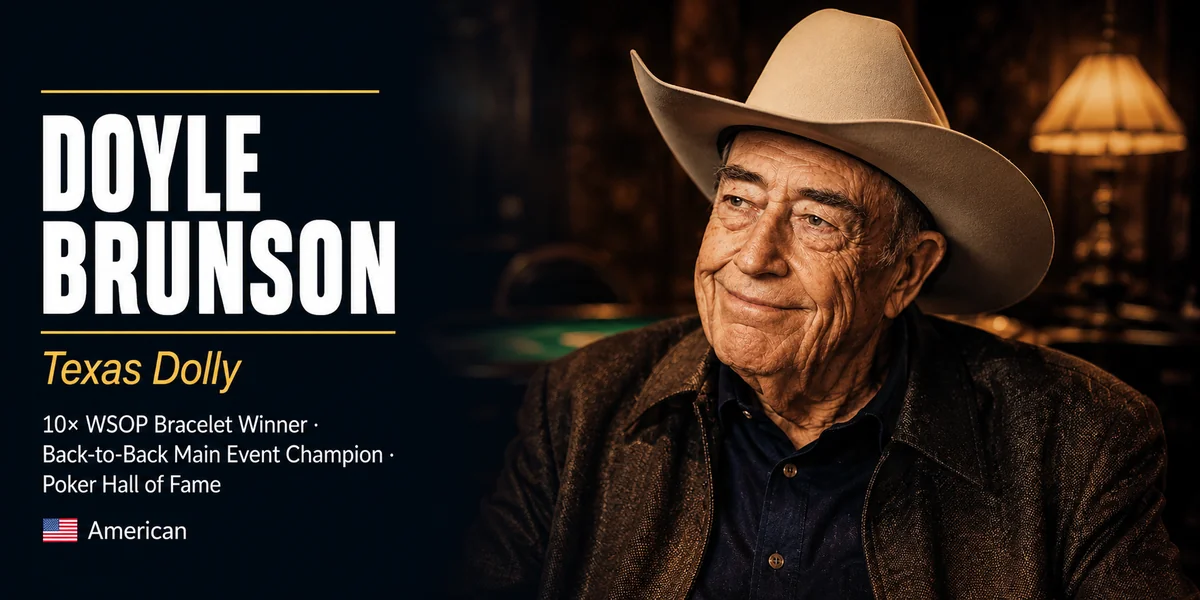
Fifty years of Texas road games and high-stakes limit cash left no public record, so the estimate stays an estimate. What can be verified is the tournament ledger: ten WSOP bracelets and just over $6.17 million in recorded live earnings. He died on 14 May 2023, aged 89.
He also took a WPT title at 71, wrote Super/System, and entered the Poker Hall of Fame in 1988. Sixty years as a professional, and he was still entering WSOP events at 84.
Player Quick Facts
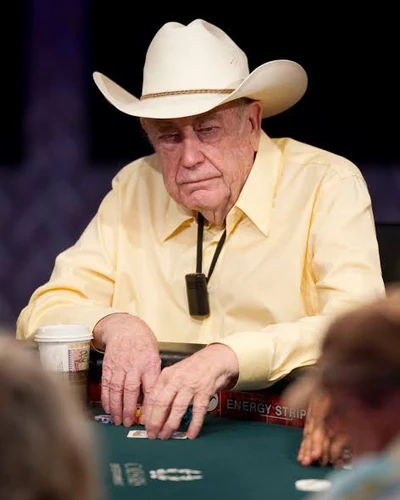
- Full Name: Doyle Frank Brunson
- Nickname: Texas Dolly; The Godfather of Poker; Big Papa
- Born: 10 August 1933
- Died: 14 May 2023, Las Vegas, aged 89
- Height: 6'3" / 190 cm
- Nationality: American
- Hometown: Longworth, Texas
- Residence: Las Vegas, Nevada
- Education: Hardin-Simmons University (bachelor's 1954; master's in administrative education 1955)
- Net Worth (Estimate): Commonly cited at $25M at his death (not publicly confirmed)
- Live Tournament Earnings: $6,176,737 (89 recorded results, 67 of them paid, per Hendon Mob)
- Biggest Cash: $1,198,260 (2004 WPT Legends of Poker)
- All-Time Money List Rank: 387th (11 August 2026)
- WSOP Bracelets: 10, across six disciplines
- WPT Titles: 1 (2004 Legends of Poker)
- Poker Hall of Fame: Inducted 1988
- Primary Formats: No-limit hold'em; mixed games; high-stakes limit cash
- Social Media: @TexDolly on Twitter, active into his late 80s
- Known For: Back-to-back Main Event titles; the 10-2 hand; Super/System
Doyle Brunson's Net Worth
Doyle Brunson’s net worth was never publicly confirmed. Only one published estimate rests on a source we will cite. Everything above it is guesswork.
No number was ever knowable, and that is the honest starting point. His income came from fifty years of cash games nobody recorded, plus book royalties and business interests whose terms were never public.
How much was Doyle Brunson actually worth?
CelebrityNetWorth carries $25 million, and it is the only published estimate on this page with a source attached. Figures of around $75 million and upwards circulate across poker media, none of them showing any workings. Treat that figure as a ballpark and nothing firmer.
What we can verify: the tournament record
His recorded live tournament earnings total $6,176,737, across 89 recorded results, of which 67 paid. The record runs 49 years, from a third-place Main Event finish in 1972 to a final entry in November 2021.
One line carries the whole story of how the game changed. His best all-time money list ranking was 1st: he was once the biggest live tournament earner in poker. On 11 August 2026 he sat 387th on that same list.
| Tour | Paid cashes | Earnings |
|---|---|---|
| WSOP (Las Vegas) | 36 | $2,998,241 |
| WSOP Europe | 1 | $51,433 |
| World Poker Tour | 8 | $2,096,004 |
| European Poker Tour | 1 | $14,066 |
| All other events | 21 | $1,016,992 |
| Career total | 67 paid of 89 | $6,176,737 |
Two of those cashes were paid in sterling, so the rows sit one dollar under the career total once converted. Read as a WSOP-only figure it comes to approximately $3 million across 37 WSOP cashes.
Every number here is a gross payout. None of it is profit, because the buy-ins that missed are not in the ledger.
Why the figure was never knowable
Five parts of his financial life left no public trace, and together they dwarf the tournament column.
- Private cash games: five decades of Texas road games, Las Vegas mixed games and heads-up matches, none of it reported anywhere.
- Staking and backing: he pooled bankrolls from his earliest years on the road. Splits of that kind are never disclosed.
- Business interests: Doyles Room and other ventures came and went across twenty years. None of the terms were made public.
- Book royalties: Super/System and four further titles sold across five decades. No royalty figure has ever been published.
- Estate and property: settled privately after his death in 2023, as almost all estates are.
None of that reaches a database. What this page carries instead is the part that does, held to the same standard as every entry in our full poker player profile directory.
Early Life & the Texas Road Gambler Years
Doyle Brunson was born on 10 August 1933 in Longworth, Texas, a farming town of roughly 100 people. He was a serious athlete long before he was a gambler.
At Sweetwater High School he helped take the basketball team to the Texas state tournament. He ran the mile too, winning it at the 1950 Texas Interscholastic Track Meet in 4:43.
At Hardin-Simmons University in Abilene he made All-Border Conference, was named Conference MVP and took Honorable Mention All-American. The university inducted him into its athletics hall of fame in 2009.
The Minneapolis Lakers were reported to have shown interest. Then a load of sheetrock weighing close to a ton fell on him in a warehouse, wrecking his knee and breaking his leg in two places.
He spent two years recovering and never played again. He finished a bachelor’s degree in 1954 and a master’s in administrative education in 1955, intending to become a school principal.
He joined the Burroughs Corporation selling business machines instead. By his own account he was invited into a seven-card stud game on his first day, won more than a month’s salary, and quit.
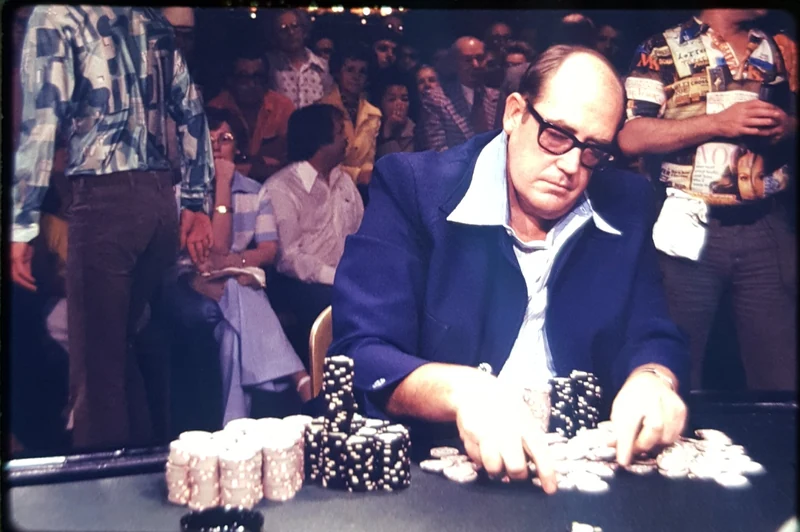
Why was he called Texas Dolly?
The story usually told is that an announcer misread “Texas Doyle” from a card and said “Texas Dolly” instead. Brunson kept it. No contemporary recording settles the account, so treat it as the version he and his contemporaries repeated.
- 10 August 1933: born in Longworth, Texas.
- 1950: wins the one-mile run at the Texas Interscholastic Track Meet in 4:43.
- 1951 to 1953: basketball and track at Hardin-Simmons; Conference MVP as a junior.
- 1954 and 1955: bachelor's degree, then a master's in administrative education.
- Mid-1950s: the warehouse accident, two years recovering, then the first professional game.
The road years started in illegal games on Exchange Street in Fort Worth, alongside his friend Dwayne Hamilton. From there the circuit widened across Texas, Oklahoma and Louisiana.
- Who: Doyle Brunson, Sailor Roberts and Amarillo Slim, real name Thomas Preston.
- Where: illegal games across Texas, Oklahoma and Louisiana.
- How long: roughly six years, as he told it.
- How it ended: a first serious trip to Las Vegas cost the three of them close to six figures.
For roughly six years he pooled a single bankroll with Sailor Roberts and Amarillo Slim, an arrangement close to what modern players would recognise as how bankroll pooling arrangements work.
A first serious trip to Las Vegas cost the three of them close to six figures and ended the partnership. The friendships outlasted it.
These were not friendly home games. Robbery was a constant risk on the circuit, and Brunson described watching a man shot dead at a table. Our 2021 piece carries his own account of the shooting he witnessed as a young pro.
Ten WSOP Bracelets Across Six Disciplines
Ten bracelets came across six disciplines and paid $1,529,130 between them. His titles came at no-limit hold’em, no-limit 2-7 draw lowball, seven-card stud, stud hi-lo split, razz and H.O.R.S.E.
Seven-card stud accounts for a pair of them, a game most players under 40 have never sat down to. Our guide sets out how seven-card stud is actually played.
How many WSOP bracelets did Doyle Brunson win?
Ten. A pair arrived in 1976 and another pair in 1977, so half the total was already banked inside two summers.
| # | Date | Event | Prize | Age |
|---|---|---|---|---|
| 1 | May 1976 | $5,000 No Limit Deuce to Seven Draw | $90,250 | 42 |
| 2 | May 1976 | $10,000 No Limit Hold’em World Championship | $220,000 | 42 |
| 3 | May 1977 | $10,000 Seven-Card Stud Split | $52,500 | 43 |
| 4 | May 1977 | $10,000 No Limit Hold’em World Championship | $340,000 | 43 |
| 5 | May 1978 | $5,000 Seven-Card Stud | $69,000 | 44 |
| 6 | May 1979 | $600 Seven Card Stud Mixed Doubles | $4,500 | 45 |
| 7 | May 1991 | $2,500 No Limit Hold’em | $208,000 | 57 |
| 8 | April 1998 | $1,500 Seven-Card Razz | $93,000 | 64 |
| 9 | April 2003 | $2,000 H.O.R.S.E. | $84,080 | 69 |
| 10 | June 2005 | $5,000 Short Handed No Limit Hold’em | $367,800 | 71 |
- No-limit hold'em: four bracelets, including both Main Events, 1991 and 2005.
- No-limit 2-7 draw lowball: one, his first, in 1976.
- Seven-card stud: two, in 1978 and 1979.
- Seven-card stud hi-lo split: one, in 1977.
- Razz: one, in 1998.
- H.O.R.S.E.: one, in 2003.
The run stretched four years, from 1976 to 1979. Only Bill Boyd, from 1971 to 1974, and Loren Klein, from 2016 to 2019, have matched it. Read the age column and a second pattern appears. Bracelets one through six all landed before he turned 46. Numbers seven to ten arrived at 57, 64, 69 and 71.
The prizes track the era rather than the man. His 1979 title paid $4,500. His tenth and last, won at 71, paid $367,800 and was the biggest of the ten.
A twelve-year gap sits between the sixth bracelet and the seventh. Six landed between 1976 and 1979, then nothing until 1991.
The 2003 win is the one that settles the specialist question. H.O.R.S.E. rotates five games and rewards nobody who is strong in only one, and he took it at 69.
Razz is the format on that list most readers will never have played. Start with the lowball game behind his 1998 title.
That total leaves him tied third all-time with Erik Seidel and Johnny Chan, a position confirmed on WSOP.com on 11 August 2026. Only Phil Hellmuth and his record 17 bracelets sits clear of that group, and second place now belongs to Phil Ivey who broke the ten-bracelet tie.
Obituaries in 2023 placed him second all-time behind a Hellmuth total of 16. Both halves were wrong then and are further out now.
Back-to-Back Main Events & the 10-2 Hand
Back-to-back Main Event titles in 1976 and 1977 are the line on his record that nothing else touches. He is one of four men to win the event more than once, alongside Johnny Moss, Stu Ungar and Johnny Chan.
All four went back-to-back. Moss did it first, in 1970 and 1971, so the title Brunson holds is second rather than first. The list runs to every Main Event winner since 1970.
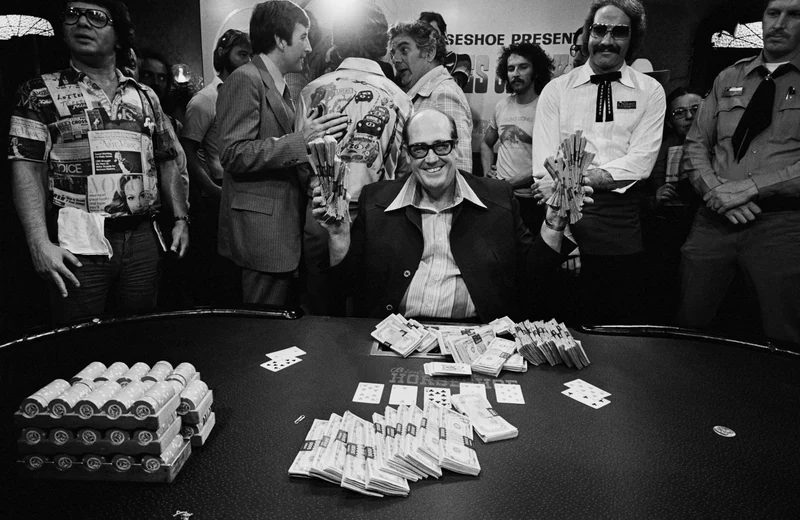
Did he really win both Main Events holding 10-2?
Yes, and the two hands were not identical. In 1976 he held 10♠ 2♠ against Jesse Alto’s ace-jack, and in 1977 he held 10♠ 2♥ against Gary Berland’s eight-five.
Both times the board filled him up. Nearly 50 years on, players still call the hand by his name.
The 1976 field held 22 entrants and paid winner-take-all. That is what puts the $220,000 in proportion: it was the whole prize pool, not a slice of it. A year later the same two ranks won him $340,000. Two identical finishes, two years running, and a starting hand no reasonable player would choose.
| Year | Finish | Prize |
|---|---|---|
| 1972 | 3rd | $32,500 |
| 1976 | 1st | $220,000 |
| 1977 | 1st | $340,000 |
| 1980 | 2nd | $146,000 |
| 1982 | 4th | $52,000 |
| 1983 | 3rd | $108,000 |
| 1997 | 16th | $25,440 |
| 2004 | 53rd | $45,000 |
| 2013 | 409th | $28,063 |
Nine Main Event cashes, spread across 41 years, total $997,003. Three dollars short of a million. The first came in 1972, third place for $32,500, four years before the first title. It closed in 2013, 409th for $28,063, at 79 years old.
Six of those nine were top-four finishes, and all six came inside twelve years, between 1972 and 1983. The 1980 runner-up spot was to Stu Ungar who beat him in 1980, taking the first of his three titles.
There is a fourteen-year hole in the middle of that record. After third place in 1983 he did not cash the Main Event again until 1997, and the three cashes that followed came in fields nothing like the ones he had beaten.
That tail matters as much as the peak. Playing a modern Main Event at 79 is a different sport from beating 21 opponents, and contemporaries such as Dan Harrington from the same era made the same crossing.
The WPT Title & Career Wins Beyond the WSOP
His biggest cash never came at the WSOP. In August 2004 he took the WPT Legends of Poker at the Bicycle Casino for $1,198,260, beating Lee Watkinson heads-up out of 667 entrants.
At 71 he was the oldest player to win a WPT title when he did it. The win landed in the middle of the boom Chris Moneymaker triggered, a year after the field sizes started climbing.
The Bellagio then renamed its Five Diamond World Poker Classic after him. He cashed in it three times: third for $563,485 in December 2005, 66th in 2008 and 18th in 2010. That 2005 finish is the second-biggest cash of his career, and it came in a tournament carrying his own name.
| # | Amount | Event | Finish |
|---|---|---|---|
| 1 | $1,198,260 | 2004 WPT Legends of Poker | 1st |
| 2 | $563,485 | 2005 Five Diamond World Poker Classic Main Event | 3rd |
| 3 | $367,800 | 2005 WSOP $5,000 Short Handed No Limit Hold’em | 1st |
| 4 | $340,000 | 1977 WSOP Main Event | 1st |
| 5 | $274,560 | 2006 WSOP $50,000 H.O.R.S.E. | 8th |
Eighteen recorded first-place finishes sit on the ledger. Ten are bracelets and one is the WPT title. The other seven span four decades and five formats.
Those seven run from December 1984 to June 2007, taking in deuce-to-seven lowball, pot-limit Omaha, no-limit hold’em and Chinese poker. That final one came on television rather than in an open field.
- Jack Straus World Match Play, $10,000 No Limit 2-7 Lowball, December 1984: $57,500
- Amarillo Slim's Super Bowl of Poker, Deuce-to-Seven Lowball, February 1986: $43,500
- America's Cup of Poker, $1,500 Pot-Limit Omaha, January 1987: $54,000
- Queens Poker Classic, $2,500 No Limit Hold'em, September 1994: $128,000
- Hall of Fame Poker Classic, $5,000 Chinese Poker World Championship, December 1994: $40,000
- Poker After Dark, Season II World Series Legends week, June 2007: $120,000
By the account carried across his biographies, he was the first player to win $1 million in poker tournaments. That claim pairs with the best money-list rank on his record.
What was Doyle Brunson’s last tournament?
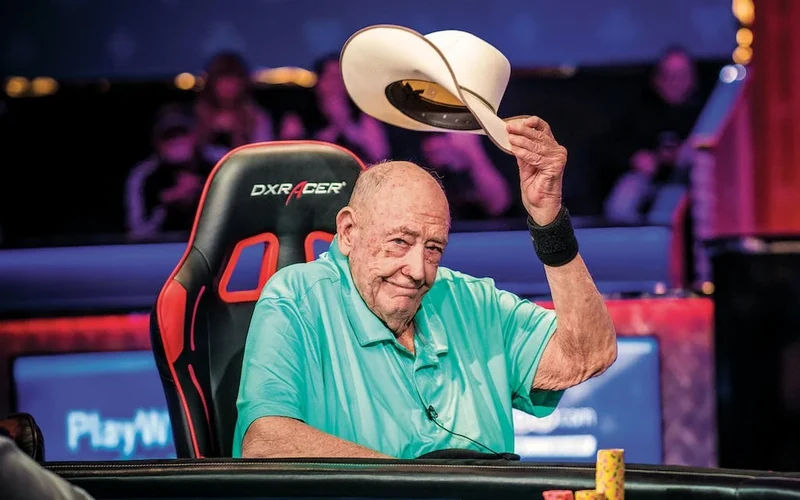
Two different answers, and they get confused. His last cash came in June 2018 at the WSOP $10,000 No Limit 2-7 Lowball Draw Championship, sixth of 95 for $43,963, at 84.
He had announced his retirement that week and Todd talked him into registering. He made the final table and SportsCenter covered it.
The last recorded entry is later and paid nothing: fifth in the WSOP Master of Ceremonies Invitational, November 2021. That is where the database record stops.
The 2005 WPT Enterprises Bid
In July 2005 an unsolicited $700 million cash bid landed for WPT Enterprises, the company that owned the World Poker Tour. The bidder named in the paperwork was Doyle Brunson.
A Las Vegas law firm delivered it on 7 July, saying it acted for Brunson and for financial backers it did not name. Those backers were never identified in the reporting from the time.
The bid doubled what the market thought the company was worth. WPT had closed at $17.75 the previous day and carried a market capitalisation of roughly $357 million.
Traders took it seriously for about three days. Then WPT said it could not substantiate the offer’s credibility and the price fell back.
| When | What was reported |
|---|---|
| July 2005 | An unsolicited cash bid for WPT Enterprises is delivered |
| Same day | The stock reaches an intraday high of $29.50 |
| Three days later | WPT cannot substantiate the offer; the stock falls 11.6% to $23.43 |
| Shortly after | The law firm that delivered the offer withdraws |
| 14 December 2005 | The SEC files in Fort Worth to enforce subpoenas on two attorneys |
| 16 December 2005 | The SEC confirms a formal investigation |
The firm that delivered the offer withdrew shortly afterwards. The offer expired unverified, and no revised bid ever followed.
In mid-December the SEC went to federal court in Fort Worth to enforce subpoenas on two attorneys. Two days later it confirmed a formal investigation into whether the offer and its publication had breached anti-fraud laws.
Brunson invoked the Fifth Amendment and declined to testify. His attorney said the offer had been sincere and that no laws were broken.
An investigation is not a finding of wrongdoing. No charge, no finding and no outcome against Brunson is on the public record, and none of the reporting from the time establishes one.
Coverage from the period runs through the bid, the market reaction and the subpoenas, then goes quiet. It stays an odd, unresolved episode in a career otherwise documented down to the dollar.
Cash Game Career: Bobby's Room & the Beal Games
Everything so far is the visible fraction. The money that built the reputation moved in cash games, and almost none of it was ever recorded.
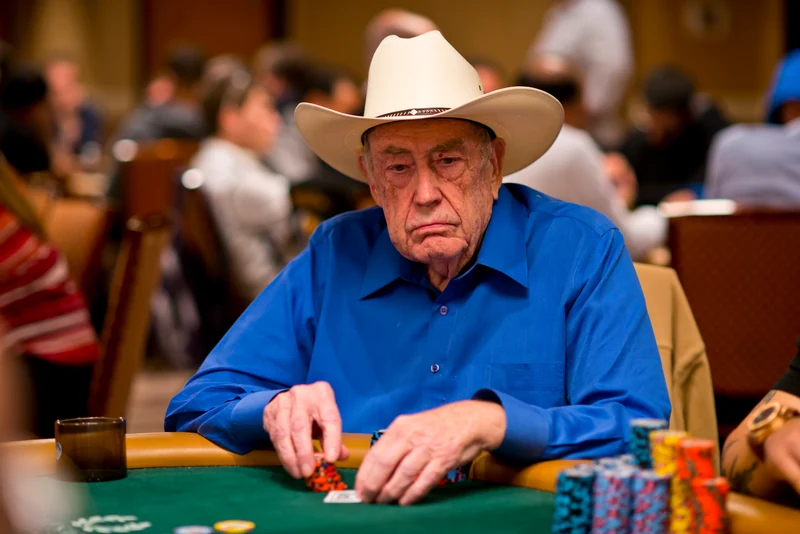
For decades he was a regular in Bobby’s Room at the Bellagio, the high-stakes room named after Bobby Baldwin. The game there was mixed and it was limit, with stakes reaching $4,000/$8,000.
That word limit does a lot of work. Bet sizes are fixed, so a bad session bleeds rather than bursts, and the edge compounds over years instead of hands. Our limit primer explains why limit games play so differently.
The regulars he sat with included Chip Reese, Johnny Chan, Jennifer Harman and Chau Giang. Bobby’s Room contemporaries like Sam Farha made up the rest of a small, closed circuit.
How big were the games in Bobby’s Room?
Limit games ran as high as $4,000/$8,000, with $800/$1,600 closer to normal. Nobody publishes results from that room, so the winners and losers are a matter of recollection rather than record.
Between roughly 2001 and 2004 the stakes went somewhere else entirely. Andy Beal, a Dallas banker, played heads-up limit hold’em against a syndicate of pros who called themselves The Corporation.
Brunson is widely credited with conceiving the syndicate. One man could not cover Beal alone, so a group pooled bankrolls and took turns in the seat.
- Doyle Brunson and Todd Brunson
- Chip Reese and Chau Giang
- Ted Forrest and Jennifer Harman
- Howard Lederer and Barry Greenstein
- Phil Ivey and Gus Hansen
Stakes escalated to a reported $100,000/$200,000, with more than $20 million on the table at the peak. The individual results were never made public. No verified figure exists for what Brunson personally won or lost against Beal, and this page will not invent one.
The contrast with today is sharp. Every large pot now runs on a stream with a graphic on it, and how big the modern games have got is a matter of public record.
The biggest pots he played sat in rooms with no cameras and no reporting. The largest of them may never have been written down anywhere.
Super/System & the Books That Changed Poker
The book came out under a title nobody would use today: How I Made Over $1,000,000 Playing Poker. It was self-published, ran to roughly 600 pages, and sold at $100.
That price was the point. At a time when paperbacks cost a few dollars, $100 filtered the audience down to people serious enough to treat it as an investment.
Publication is dated to 1978, though 1979 is also widely cited. A wider-circulation Cardoza edition followed in 2002.
He did not write all of it. Bobby Baldwin, Mike Caro, David Sklansky, Chip Reese and Joey Hawthorne each took the game they knew best.
The no-limit hold’em section he kept for himself, and that is the chapter usually credited with changing how the game was played. It set out the no-limit hold’em fundamentals he set out in print for the first time.
Three more books followed across the next three decades. Closing the set was the autobiography, and it took a professional journalist to get it down.
- Super/System (1978): first published as How I Made Over $1,000,000 Playing Poker. Roughly 600 pages, sold at $100.
- According to Doyle (1984): later reissued as Poker Wisdom of a Champion.
- Super System 2 (2004): contributors included Daniel Negreanu, Jennifer Harman and Todd Brunson, who wrote the seven-card stud hi-lo section.
- The Godfather of Poker (2009): his autobiography, published by Cardoza and co-written with Associated Press reporter Mike Cochran.
That edition is the one that reached a mass audience. By then the strategy inside it had been absorbed into how everyone played, a strange fate for a book priced at $100 to keep the audience small.
Publishing it is also why he turned up on the most influential figures in poker. Winning made him famous. Explaining how he won changed what everyone else did.
Brunson was blunt about it. He said in interviews that the book had cost him money in the long run, because it taught his opponents how to beat him.
Is Super/System still worth reading?
As history, yes. Its no-limit chapter is where modern aggression starts, and reading it shows you the ground everything since was built on.
As a strategy manual it has been overtaken. Half a century of study has refined almost every idea in it, and the games it teaches are not the games most people play now.
Playing Style
His game ran on feel. Contemporaries described him as aggressive and intuitive, reading the player rather than the range, and he built a fifty-year career on it.
The hold’em chapter in his book made the method explicit. Relentless aggression, and small suited connectors and one-gappers played for what they could become after the flop.
In 1978 that was contrarian. Playing hands like those for their post-flop potential ran against everything the conventional wisdom of the day taught.
Ten-deuce is the clearest illustration. It became his hand for one reason: he played it, twice, in the biggest spot the game had. Nothing about that was strategy.
What replaced him is a different discipline entirely. Range construction, equity calculation and machine-checked strategy have taken over, and the solver-driven approach that followed answers questions he settled by instinct.
He kept playing into his late 80s against opponents raised on that material. No citable comment from him on solvers or game theory exists, so this page will not put words in his mouth.
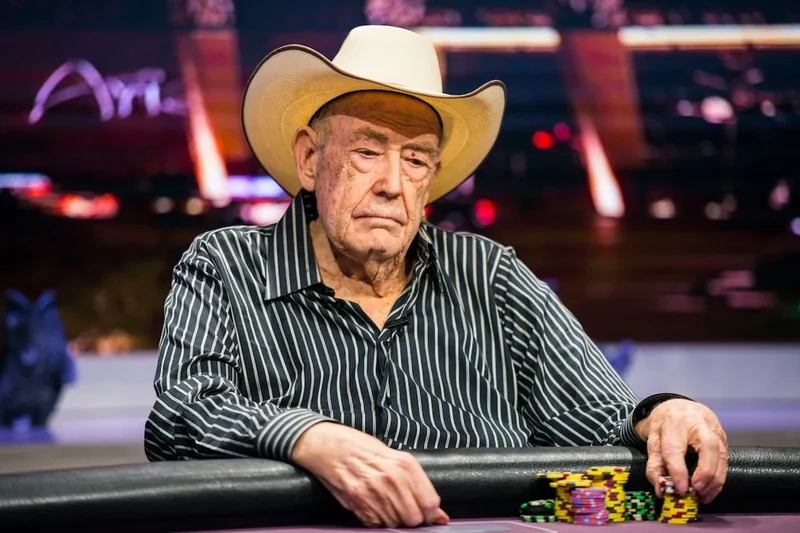
The two approaches never really met on equal terms. His method was built in games with no hand histories, no databases and nobody watching.
The younger generation’s regard for him showed up in odd ways. When one high-profile pro pushed for a heads-up match in 2021, Brunson brushed it off with an offer to play tic-tac-toe instead.
Others were less relaxed about it, and a very public defence of Brunson followed within days.
Doyles Room & the Online Era
Doyles Room launched in 2004, at the point when online poker was turning into an industry. It carried his name and his endorsement.
The site ran on four different networks in seven years, which tells you most of what you need to know about how unstable the offshore market was in those years.
Seizure came on 26 May 2011, weeks after what Black Friday did to online poker. He cut ties around that point and the site passed to new owners later the same year.
The number he gave for what he walked away from is the part worth sitting with. Publicly, he put it at $235 million turned down for the site, and that the decision haunted him.
He held a half share in it at the time. He dated the offer himself, but not consistently: one telling puts it just before Black Friday, another before the earlier law that first pushed online poker out of the US.
On an earlier occasion he gave a different number, $230 million, with no date attached. Both figures are his own. This page uses the later and more specific of the two.
Set against a net worth commonly put at a tenth of that, it is the largest single financial fact anyone has ever attached to him. It is also the only one he volunteered.
His online life outlasted the poker room by more than a decade. Twitter kept him busy into his late 80s, posting about scripture, sport and the games he was still playing.
He gave as good as he got. After a prominent player mocked one of his religious posts in 2021, how he handled online needling was simply to block him and move on.
Personal Life & Family
He met Louise in 1959 and married her in August 1962. She was a trained pharmacist who, by her own telling, spent the early part of their courtship believing he was a bookkeeper.
They were together for six decades. Published accounts disagree on the exact count, so this page gives none.
Melanoma arrived early. Diagnosed in the early 1960s, he was reportedly given three months to live while Louise was pregnant with their first child, and came through three surgeries.
M.D. Anderson found the cancer in remission. It returned more than once across the following decades and he beat it repeatedly. No public count was ever given, and this page will not supply one.
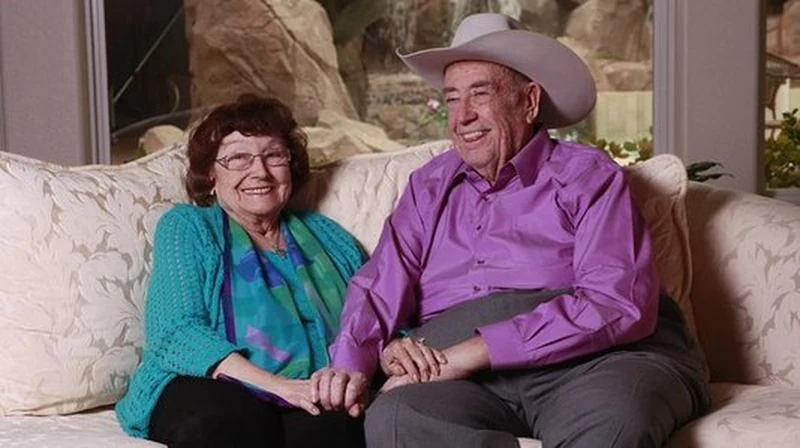
Three children followed, and all three grew up around the game. Two went on to play it in public, at the World Series, under a surname that guaranteed attention.
- Louise Brunson, wife. A trained pharmacist. Met in 1959, married August 1962, together for six decades.
- Todd Brunson, son, born 1969. Poker Hall of Fame, 2016.
- Pamela Brunson, daughter. Played the WSOP Main Event in 2007 and 2009.
- Doyla Lynn Brunson, daughter, born 6 June 1963. Died 16 March 1982, aged 18.
Todd went into the family trade and matched his father at the 2005 WSOP, taking Event #21, the $2,500 Omaha High-Low Split, out of 359 entries for $255,945.
Doyle won a bracelet the same summer. It made them the first father and son to each hold one, and they did it weeks apart.
At the time of that 2016 induction the WSOP noted that the Brunsons had joined the Binions as the only families with two members in the Hall.
Doyla died in March 1982 of a heart-valve condition, three months short of her nineteenth birthday. The middle of the three children, and by every account the family never really recovered. He spoke about it rarely and never at length.
Louise outlived him by five months. She died later that year, aged 91, and Pamela announced it.
Death, Tributes & Legacy
How did Doyle Brunson die?
Death came on 14 May 2023 in Las Vegas, at 89. The family issued a statement through his agent describing him as a husband, father and grandfather, and asking for prayers. No cause was disclosed. Nothing further has been made public in the years since, and this page will not guess at one.
The tributes started within hours and did not really stop. The WSOP opened its 2023 series with a moment of silence for him.
A celebration of life followed on 2 July 2023 at the Jubilee Theater inside Horseshoe Las Vegas. Free, open to the public, and hundreds came. His management company organised it with the WSOP, the WPT and PokerGO. Those who spoke:
- Todd Brunson, his son
- Jack Binion and Lyle Berman
- Dewey Tomko and Billy Baxter
- Eric Drache
- Phil Hellmuth and Daniel Negreanu
Between them they covered seven decades of his life, on and off the felt.
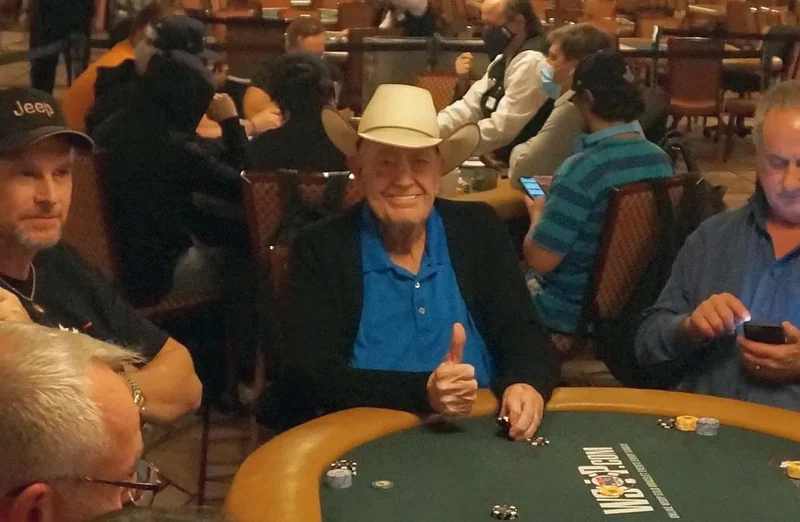
Lucky You, the film he built from the inside
A Brunson documentary has been in development since 2021 with nothing to show for it. That obscures the fact that he had already shaped the most authentic poker film ever made, nearly twenty years earlier.
He took the poker consultant role on Lucky You in 2007. He scripted the hands and coached Eric Bana and Robert Duvall for months before shooting.
Johnny Chan, Sam Farha, Phil Hellmuth, Daniel Negreanu, Barry Greenstein, Antonio Esfandiari and Jennifer Harman all appeared. It flopped at the box office, and it is still the benchmark for the poker film he scripted himself.
The formal honour came long before any of this. He entered the Poker Hall of Fame in 1988, at 55, with two decades of his career still ahead of him.
His son Todd was inducted in 2016. Anyone curious about the Hall of Fame criteria and its omissions will find the shortlist arguments there.
Latest News & Updates
Todd came within a hand of the story nobody has written. On 13 July 2026, Day 8 of the WSOP Main Event, he got pocket aces in against Malcolm Trayner’s A♣ J♣ on a jack-high board with two clubs already out.
Trayner rivered the flush. He went out 20th for $325,000, with 19 players between him and the title his father won 50 years earlier.
Had it landed, they would have been the only father and son to each win it. You can follow this year’s Main Event and its final table for how the rest played out.
Every 2 October is now Doyle Brunson Day. The date is the hand: 10-2. His agent proposed it at the memorial and the poker community adopted it. PokerGO marked the first one by releasing the celebration of life footage at 10:02am Pacific.
The documentary is still unmade. A film about his life has been in development since 2021 with nothing released. Status unchanged as of August 2026.
FAQs
How many WSOP Main Events did Doyle Brunson win?
Two, back-to-back in 1976 and 1977. Only four men have won it more than once, and he was the second to go back-to-back after Johnny Moss did it in 1970 and 1971. The Main Event paid him nine times in all, across 41 years.
What was Doyle Brunson's biggest tournament win?
$1,198,260 at the 2004 WPT Legends of Poker. His only World Poker Tour title, the largest single cash of his career, and he took it at 71.
Was Doyle Brunson in the Poker Hall of Fame?
Yes, inducted in 1988 alongside Jack Straus, whose place came posthumously after his death that August. Todd followed him in 2016, which put the Brunsons alongside the Binions as families with two members inside.
What is the Doyle Brunson hand?
Ten-deuce, written 10-2. Both Main Events were won holding it, and players have called the hand by his name ever since. Hence Doyle Brunson Day, held every 2 October.
Did Doyle Brunson write Super System?
Yes. First published in 1978 under the title How I Made Over $1,000,000 Playing Poker, self-published at $100, with chapters contributed by other professionals on their own games.
Where was Doyle Brunson from?
Longworth, Texas, a farming town of roughly 100 people. School was in Sweetwater and university at Hardin-Simmons in Abilene, then played the Texas, Oklahoma and Louisiana circuit before settling in Las Vegas, where he lived for most of his adult life.
Sources & Methodology
How we handle ‘net worth’
We publish a net worth figure only where a source can be named. For Doyle Brunson that is one estimate, and we say so rather than averaging the guesses in circulation.
Cash game results, staking splits and private business terms are not public. Any figure claiming to capture them is an assertion, not a calculation, and we treat it that way.
How we report earnings
Live tournament totals come from The Hendon Mob. Bracelet counts, event names and WSOP prizes come from WSOP.com, which is canonical where the two disagree.
Every figure here is a gross payout before buy-ins and expenses. Where sources conflict we publish the canonical one and say a conflict exists. Hendon Mob’s own bracelet ranking gives him nine rather than ten, most likely because it excludes the 1979 mixed doubles team event.
How we cover controversies
We report what happened and imply nothing beyond it. The 2005 SEC investigation produced no charge, no finding and no public outcome against him, and this page states that plainly.
Where a claim rests on a single source or on anecdote, we say so. Where no citable source exists, we leave the gap open rather than fill it. Figures we could not reconcile are flagged in the text, not smoothed over.
References
- The Hendon Mob – total live earnings, best cash, all-time money list rank, and every prize in every table
- WSOP.com player profile – date of birth, birthplace, date of death, bracelet count, the 10-2 statement and the 1970 debut
- WSOP.com Event #21 report, 2005 – Todd Brunson's bracelet: field size, prize pool and first-place prize
- US Securities and Exchange Commission – the subpoena enforcement action, the filing date and the scope of the investigation
- NBC News, December 2005 – the $700 million offer, the share price movement and the attorney's statement
- NBC News, May 2023 – date and place of death, age, the family statement and the absence of a disclosed cause
- Las Vegas Review-Journal – the celebration of life at the Jubilee Theater and who spoke
- PokerGO Tour – Todd Brunson's 2026 Main Event finish and the hand that ended it
- PokerGO Tour press release – Doyle Brunson Day, 2 October, and the 10:02am release
- Hardin-Simmons University Athletics – the college record and the 2009 athletics hall of fame induction
- Sports-Reference College Basketball – height, playing position and college basketball statistics
- CelebrityNetWorth – the one citable net worth estimate, $25 million at the time of death
- Wikipedia – WSOP money finishes and final tables, the four-consecutive-years record and early life detail
- Wikipedia, Big Game – the stakes played in Bobby's Room at the Bellagio