

Dan Harrington Net Worth 2026: $8M to $15M, 1995 WSOP Champion & Author
Dan Harrington has an estimated net worth of $8 million to $15 million, from $6,653,820 in tracked live tournament earnings, a stake in the lender he co-founded and his book royalties. The 1995 WSOP Main Event champion also holds a WPT title and a Hall of Fame place.
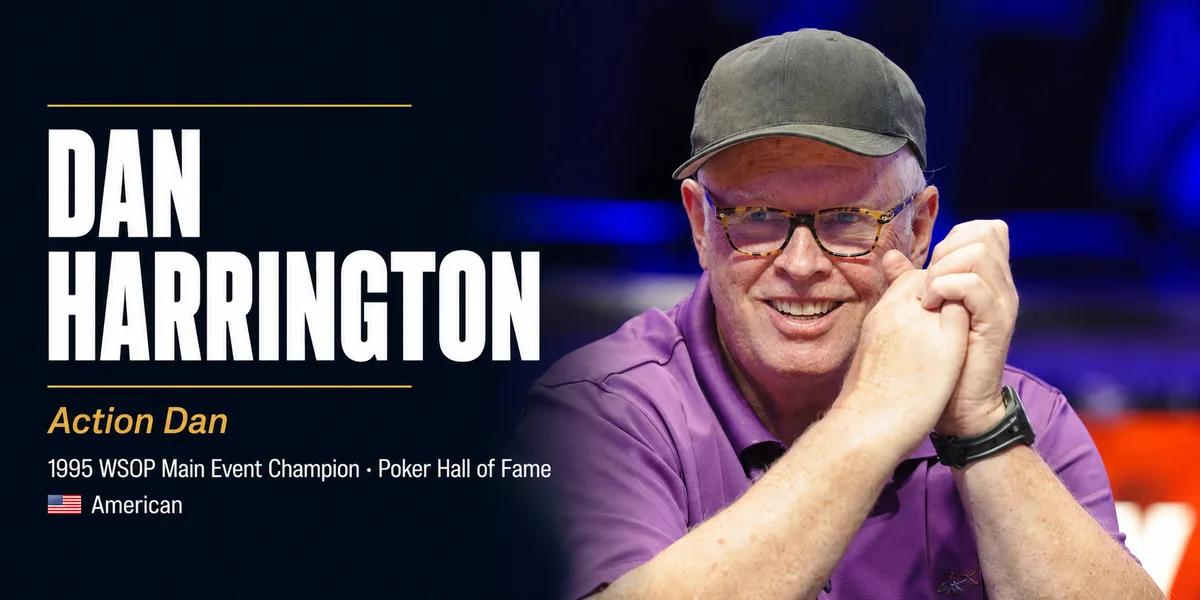
His Harrington on Hold’em series, written with backgammon champion Bill Robertie, gave tournament poker the M-ratio and the zone system. Anchor Loans, the company he started in 1998 with two poker friends, has since funded $22 billion in loans and now belongs to Pretium Partners.
Between cruises and stock trading he still turns up at the odd WSOP event. His last tracked cashes came in 2024, ending a decade without a WSOP payout.
Player Quick Facts

- Full Name: Daniel Harrington
- Nickname: Action Dan
- Born: December 6, 1945 (age 80)
- Nationality: American
- Heritage: Irish (both parents born in Ireland)
- Hometown: Cambridge, Massachusetts
- Residence: Santa Monica, California
- Education: Suffolk University (BA); Suffolk University Law School (JD)
- Net Worth (Estimate): $8M to $15M
- Live Tournament Earnings: $6,653,820 (56 cashes)
- WSOP Bracelets: 2 (both 1995)
- WPT Titles: 1 (2007 Legends of Poker)
- Primary Format: No-Limit Hold'em (tournaments)
- Known For: 1995 WSOP Main Event champion; Harrington on Hold'em book series; Poker Hall of Fame (2010)
- Current Sponsor: None
Dan Harrington's Net Worth
Dan Harrington’s net worth is estimated at $8 million to $15 million. The range combines his tracked tournament payouts with an undisclosed shareholding in Anchor Loans, royalties from seven poker books and an active private stock portfolio.
The business side almost certainly outweighs the poker side. Anchor Loans has funded $22 billion in loans since 1998 and was sold to Pretium Partners in November 2021, with Harrington keeping a shareholding after he retired from the company. His stake and any sale proceeds have never been disclosed.
What is Dan Harrington’s net worth in 2026?
Harrington’s net worth in 2026 is estimated at $8M to $15M. No financial disclosure has ever been published, so the figure is built from four income streams rather than a confirmed number.
Tournament earnings are the only fully verifiable component, tracked cash by cash on The Hendon Mob. Anchor Loans, the hard-money lender he co-founded in 1998 with Jeff Lipton and Stephen Pollack, is probably the largest source: he was its first CEO and retired from the firm in 2010.
The seven books published with Two Plus Two provide a third stream, with Harrington on Hold’em in print since 2004. The fourth is stock trading, which he described to the World Poker Tour in 2024 as the main thing he does.
| Income stream | What is on record | Status |
|---|---|---|
| Live tournaments | $6,653,820 across 56 cashes | Verified (Hendon Mob) |
| Anchor Loans | Co-founder 1998, first CEO, shareholder after 2010 | Stake undisclosed |
| Books | Seven titles, 2004 to 2014 | Royalties undisclosed |
| Stock trading | Self-described active private trader | Returns undisclosed |
What we can verify: $6,653,820 in tracked earnings
The Hendon Mob lists 56 cashes worth $6,653,820, which put Harrington 355th on the all-time money list in October 2026. His peak position on that list was 8th.
Those are gross payouts before buy-ins, travel, taxes and staking, not profit. There are no tracked online earnings; his career predates the online boom.
Net worth estimates: why they range from $6M to $44M
Celebrity biography sites publish figures for Harrington anywhere from $6 million to $44 million, and none disclose a method. The low end rounds his tournament earnings; the high end presumably prices in Anchor Loans equity without showing the working.
Our range anchors on two verifiable points: tracked payouts and the documented scale of the business he co-founded. The upper bound leaves room for royalties and investment returns without implying a precision we cannot support.
How old is Dan Harrington?
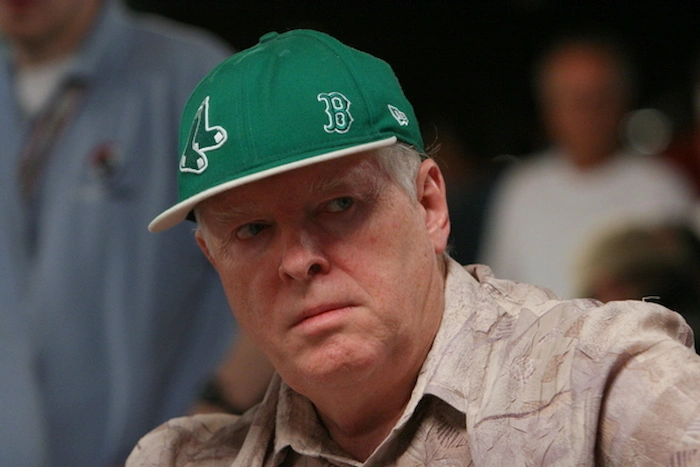
Dan Harrington was born on December 6, 1945, which makes him 80 years old. He won the Main Event at 49, made back-to-back Main Event final tables at 57 and 58, and entered the Poker Hall of Fame at 64.
Career Earnings & Tournament Results
Harrington’s tracked record runs from January 1986 to June 2024, a span of 38 years. Three events account for more than 60% of his $6.65 million total: the 2007 WPT Legends of Poker ($1,635,365), the 2004 WSOP Main Event ($1,500,000) and the 1995 WSOP Main Event ($1,000,000).
Top 10 career cashes
Four of his ten biggest payouts came in 1995 alone. All figures are gross amounts before taxes and expenses.
| # | Year | Event | Finish | Prize |
|---|---|---|---|---|
| 1 | 2007 | WPT Legends of Poker | 1st | $1,635,365 |
| 2 | 2004 | WSOP Main Event | 4th | $1,500,000 |
| 3 | 1995 | WSOP Main Event | 1st | $1,000,000 |
| 4 | 2003 | WSOP Main Event | 3rd | $650,000 |
| 5 | 2005 | WPT Doyle Brunson North American Championship | 2nd | $620,730 |
| 6 | 1995 | WSOP $2,500 NLHE | 1st | $249,000 |
| 7 | 1995 | Four Queens Poker Classic $5,000 NLHE | 1st | $212,000 |
| 8 | 1995 | Festival of Poker London £1,500 NLHE | 1st | $109,250 |
| 9 | 2006 | WPT Bay 101 Shooting Star | 22nd | $50,000 |
| 10 | 2005 | Poker Royale Battle of the Ages Final | 1st | $50,000 |
How much has Dan Harrington won in poker?
Harrington has won $6.65 million in tracked live tournaments across 56 cashes. His largest payout was just over $1.6 million for the 2007 WPT Legends of Poker title; his most recent was $2,001 for 346th in the 2024 WSOP $1,000 Super Seniors.
The figure covers live tournaments only. There is no public record of him playing cash games professionally, and no online results.
WSOP record: 2 bracelets, 15 cashes, $3,547,255
Both bracelets came in 1995. Across his career he recorded 15 WSOP cashes worth $3,547,255 and five final tables: 1987, the two 1995 wins, 2003 and 2004.
| Year | Event | Entries | Finish | Prize |
|---|---|---|---|---|
| 1995 | $2,500 No-Limit Hold’em | 249 | 1st | $249,000 |
| 1995 | $10,000 Main Event (World Championship) | 273 | 1st | $1,000,000 |
He cashed the Main Event six times in total and finished third in the 2009 WSOP Champions Invitational, a no-prize event reserved for former world champions.
WPT results: 1 title, 2 final tables, $2.4M
Harrington won the 2007 Legends of Poker and finished runner-up at the 2005 Doyle Brunson North American Championship for $620,730. His WPT-tagged results total more than $2.4 million, with the detail in the career timeline below.
Early Life, Chess & the Mayfair Club
Harrington grew up in Cambridge, Massachusetts, the son of Irish parents from Waterford and Cork. He took a BA in government and history at Suffolk University, then a law degree at Suffolk University Law School, and practised as a bankruptcy lawyer in Boston for roughly a decade.
Games ran alongside the law. By his mid-twenties he was a state chess champion, and by 35 a world champion at backgammon.
Chess, backgammon and the 1981 World Cup
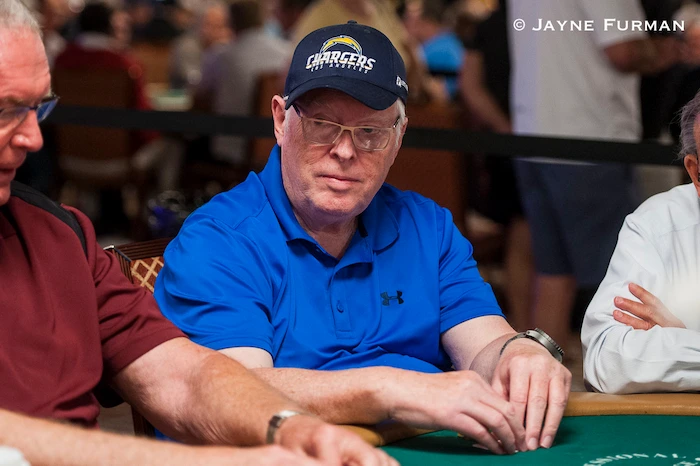
Harrington won the 1971 Massachusetts State Chess Championship and holds the title of US Chess Master. In backgammon he won the 1981 World Cup of Backgammon in Washington, D.C., coached by Bill Robertie, a two-time world champion who later co-wrote all seven of his poker books.
During his Suffolk years he is also said to have played on an MIT-affiliated roulette team and a separate blackjack team. Both stories are widely repeated but rest on secondary sources.
The route from the board to the felt is not unique to him: our ranking of chess players who switched to poker places him alongside Dan Smith and Jennifer Shahade.
Did Dan Harrington really play poker with Bill Gates?
Yes. During their college years Harrington visited Harvard and sat in casual games with Bill Gates and Paul Allen, a story repeated across biographical sources and in his own interviews.
No stakes, dates or results were recorded; they were informal student games.
The Mayfair Club and the 1987 WSOP final table
In the mid-1980s Harrington became a regular at the Mayfair Club, an underground card room in New York. The roster included Erik Seidel, Howard Lederer, Jay Heimowitz, Mickey Appleman, Steve Zolotow, Jason Lester, Paul Magriel and Stu Ungar.
The 1987 WSOP Main Event showed the club’s strength. Harrington finished 6th for $43,750, Lederer 5th, Appleman 8th and Heimowitz 11th in a 152-player field, and Mayfair regular Erik Seidel’s own career took off from the same room with his 1988 Main Event runner-up finish.
| Mayfair regular | 1987 Main Event finish | Prize |
|---|---|---|
| Howard Lederer | 5th | $56,250 |
| Dan Harrington | 6th | $43,750 |
| Mickey Appleman | 8th | $25,000 |
| Jay Heimowitz | 11th | $12,500 |
That final table was his first at the WSOP, though not his first cash. His tracked record begins in January 1986 with a 4th place at the Grand Prix of Poker in Las Vegas ($13,050), then a 24th at the 1986 WSOP.
The Mayfair Club closed around 2000 during Mayor Giuliani’s enforcement push. In 2008 a Poker After Dark episode titled Mayfair Club reunited Harrington with Lederer, Appleman, Zolotow, Heimowitz and owner Mike Shichtman.
Tournament Career Timeline
After the Mayfair years came the 1995 breakthrough, the 2003 and 2004 final tables, the 2007 WPT title and a long semi-retirement.
1995: four titles, two bracelets and the Main Event
Harrington won the $2,500 No-Limit Hold’em bracelet from 249 entries, then beat Howard Goldfarb heads-up for the $10,000 Main Event and $1,000,000 from a field of 273.
The year brought two more titles, in London and back in Las Vegas, for four wins in five months.
| Date | Event | Entries | Prize |
|---|---|---|---|
| May 1995 | WSOP $2,500 No-Limit Hold’em | 249 | $249,000 |
| May 1995 | WSOP $10,000 Main Event | 273 | $1,000,000 |
| Jul 1995 | Festival of Poker London £1,500 No-Limit Hold’em | N/A | $109,250 |
| Sep 1995 | Four Queens Poker Classic $5,000 No-Limit Hold’em | N/A | $212,000 |
Two bracelets leave him far behind Phil Hellmuth’s record bracelet haul, but his influence would come from a different direction. He returned as defending champion in 1996 and finished 17th ($23,400), a result some secondary sources wrongly attach to 1987.
2003 and 2004: back-to-back Main Event final tables
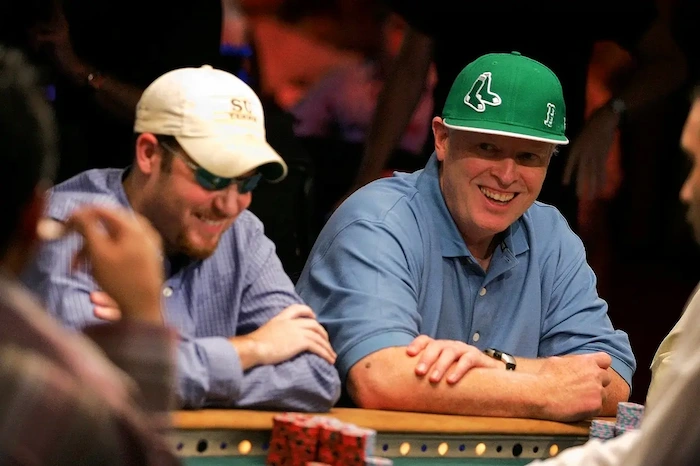
The 2003 Main Event drew 839 players and changed the game. Harrington finished 3rd for $650,000, outlasting all but the two men who played heads-up for the title.
The winner was an accountant from Tennessee: Chris Moneymaker and the boom he started are covered in full on his profile. The runner-up was cash game specialist Sam Farha, who duelled Moneymaker for the title.
In 2004 the field exploded to 2,576 and Harrington finished 4th for $1,500,000 in the year Greg Raymer won. Back-to-back top-four finishes in fields that size remain a rarity, and his four Main Event final tables span 17 years.
| Year | Entries | Finish | Prize |
|---|---|---|---|
| 1987 | 152 | 6th | $43,750 |
| 1995 | 273 | 1st | $1,000,000 |
| 2003 | 839 | 3rd | $650,000 |
| 2004 | 2,576 | 4th | $1,500,000 |
The full roll of WSOP Main Event champions from 1970 onwards shows how far the fields grew in those two years. Many of the hand examples in Harrington on Hold’em are drawn from these two final tables.
2007: the WPT Legends of Poker title
Harrington’s largest cash came at the Bicycle Casino in August 2007, where he won the WPT Legends of Poker for $1,635,365 from 485 entries. It was his only WPT title and his second WPT final table after the 2005 runner-up finish.
After 2007 his appearances became sporadic as Anchor Loans and the books took priority. Every tracked cash since then is listed below, the largest $32,963 for 252nd in the 2009 Main Event.
| Date | Event | Finish | Prize |
|---|---|---|---|
| Jul 2009 | WSOP $10,000 Main Event | 252nd | $32,963 |
| Nov 2010 | Caesars Palace Classic $1,080 Hall of Fame Open | 5th | $3,984 |
| Jun 2012 | WSOP $2,500 Mixed Hold’em | 45th | $4,229 |
| Jun 2014 | WSOP $1,000 NLHE Turbo | 82nd | $2,532 |
| Jun 2019 | Wynn Summer Classic $1,100 NLHE | 23rd | $3,127 |
| Jul 2019 | DeepStack Championship $400 Closer | 83rd | $750 |
| Mar 2020 | Wynn Spring Classic $400 Seniors | 8th | $1,602 |
| Mar 2021 | Wynn Spring Classic $1,600 Bounty | 3rd | $14,560 |
| Sep 2023 | Bellagio Kickoff Classic $600 NLHE | 6th | $1,800 |
| May 2024 | WSOP $5,000 Champions Reunion | 37th | $11,017 |
| Jun 2024 | WSOP $1,000 Super Seniors | 346th | $2,001 |
Is Dan Harrington still playing poker?
Harrington is semi-retired and has not announced a formal retirement. His last tracked cashes came at the 2024 WSOP: 37th in the $5,000 Champions Reunion ($11,017) and 346th in the $1,000 Super Seniors ($2,001), his first WSOP payouts in a decade.
He told the World Poker Tour that he only entered the Champions Reunion because he was checking into the Bellagio for a jewellery show and heard about the event. No tournament entries have been recorded in 2025 or 2026.
Harrington on Hold'em & the Book Legacy
Harrington’s seven books, all co-written with Bill Robertie and published by Two Plus Two, changed how a generation approached tournament poker. The frameworks are referenced two decades on, even in a solver era they predate.
Complete book list: seven titles from 2004 to 2014
Three tournament volumes came first, then cash games, online play and a late return to tournaments.
| Year | Title | Focus |
|---|---|---|
| 2004 | Harrington on Hold’em Vol. I: Strategic Play | Tournament fundamentals, hand categories, position play |
| 2005 | Harrington on Hold’em Vol. II: The Endgame | M-ratio, zone system, short-stack play |
| 2006 | Harrington on Hold’em Vol. III: The Workbook | Practice problems and hand quizzes |
| 2008 | Harrington on Cash Games Vol. I | Full-ring cash game strategy |
| 2008 | Harrington on Cash Games Vol. II | Advanced cash game concepts |
| 2010 | Harrington on Online Cash Games | 6-max no-limit hold’em online |
| 2014 | Harrington on Modern Tournament Poker | Updated tournament strategy for larger fields |
No book has followed Modern Tournament Poker in 2014. The series remains in print and widely stocked, though royalty figures are not public.
What is the M-ratio in poker?
The M-ratio measures how urgently a tournament player needs to act. It divides a player’s chip stack by the cost of one full orbit of blinds and antes.
The concept was originally developed by Paul Magriel, a backgammon champion and Mayfair Club regular. Harrington and Robertie codified it in Vol. II: The Endgame (2005) and built a colour-coded zone system around it.
The five zones are Green (M above 20: full flexibility), Yellow (M 10 to 20: tightening range), Orange (M 6 to 10: aggressive action required), Red (M 1 to 5: push-or-fold) and Dead (M below 1: all-in). It gave recreational players a simple late-tournament decision framework.
Small ball, Negreanu and the GTO era
Harrington is credited with bringing “small ball” into poker writing: controlling pot size, minimising risk and taking thin value rather than playing big pots.
Daniel Negreanu’s small ball evolution made the style his table identity, but the written framework is Harrington and Robertie’s.
Modern tournament play has shifted towards solver-based GTO (game theory optimal) strategy that did not exist when the books were written. The M-ratio and zones survive as quick heuristics.
The books bridge the intuition-led Super/System era and the data-driven age of solvers. For the wider cast of game-changers, see our list of the 20 most influential people in poker.
Playing Style & Reputation
Harrington is a tight-aggressive player whose decisions rest on the mathematics he learned at chess and backgammon. He plays fewer hands than most professionals, waits for position and picks his spots.
The gap between that style and his nickname is a running joke he started himself.
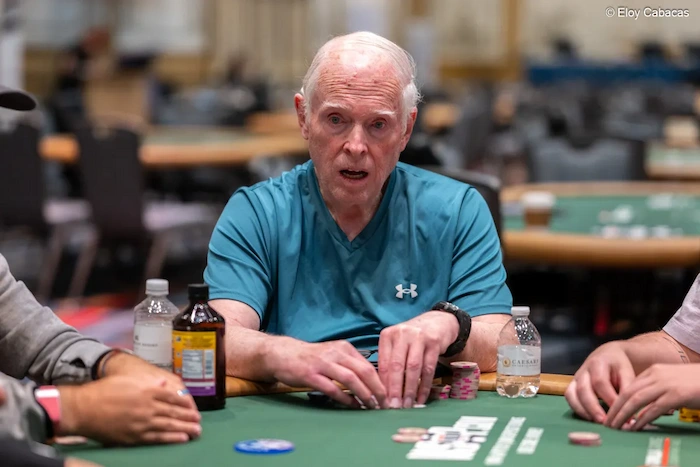
Why is Dan Harrington called “Action Dan”?
The nickname is self-chosen and deliberately ironic. His table presence is the opposite of action: frequent folds, strong holdings only, and no marginal spots unless the numbers clearly favour him.
Brian Rast, who shared his 2024 WSOP table and is a Poker Hall of Fame member alongside him, called the books seminal and noted that he won a lot of pots without showdown. The green Red Sox cap and quiet manner made him instantly recognisable on the circuit.
How Harrington plays: hand selection, position and M
Three principles run through his play, and all three are set out in his own books.
- Hand selection: a narrower opening range than most opponents, especially from early and middle position
- Position: far more hands from the button and cutoff, where information is greatest
- Stack-relative decisions: aggression dialled up or down by M, the stack measured in orbits of blinds and antes
The M-ratio was not just theory: his 2003 and 2004 runs show him adjusting aggression as his stack-to-blind ratio moved. Players who want the same final-table maths can use our free final table ICM calculator to model payout equity.
His style is exploitative rather than GTO: he reads opponents and adjusts instead of playing a fixed equilibrium strategy. The game has moved towards the latter since his peak, yet his 2024 run to 37th of 493 in the Champions Reunion showed the approach can hold up.
Personal Life
Harrington is among the most private figures in professional poker. He lives in Santa Monica, California, and there is no public record of a spouse or children.
Away from cards his routine is stock trading and travel. He told the World Poker Tour in 2024 that he spends up to 100 days a year on cruises and otherwise “basically does nothing”.
Latest News & Updates
“Quite frankly, only two or three percent of the people are going to make any serious money out of this and the rest are going to be contributing. Make it enjoyable for everyone.” – Dan Harrington, 2024 WSOP
That was his verdict after ending a ten-year WSOP drought in May 2024. He has not cashed since: The Hendon Mob shows nothing after the June 2024 Super Seniors.
The money list has moved on without him, and his career total sat 355th in October 2026.
Off the felt, Anchor Loans reported a record $5.4 billion in loan originations for 2025. For the circuit he watches from a distance, follow the latest poker tournament news and results.
FAQs
What is Dan Harrington's net worth?
Dan Harrington’s net worth is estimated at $8 million to $15 million, based on $6,653,820 in tracked live tournament earnings, a shareholding in Anchor Loans, royalties from seven poker books and a private stock portfolio. No financial disclosure has ever been published.
How old is Dan Harrington?
Dan Harrington was born on December 6, 1945. He is 80 years old. He won the WSOP Main Event at 49 and entered the Poker Hall of Fame at 64.
How many WSOP bracelets does Dan Harrington have?
Harrington has 2 WSOP bracelets, both won in 1995: the $2,500 No-Limit Hold’em event ($249,000) and the $10,000 Main Event ($1,000,000), where he beat Howard Goldfarb heads-up in a field of 273.
What are Dan Harrington's career earnings?
Harrington’s tracked live tournament earnings total $6,653,820 across 56 cashes, per The Hendon Mob, which placed him 355th on the all-time money list in October 2026. The figure covers gross payouts only, with no private games or online play.
Why is Dan Harrington called Action Dan?
The nickname is self-chosen and deliberately ironic. Harrington’s playing style is the opposite of action: he folds frequently, waits for strong holdings and avoids marginal spots. The name is a wink at a style defined by patience.
What is the M-ratio in poker?
The M-ratio divides a player’s chip stack by the cost of one full orbit of blinds and antes, measuring how urgently they need to act. Harrington and Bill Robertie codified it in Harrington on Hold’em Vol. II (2005) with a five-zone system from Green to Dead.
Is Dan Harrington still playing poker?
Harrington is semi-retired and has not announced a formal retirement. His last tracked cashes came at the 2024 WSOP: 37th in the $5,000 Champions Reunion and 346th in the $1,000 Super Seniors. No entries have been recorded since.
How many books has Dan Harrington written?
Harrington has published seven poker books, all co-written with Bill Robertie for Two Plus Two: three Harrington on Hold’em volumes (2004 to 2006), two Cash Games volumes (2008), Online Cash Games (2010) and Modern Tournament Poker (2014).
Is Dan Harrington in the Poker Hall of Fame?
Yes. Harrington was inducted into the Poker Hall of Fame in 2010, in the same class as Erik Seidel, fifteen years after his Main Event win.
What is Anchor Loans?
Anchor Loans is a private real estate lender co-founded by Harrington in 1998 with Jeff Lipton and Stephen Pollack. He was its first CEO and retired in 2010. The firm has funded $22 billion in loans and was bought by Pretium Partners in November 2021.
Did Dan Harrington play poker with Bill Gates?
Yes. During their college years Harrington played casual poker with Bill Gates and Paul Allen at Harvard. The story appears across biographical sources and his own interviews, though no dates, stakes or outcomes were ever recorded.
What was the Mayfair Club?
The Mayfair Club was an underground poker room in New York where Harrington became a regular in the mid-1980s alongside Erik Seidel, Howard Lederer, Jay Heimowitz, Mickey Appleman and Stu Ungar. It closed around 2000 during Mayor Giuliani’s enforcement push.
What is Dan Harrington's biggest tournament cash?
Harrington’s largest payout was $1,635,365 for winning the 2007 WPT Legends of Poker at the Bicycle Casino. His second largest was $1,500,000 for 4th place in the 2004 WSOP Main Event.
Does Dan Harrington have social media?
No. Harrington has no verified accounts on X (Twitter), Instagram, Facebook or any other social network, and has never had one.
Sources & Methodology
This player profile separates verifiable facts from estimates and public claims. We cannot accurately calculate any player’s net worth, but we aim to publish transparent, verifiable information.
How we handle ‘net worth’
Net worth estimates for poker players are never verified. Private game results, staking arrangements and undisclosed investments make any estimate approximate, so every figure is reported with its basis stated.
For Harrington, the largest unknown is the value of his Anchor Loans shareholding and the proceeds of the firm’s 2021 sale, neither of which has been disclosed.
How we report earnings
Live tournament earnings are taken from major poker databases such as The Hendon Mob. They are gross prize money, not profit after buy-ins, travel, staking splits or taxes.
Harrington’s record contains no online results and no cash game figures, so the tracked total is the only earnings figure we publish for him.
How we cover controversies
All sensitive topics are checked for accuracy. We rely on direct statements from named sources, avoid anonymous speculation and present both sides where allegations are disputed.
Harrington has no recorded controversies in nearly four decades of tracked play.
References
- The Hendon Mob – tracked live tournament cashes, all-time money list rank and results history
- WSOP.com – official player profile, bracelet record and event results
- World Poker Tour – May 2024 feature and quotes from the Champions Reunion
- Anchor Loans – January 2026 press release with lifetime loan volume and 2025 originations
- Wikipedia – biographical context, cross-checked where possible
- Wikipedia: Mayfair Club – historical context for the New York club years