

Sam Farha Net Worth 2026: Career Earnings, Age & 2003 Main Event
Sam “Sammy” Farha is the Lebanese-American cash game specialist who came within one hand of winning the 2003 WSOP Main Event. He holds three WSOP bracelets, all in Omaha variants, and $2,996,618 in tracked live tournament earnings across a career spanning more than three decades.
Most of Farha’s career income came from private high-stakes cash games where results are never publicly reported. This profile separates what is verifiable from what is estimated, with honest sourcing throughout.
Below you will find quick facts, a net worth breakdown, full tournament results, the story behind the 2003 Main Event, his cash game and television career, playing style, and current status.
Player Quick Facts
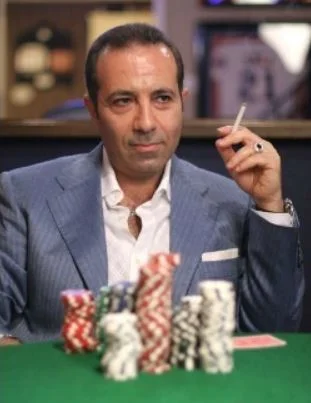
- Full Name: Ihsan 'Sam' Farha
- Nickname: Sammy, 'Mister Cool'
- Born: 23 February 1959 (age 67)
- Nationality: Lebanese-American
- Hometown: Beirut, Lebanon
- Residence: Houston, Texas
- Education: University of Kansas (B.A. Business Administration, 1981)
- Net Worth (2026 est): $10M to $15M (not publicly confirmed)
- Live Tournament Earnings: $2,996,618 (42 cashes)
- WSOP Bracelets: 3 (1996, 2006, 2010 - all Omaha variants)
- Primary Format(s): Pot-Limit Omaha; Omaha Hi-Lo; No-Limit Hold'em (cash)
- Known For: 2003 WSOP Main Event runner-up; 3 Omaha bracelets; High Stakes Poker regular; the unlit cigarette
- Current Sponsor: None
Sam Farha's Net Worth
Sam Farha’s net worth is not publicly confirmed. His tracked live tournament earnings total $2,996,618 across 42 cashes, but the majority of his 35-year career was spent in private high-stakes cash games where results are never recorded.
Several aggregator sites list Farha’s net worth at $100 million. That figure traces to a single celebrity biography entry published in 2017 with no sourcing, no interview, and no financial filing behind it.
The same source puts Farha’s wealth on par with players who hold ten or more WSOP bracelets, $38 million-plus in tracked tournament earnings, and major endorsement portfolios. The comparison alone raises serious doubts about the $100 million figure.
What is Sam Farha’s net worth?
Farha has never publicly confirmed a net worth figure in any located interview or financial disclosure. A realistic estimate, accounting for decades of high-stakes cash game play and business interests in Houston, likely places his net worth in the range of $10 million to $15 million.
That is a strong figure for a poker career but well below the $100 million repeated across aggregator sites. Every site citing that number is sourcing from the same single unverified entry.
Why Farha’s true net worth is unknowable
Five factors make any precise estimate speculative:
- Private cash games at Bobby's Room and Houston card rooms (no public reporting)
- Staking and backing arrangements (splits never disclosed)
- The Harrah's Casino spokesman deal (terms never made public)
- Business interests in Houston (unverified scope)
- Lifestyle expenses across 35+ years of high-stakes play
Without transparency on any of these, the gap between Farha’s tracked $2.99 million in tournament earnings and his actual wealth is impossible to close with public data alone.
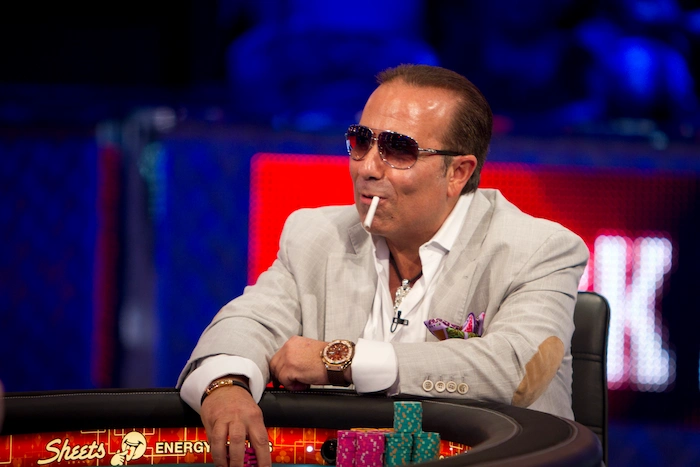
What we can verify: tracked live tournament earnings
His Hendon Mob profile lists $2,996,618 across 42 career cashes. The bulk of that total comes from three results: $1,300,000 for second at the 2003 WSOP Main Event and a combined $886,801 from his 2006 and 2010 bracelet wins.
Farha’s WSOP-specific earnings stand at $2,657,938 across 21 cashes. The tournament record tells only part of the story because his strongest format, Omaha cash games, is never publicly tracked.
These are gross payouts. After buy-ins, travel, staking splits, and taxes, the actual take-home figure would be significantly lower.
Sam Farha's Career Earnings & Tournament Results
Farha’s 42 tracked cashes span 1996 to 2026, but the distribution is top-heavy. His three largest paydays account for nearly three-quarters of the $2,996,618 lifetime total, and every one of those came at the WSOP.
The table below lists his ten biggest live cashes as recorded on his tracked live tournament results history.
| # | Year | Event | Finish | Prize |
|---|---|---|---|---|
| 1 | 2003 | WSOP $10K Main Event | 2nd / 839 | $1,300,000 |
| 2 | 2010 | WSOP $10K Omaha Hi-Lo Championship | 1st / 212 | $488,241 |
| 3 | 2006 | WSOP $5K Omaha Hi-Lo | 1st / 265 | $398,560 |
| 4 | 1996 | WSOP $2,500 Omaha Pot Limit | 1st / 78 | $145,000 |
| 5 | 2009 | NBC National Heads-Up Championship | 3rd | $125,000 |
| 6 | 2008 | WSOP $10K World Championship 8-Game | 6th | $85,728 |
| 7 | 2006 | NBC National Heads-Up Championship | 5th | $75,000 |
| 8 | 2002 | WSOP $1,500 Pot-Limit Omaha | 3rd | $48,140 |
| 9 | 2007 | WPT Five Star World Poker Classic | 83rd | $46,410 |
| 10 | 2012 | WSOP $10K PLO Championship | 11th | $43,076 |
How much has Sam Farha won in poker?
Farha’s verified live tournament earnings total $2,996,618 across 42 cashes. Of that, $2,657,938 came through the WSOP across 21 cashes and six final tables, as recorded on his official WSOP results page.
His remaining $338,680 in tracked earnings came from events outside the WSOP, including two deep runs at the NBC National Heads-Up Poker Championship in 2006 and 2009.
His 387th-place position on the all-time WSOP earnings list is misleading as a measure of his career. Farha played far fewer events than peers like record bracelet holder Phil Hellmuth, preferring cash games over the full summer tournament grind.
| Year | Event | Buy-in | Entrants | Prize | Heads-up Opponent |
|---|---|---|---|---|---|
| 1996 | Omaha Pot Limit | $2,500 | 78 | $145,000 | Brent Carter |
| 2006 | Omaha Hi-Lo 8 or Better | $5,000 | 265 | $398,560 | Phil Ivey |
| 2010 | $10K Omaha Hi-Lo Championship | $10,000 | 212 | $488,241 | James Dempsey |
How many WSOP bracelets does Sam Farha have?
Farha has won three WSOP bracelets, all in Omaha variants. His 2006 victory over high-stakes legend Phil Ivey in the $5,000 Omaha Hi-Lo event remains one of the most notable bracelet heads-up matches of that era.
His third and largest bracelet cash came in 2010 at the $10,000 Omaha Hi-Lo Championship. Farha outlasted 212 players and closed out a five-hour heads-up battle with James Dempsey to claim $488,241.
All three wins came in Omaha formats. His bracelet record is modest by count but concentrated in the formats where his peers considered him most dangerous.
Early Life & Immigration to America
Ihsan “Sam” Farha was born in 1959 in Beirut, Lebanon. His childhood was cut short by the Lebanese Civil War, which erupted in 1975 and displaced an estimated 900,000 people.
Farha left Lebanon in the mid-to-late 1970s as a teenager. Sources differ on whether he arrived in the United States in 1976 or 1977.
Where was Sam Farha born?
Farha was born in Beirut, the capital of Lebanon. He has spoken little publicly about his early years, but the civil war that began when he was 16 shaped the trajectory of his life and brought him to America.
He enrolled at the University of Kansas, where he earned a Bachelor of Arts in Business Administration in 1981. After graduating, he took a corporate job in Houston, Texas.
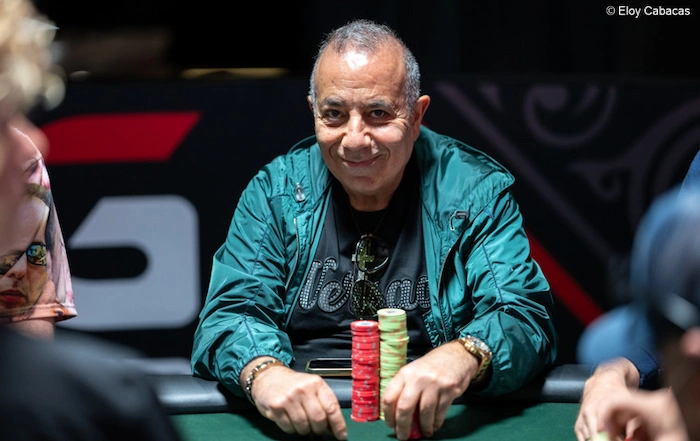
How did Sam Farha start playing poker?
The corporate path lasted less than a decade. In 1990, Farha took $2,000 to Las Vegas on what was meant to be a recreational trip.
He turned that $2,000 into $7,000 at the poker tables. The experience convinced him to leave his corporate career and pursue poker full-time.
Farha split his time between Houston and Las Vegas, making the high-stakes cash games at the Bellagio and other rooms his primary income source. His first tracked tournament cash did not come until 1996, six years after turning professional.
The 2003 WSOP Main Event
The 2003 WSOP Main Event drew a then-record 839 entrants at $10,000 each. First prize was $2,500,000 and the runner-up collected $1,300,000.
Farha entered as a respected cash game professional and one of the more experienced players in the field. On Day 2, he lost a huge pot to Barry Greenstein and stood up to leave the table.
Greenstein pointed out that Farha still had chips. He sat back down with roughly 5,400 and rebuilt to 54,000 within a few hands, a turnaround that kept his tournament alive.
The nine-handed final table featured amateur qualifier Chris Moneymaker, who had parlayed an $86 PokerStars satellite into his seat. The broadcast drew millions of viewers on ESPN.
1995 champion Dan Harrington finished third. Jason Lester was fourth and Tomer Benvenisti fifth.
Did Sam Farha turn down a deal with Moneymaker?
When play went heads-up, Moneymaker proposed splitting the remaining prize money evenly. Farha refused, insisting on more than half as the more experienced player.
No deal was reached. The widely quoted “Let’s play” line belongs to Moneymaker, not Farha.
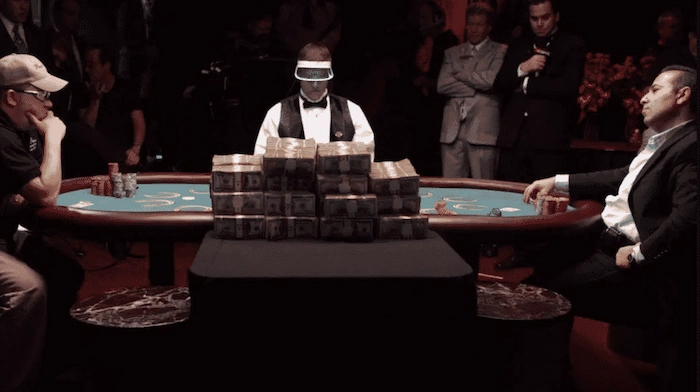
What was the famous bluff against Sam Farha?
Moneymaker pushed all-in on a spade-heavy board holding K♠ 7♥. Farha, with top pair of nines, faced a decision for his tournament life.
Farha folded. ESPN commentator Norman Chad called it the “bluff of the century,” and the hand was later voted the most memorable WSOP TV hand at the 2019 First Fifty Honors.
That fold became one of the most replayed moments in poker broadcast history. The dynamics behind it illustrate core principles of poker bluffing theory and technique.
What hand did Chris Moneymaker beat Sam Farha with?
The final hand saw Farha raise with J♥ 10♦ and Moneymaker call with 5♦ 4♠. The flop came J♠ 5♠ 4♥, giving Farha top pair and Moneymaker bottom two pair.
The turn 8♦ changed nothing. The river 5♥ gave Moneymaker fives full of fours, and the $86 satellite qualifier collected the $2,500,000 first prize.
The result triggered what became known as the “Moneymaker Effect”: a global surge in online and live poker participation.
Farha came closer than almost anyone to joining the full list of WSOP Main Event champions. The runner-up finish and the bluff proved to be his more enduring legacy.
Farha and Moneymaker met twice more in subsequent years. Farha won a PokerStars online rematch, while Moneymaker took the 2011 WSOP “Grudge Match.”
Sam Farha's Cash Game Career & High Stakes Poker
Farha’s reputation was built at the cash game tables. He played regularly in Bobby’s Room at the Bellagio, poker’s most famous high-stakes room, for what he described as “almost 14 years straight.”
The room attracted the highest-stakes regulars in the game, from Doyle Brunson and the late Chip Reese to later arrivals like high-roller regular Andrew Robl. Buy-ins routinely reached six and seven figures.
Was Sam Farha on High Stakes Poker?
Farha was a regular cast member on High Stakes Poker (GSN) during the show’s first four seasons. The programme brought Bobby’s Room-level action to television for the first time.
He appeared alongside seven-time bracelet winner Daniel Negreanu, Doyle Brunson, and other top professionals. Farha’s loose-aggressive style and table talk made him a fan favourite.
What was Sam Farha’s biggest televised cash game pot?
His most famous televised moment came in Season 4 against Patrik Antonius. The two contested a $998,800 pot and agreed to run the board four times, making it one of the biggest recorded cash game pots in history.
Farha also appeared on Poker After Dark (NBC), another staple of poker’s television golden age. The cash game and sit-and-go formats suited his style.
Away from the table, Farha served as a paid spokesman for Harrah’s Casino during the mid-2000s. He also had a cameo in the 2007 poker film Lucky You alongside Eric Bana and Robert Duvall.
Playing Style & Reputation
Farha is a feel player. He has never claimed to use game theory or solver-based approaches, relying instead on reads, aggression, and decades of table experience.
His strongest format has always been Omaha. All three of his WSOP bracelets came in Omaha variants, and Poker Hall of Famer Chip Reese reportedly considered him one of the best short-handed pot-limit Omaha players in the world.
The core concepts behind his approach overlap with modern pot-limit Omaha strategy fundamentals, though Farha developed his edge through live play rather than formal study.
At the table, Farha became known for the catchphrase “Raisy daisy,” delivered each time he put in a raise. The line became a fixture of his High Stakes Poker appearances and one of the more quoted phrases from the televised poker era.
In 2007, Farha co-authored Farha on Omaha with Storms Reback, published by Triumph Books. The book covers pot-limit Omaha strategy from the perspective of a lifelong cash game specialist.
Why does Sam Farha hold an unlit cigarette?
Farha does not smoke. Before a cash game session early in his career, a friend offered him a cigarette for good luck.
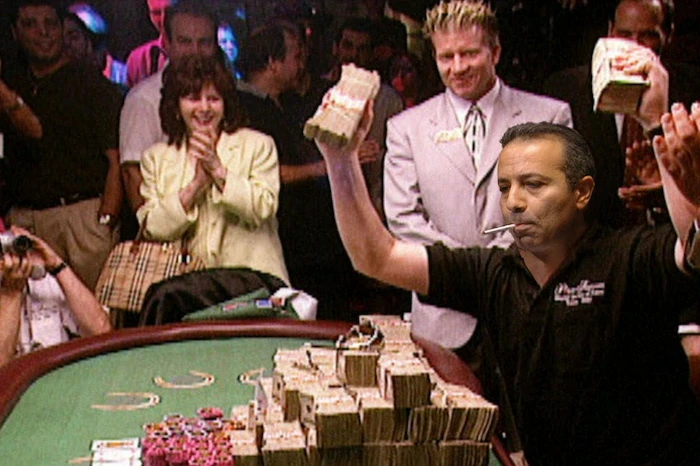
He never lit it but won that session. The unlit cigarette became a permanent superstition and his most recognisable visual trademark.
Controversies
Farha’s career spans more than three decades with relatively few public disputes. One incident, however, made headlines in the Houston poker community.
The Legends Poker Room altercation (December 2021)
On 9 December 2021, an altercation took place between Farha and a former dealer known as “AJ” at Legends Poker Room on Richmond Avenue in Houston.
AJ had previously been dismissed from Johnny Chan’s 88 Social poker room following a complaint by Farha. He confronted Farha at the card room and, according to accounts from those present, slapped him and shoved him into a wall.
Both men were ejected from the venue and police were called. No public court filing related to the incident has been located.
A GoFundMe campaign was started on behalf of AJ with a stated goal of $20,000. Farha was not banned from the room.
The incident is the only significant public controversy attached to Farha’s name across more than 30 years as a professional.
Personal Life
Farha has kept his personal life largely out of the public eye. He is based in Houston, Texas, where he has lived since arriving in the United States decades ago.
How old is Sam Farha?
Farha was born on 23 February 1959 and is 67 years old. He has been playing poker professionally since 1990.
He is married and has children, but their names have never been made public. Farha has not discussed his family in any located interview or media appearance.
Farha has no verified X (formerly Twitter) or Instagram account. His public presence is limited to tournament appearances and the occasional poker media mention.
Latest News & Updates
After a roughly seven-year absence from tracked tournaments between 2014 and 2020, Farha returned to the WSOP in 2021. He has cashed consistently each summer since, entering a mix of seniors, super seniors, and Omaha events.
His 2023 WSOP produced four cashes, the deepest being 16th in the $10,000 Omaha Hi-Lo Championship for $20,483. In 2024 he recorded five cashes, with 11th in the $1,500 Big O for $20,129 as the best result.
A reported 25th-place finish in the 2025 WSOP $1,000 Super Seniors added $14,461 to his lifetime total.
Is Sam Farha still playing poker?
Yes. Farha remains active at the WSOP and is still based in Houston. His return after a seven-year gap and consistent results since 2021 suggest he has no plans to step away.
Farha has not been inducted into the Poker Hall of Fame despite periodic fan discussion. Claims that he was inducted in 2010 are false: the actual 2010 inductees were Erik Seidel and Dan Harrington.
FAQs
What is Sam Farha's net worth?
Sam Farha’s net worth is not publicly confirmed. His tracked live tournament earnings total $2,996,618, but the majority of his career was spent in private cash games. A realistic estimate places his net worth at $10 million to $15 million.
How much has Sam Farha won in poker?
Farha has $2,996,618 in tracked live tournament earnings across 42 cashes, with $2,657,938 of that coming through the WSOP. His cash game winnings are not publicly recorded.
How many WSOP bracelets does Sam Farha have?
Farha has three WSOP bracelets, all won in Omaha variants: WSOP $2,500 Pot-Limit Omaha (1996), WSOP $5,000 Omaha Hi-Lo (2006), and WSOP $10,000 Omaha Hi-Lo Championship (2010).
Where was Sam Farha born?
Farha was born on 23 February 1959 in Beirut, Lebanon. He left the country during the Lebanese Civil War and arrived in the United States in the mid-to-late 1970s.
What was the famous bluff against Sam Farha?
In the 2003 WSOP Main Event heads-up, Moneymaker went all-in with K♠ 7♥ on a board showing multiple spades. Farha laid down top pair of nines in what Norman Chad called the “bluff of the century.”
What hand did Chris Moneymaker beat Sam Farha with?
The final hand saw Farha hold J♥ 10♦ against Moneymaker’s 5♦ 4♠. The board ran J♠ 5♠ 4♥ 8♦ 5♥, giving Moneymaker fives full of fours and the $2,500,000 first prize.
Did Sam Farha turn down a deal with Moneymaker?
Yes. Moneymaker proposed an even split of the remaining prize money. Farha demanded more than 50% and no deal was reached. The “Let’s play” quote belongs to Moneymaker, not Farha.
Why does Sam Farha hold an unlit cigarette?
Farha does not smoke. A friend offered him a cigarette for luck before a session early in his career. He never lit it, won, and kept the habit as a permanent superstition.
Is Sam Farha in the Poker Hall of Fame?
No. Farha has not been inducted and has never appeared on a verified official finalist ballot. Claims of a 2010 induction are false: the 2010 inductees were Erik Seidel and Dan Harrington. For the full history, see our Poker Hall of Fame inductees and history page.
Is Sam Farha still playing poker?
Yes. After a seven-year absence from tournaments, Farha returned to the WSOP in 2021 and has cashed each year since, including five cashes in 2024. He remains based in Houston.
Sources & Methodology
This profile separates verifiable facts from estimates and public claims. Poker careers involve significant untracked cash game action, so we aim to be transparent about what can and cannot be confirmed.
How we handle ‘net worth’
Net worth figures for poker players are almost never publicly confirmed. Where third-party estimates exist, we report the range and disclose the sourcing. We never present an unverified number as fact.
How we report earnings
Live tournament earnings are sourced from the Hendon Mob database. WSOP-specific records are cross-referenced with WSOP.com. Figures represent gross payouts before buy-ins, taxes, staking splits, and travel.
How we cover controversies
We report verified facts and attributed accounts. Where legal proceedings are involved, we note public filings or the absence of them. We do not editorialize or assign blame.
References
- The Hendon Mob – tracked live tournament cashes and results history
- WSOP.com – official series profile and event results
- Wikipedia – Sam Farha biography and career overview