

Phil Ivey Net Worth 2026: $100M to $115M, 11 Bracelets & Poker's G.O.A.T.
Phil Ivey’s net worth is estimated at $100 million to $115 million, built from tracked earnings and court records rather than the flat figure most sites repeat without a method.
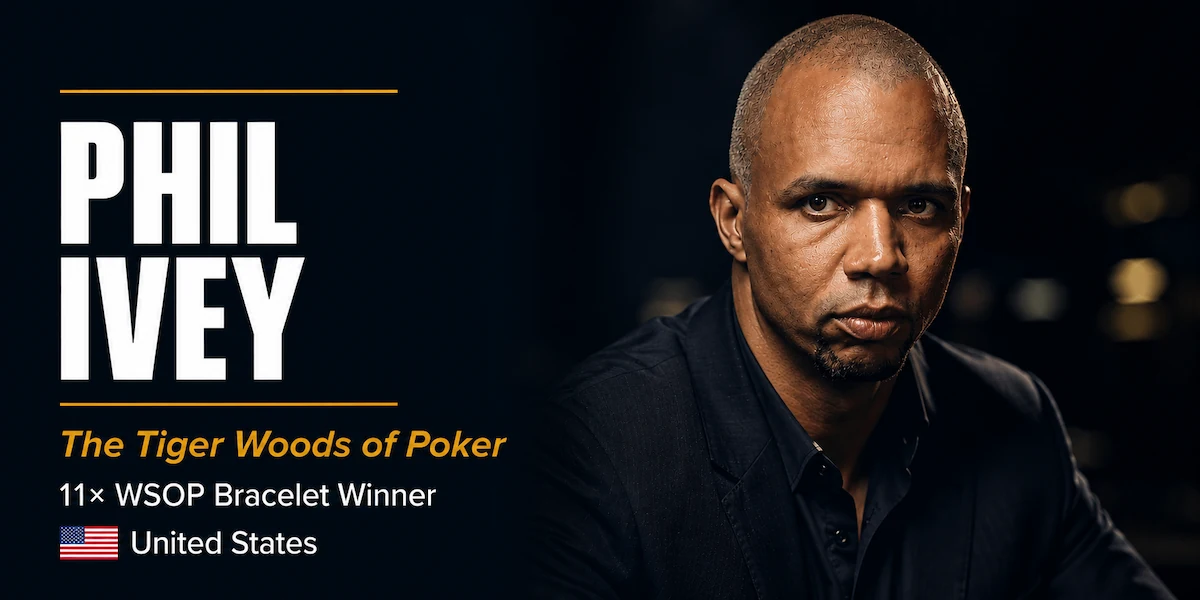
Born in Riverside, California in 1977, he holds 11 WSOP bracelets, all won in non-Hold’em events, and has accumulated $55,697,664 in tracked live tournament earnings across 266 cashes.
He was inducted into the Poker Hall of Fame in 2017 on his first year of eligibility and is widely regarded as one of the most influential poker figures of all time.
Every other site publishing an Ivey figure states a single number and discloses no method. We separate what’s verifiable from what’s estimated and show the working.
Player Quick Facts
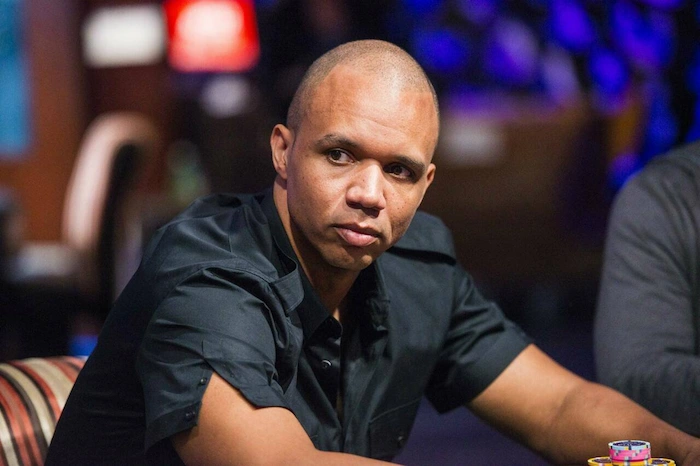
- Full Name: Phillip Dennis Ivey Jr.
- Nickname: The Tiger Woods of Poker, No Home Jerome
- Born: February 1, 1977 (age 49)
- Height: Approx. 6'0" / 183 cm
- Nationality: American
- Ethnicity: African American
- Hometown: Roselle, New Jersey (grew up in); born in Riverside, California
- Residence: Absecon, New Jersey
- Net Worth (Estimate): $100 million to $115 million
- Live Tournament Earnings: $55,697,664 (266 cashes, per Hendon Mob)
- Biggest Live Cash: $3,582,753 (2014 Aussie Millions Challenge)
- All-Time Money List: 11th (7th USA, 1st New Jersey)
- WSOP Bracelets: 11 (second all-time, all in non-Hold'em events)
- WPT Titles: 2 (11 final tables, $3,394,821 in WPT earnings)
- Primary Formats: Mixed games, all variants at the highest level
- Known For: All-time non-Hold'em WSOP bracelet record; Poker Hall of Fame (2017); edge-sorting controversy
- Current Sponsor: WPT Global (since November 2022)
Phil Ivey's Net Worth
Phil Ivey’s net worth is estimated at $100 million to $115 million. That range is built from what can actually be counted, then adjusted for what is known to have gone the other way.
The countable inflows are $55.7 million in tracked live cashes, $19.2 million in online cash game profit, and a Full Tilt salary that divorce filings put at roughly $920,000 a month.
Against those sit the edge-sorting losses, the Borgata settlement, a divorce that assigned him $15.1 million in gambling debts, and a failed cannabis investment.
How we arrive at $100M to $115M
Most sites publishing an Ivey figure state $100 million flat and disclose no method. Here is what actually sits behind our range:
- Tracked live tournament cashes: $55,697,664 gross across 266 recorded finishes, 11th on the all-time money list. Gross, not profit: buy-ins and backing splits come out of it.
- Tracked online cash game profit: $19.2 million across his PokerStars and Full Tilt accounts before Black Friday, plus $1,115,621 in online tournament cashes.
- Full Tilt salary and equity: divorce filings recorded roughly $920,000 a month from Tiltware LLC, a stream that ran until April 2011.
- Documented losses: £7.7 million withheld at Crockfords, a confidential Borgata settlement on $10.1 million, $15.1 million in divorce-assigned gambling debts, and a $1.9 million cannabis write-down.
- The unknowable part: decades of private cash games in Macau and Las Vegas with no public reporting, which is why we publish a range rather than a single figure.
The flat nine-figure estimate repeated across celebrity biography sites has not moved in years, despite an edge-sorting defeat at the UK Supreme Court, a confidential Borgata settlement, and a reported forced house sale in 2019.
We hold the low end where the countable inflows alone land, and cap the range because the private-game upside cannot be evidenced.
How much has Phil Ivey won in tournaments?
Ivey’s tracked live tournament earnings total $55,697,664 across 266 recorded cashes, per The Hendon Mob. That figure is real, publicly auditable, and updated after every tracked event.
But it only tells part of the story. Tournament cashes reflect gross payouts, not profit.
They don’t account for buy-ins that didn’t cash, travel expenses, or staking splits. A player who cashes for half a million in a quarter-million buy-in event while selling 50% of their action netted $125,000.
For context, $55.7M in tracked live cashes puts Ivey at 11th on poker’s all-time money list. His biggest recorded result is A$4,000,000 (US$3,582,753) for winning the 2014 Aussie Millions Challenge. He has 14 seven-figure scores and 40 outright victories across his career.
Where the untracked money sits
Ivey’s biggest sessions happened in games with no public reporting at all. Bobby’s Room at the Bellagio, Macau’s invitation-only tables and private home games are entirely off the record.
High-stakes players also play on shares. Ivey was part of “The Corporation,” a group of pros who pooled bankrolls against billionaire Andy Beal, and those splits are never disclosed.
Add the edge-sorting cases, which cost him an estimated $20 million or more with the Borgata terms sealed, and the true figure moves further out of reach with every year.
Biggest live cashes and notable results
Beyond tournament earnings, Ivey’s record includes five Triton Super High Roller Series titles at the most prestigious live series in poker, and $19.2 million in tracked online cash game profit across his PokerStars and Full Tilt Poker accounts during the pre-Black Friday era.
The ten biggest scores of his career
| Prize | Year | Event | Place |
|---|---|---|---|
| $3,582,753 | 2014 | Aussie Millions $250,000 Challenge | 1st |
| $2,058,948 | 2012 | Aussie Millions $250,000 Challenge | 1st |
| $1,795,000 | 2024 | Triton Montenegro Main Event | 4th |
| $1,710,854 | 2015 | Aussie Millions LK Boutique Challenge | 1st |
| $1,666,480 | 2018 | Triton Montenegro HK$1M Short Deck | 3rd |
| $1,596,100 | 2008 | WPT LA Poker Classic | 1st |
| $1,482,000 | 2025 | Triton Montenegro $150,000 NLH | 4th |
| $1,404,014 | 2009 | WSOP Main Event | 7th |
| $1,172,659 | 2022 | WSOP $100,000 High Roller | 2nd |
| $1,170,000 | 2022 | Triton Cyprus $75,000 Short Deck | 1st |
Three of the ten came at the Aussie Millions and four on the Triton circuit. Only two are WSOP results and neither was a win, which is the clearest evidence that Ivey’s money has come from invitational super high rollers rather than the events that made his name.
WPT earnings (tracked separately)
Ivey has been a fixture at the World Poker Tour since the poker boom. He has earned a verifiable total of $3,394,821 purely at the WPT with a Main Tour victory at the 2008 LA Poker Classic for $1,596,100.
He added a second WPT trophy in June 2021, winning the $25,000 WPT Heads-Up Championship online for $400,000.
Eleven final tables give Ivey one of the strongest WPT records of any player.
Online and cash game legacy
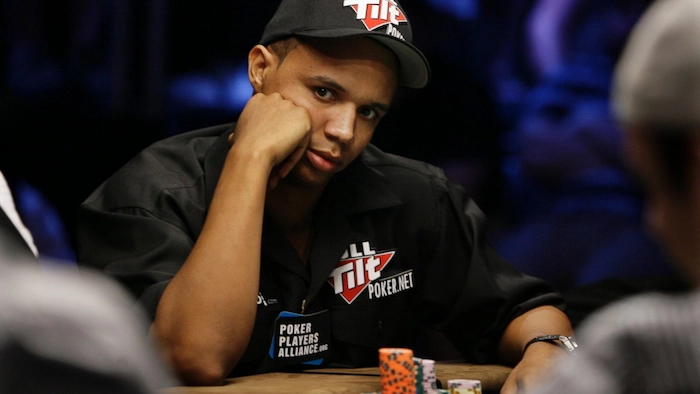
Phil Ivey was one of the greatest online cash game players in the pre-Black Friday era, racking up eight figures of tracked profit across his PokerStars and Full Tilt Poker accounts.
That total comes from third-party hand-history tracking and covers those two accounts only. Whether he played anonymously elsewhere is not public.
Ivey was a contracted Red Pro on Full Tilt Poker where he reportedly played rake-free on a seven-figure monthly salary.
He was also one of the most feared players at the highest-stakes tables online, regularly battling Phil Galfond, Patrik Antonius, and Tom “durrrr” Dwan at $500/$1,000 and above.
Phil Ivey's WSOP Bracelet Record
Phil Ivey has won 11 WSOP bracelets, placing him second on the all-time list behind Phil Hellmuth and his 17 bracelets. Every single one came in a non-Hold’em event, a record no other player holds.
His first bracelet arrived in 2000 at the age of 23. His most recent came 24 years later in 2024 at the age of 47, ending a decade-long drought.
Complete WSOP bracelet wins
| # | Year | Event | Prize |
|---|---|---|---|
| 1 | 2000 | $2,500 Pot Limit Omaha | $195,000 |
| 2 | 2002 | $2,500 7 Card Stud Hi/Lo | $118,440 |
| 3 | 2002 | $2,000 S.H.O.E. | $107,540 |
| 4 | 2002 | $1,500 7 Card Stud | $132,000 |
| 5 | 2005 | $5,000 Pot Limit Omaha | $635,603 |
| 6 | 2009 | $2,500 No-Limit 2-7 Draw Lowball | $96,367 |
| 7 | 2009 | $2,500 Omaha/Stud Hi-Lo | $220,538 |
| 8 | 2010 | $3,000 H.O.R.S.E. | $329,840 |
| 9 | 2013 | A$2,200 Mixed Event (WSOP Asia Pacific) | A$51,840 |
| 10 | 2014 | $1,500 Eight Game Mix | $167,332 |
| 11 | 2024 | $10,000 Limit 2-7 Triple Draw Championship | $347,440 |
The ten-year gap between bracelets 10 and 11 (2014 to 2024) is one of the longest droughts endured by any multiple bracelet winner who went on to win again.
Key WSOP records and milestones
- All 11 bracelets in non-Hold'em events: an all-time record. No other player has won more than seven bracelets without a Hold'em title.
- Youngest player to reach 10 bracelets: Ivey got there at 37, with the $1,500 Eight Game Mix in June 2014.
- Fastest to 10 bracelets: achieved in 14 years (2000 to 2014) versus Hellmuth's 17 years.
- WSOP consistency: around 50 final tables and more than 100 money finishes as of the 2026 Series, among the most of any player in WSOP history.
- Heads-up record in bracelet events: 11-5 (.688 win rate).
- Five mixed-game bracelets: S.H.O.E., H.O.R.S.E., Omaha/Stud Hi-Lo, Eight Game Mix and the WSOP APAC Mixed Event.
Notable WSOP Main Event runs
Ivey has never won the WSOP Main Event, but he has come close more than once. His best finish was 7th place in 2009 as part of the famous “November Nine,” earning $1,404,014.
He also finished 10th in 2003, losing as an 83% favourite to eventual champion Chris Moneymaker in a legendary cooler, one spot short of the final table.
Other notable Main Event finishes include 23rd in 2002 and 20th in 2005. At the 2025 WSOP, Ivey busted on Day 1d to Joseph Cheong, and he did not cash the 2026 Main Event.
Phil Ivey's Poker Career Timeline
Early life and background
Phil Ivey was born on February 1, 1977, in Riverside, California. His father worked in construction and his mother Pamela worked in insurance.
The family relocated to Roselle, New Jersey when Ivey was young.
It was his grandfather Leonard “Bud” Simmons who taught him five-card stud as a child, sparking the obsession that would define his life. Ivey later named his charitable foundation, the Budding Ivey Foundation, in his honour.
He attended Old Bridge High School in New Jersey and did not pursue higher education.
Learning the trade in Atlantic City
Before Ivey was dubbed “The Tiger Woods of Poker,” he was known as “No Home Jerome.” Still underage, Ivey used a fake ID bearing the name Jerome Graham to gain entry to the casinos and card rooms of Atlantic City.
He spent so much time at the tables that locals assumed he was homeless, hence the nickname. Those early sessions dealt out painful lessons, but they built the foundation for the player Ivey was to become.
Becoming a star in the poker boom
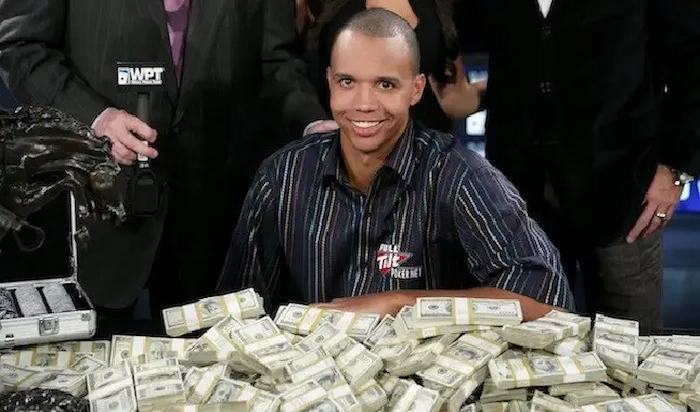
By the time Chris Moneymaker‘s 2003 WSOP Main Event victory changed poker forever, Ivey was already considered the best player in the world by many of his high-stakes peers. His maiden WSOP bracelet had come in 2000, followed by a stunning three-bracelet haul in 2002.
The full breakdown of all 11 bracelet wins is covered in the WSOP Bracelet Record section above.
Beyond the WSOP, Ivey was racking up results across every major live series.
He won the Aussie Millions $250,000 Challenge twice, in 2012 and 2014, the second of which remains his career-best live cash. Five Triton Super High Roller Series titles followed: Montenegro in 2018, two in Cyprus in 2022, and two more in London in 2023.
Those sit inside 40 outright tournament victories spanning every major format, from a $1,000 Atlantic City stud event in 1998 to seven-figure super high rollers.
The Full Tilt Poker era (2003 to 2011)
Ivey was one of the original members of Full Tilt Poker’s design team and among its most prominent ambassadors. As a contracted Red Pro, he was both a shareholder in the company and a fixture at its highest-stakes tables.
His divorce proceedings later revealed that he earned approximately $920,000 per month from Tiltware LLC, Full Tilt’s parent company. Combined with his tracked online cash game profits, the boom years were enormously profitable for Ivey.
During this period, fans would log onto Full Tilt hoping to watch Ivey battle the era’s top players at $500/$1,000 and above.
Black Friday and the Full Tilt scandal
On April 15, 2011, the U.S. Department of Justice shut down Full Tilt Poker, PokerStars, and Absolute Poker in what became known as Black Friday.
The DOJ labelled Full Tilt a “global Ponzi scheme,” alleging the site owed approximately $330 million to players but held only $60 million in liquid assets.
Ivey’s response set him apart from other Full Tilt stakeholders. He filed a $150 million lawsuit against Tiltware claiming breach of contract, and he boycotted the 2011 WSOP in solidarity with players who couldn’t access their funds.
However, it later emerged that Ivey had borrowed over $10 million from Full Tilt in 18 loans between June 2009 and April 2011, repaying only $4 to $5 million. He voluntarily withdrew the lawsuit on June 30, 2011. Full Tilt publicly called him “selfish.”
Ivey was never charged with any crime. PokerStars eventually acquired Full Tilt for $590 million and reimbursed all affected players. The full timeline of Ivey’s legal battles is covered in the Controversies section below.
Return to the tournament circuit (2021 to present)
After years focused on private cash games and the edge-sorting lawsuits, Ivey re-emerged as a regular tournament presence in the early 2020s.
It started in 2021 with the $25,000 WPT Heads-Up Championship for $400,000 and the SHRB Europe short deck opener in Cyprus. Two Triton titles followed in 2022, alongside a WSOP $100,000 High Roller runner-up finish for $1,172,659.
Two more Triton London titles came in 2023, including the $60,000 Turbo for $1,007,000, and a $1,795,000 runner-up run at Triton Montenegro in 2024.
In November 2022, he signed as World Poker Tour Ambassador, his first major sponsorship deal since Full Tilt. The partnership with WPT Global aligned one of poker’s most prestigious brands with its most celebrated player.
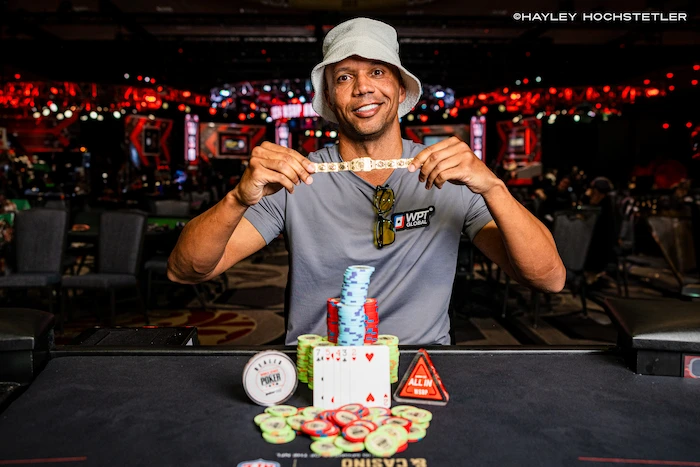
In June 2024 he won his 11th WSOP bracelet in the $10,000 Limit 2-7 Triple Draw Championship, ending a ten-year drought that many thought would be permanent.
At the 2025 WSOP he recorded six live cashes and three final tables: 5th in the $100,000 PLO for $715,614, 6th in the $25,000 PLO High Roller for $394,531, and 6th in the Limit H.O.R.S.E. High Roller for $149,643.
At the Onyx Super High Roller Series in Cyprus (August 2025) he finished 3rd in the $100,000 NLH Invitational for $1,080,000, adding $215,000 in the PLO Invitational and $80,000 in the Second Chance.
The following month at Triton Jeju he finished runner-up in the $30,000 PLO/NLH Mix, beaten heads-up by four-time Triton champion Nacho Barbero.
In a late-2024 interview, Ivey acknowledged coming into big events “quite cold” but said he still loves playing and treats it as “more of a fun thing” now.
The 2026 WSOP and the Poker Players Championship
Ivey went 38 events deep into the 2026 WSOP without a cash, then produced the strongest mixed-game run of his career in a fortnight.
He finished 3rd in the $50,000 Poker Players Championship for $600,698 on 25 June 2026, the event most players rate the hardest bracelet to win. It was his fifth PPC final table and he still has no title.
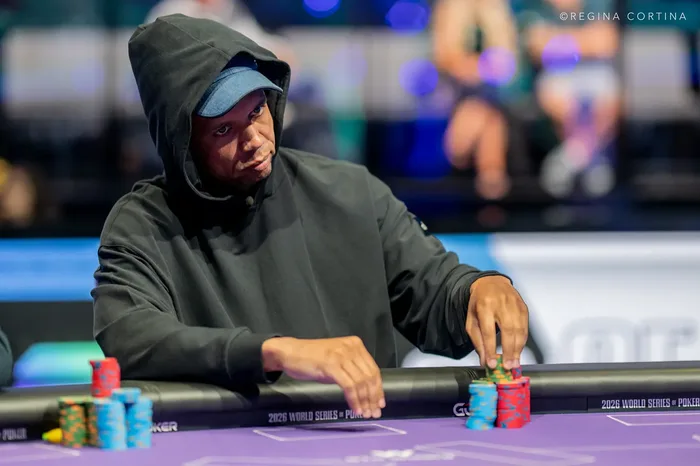
He was eliminated during a round of 2-7 Triple Draw, and Benny Glaser took the title and a ninth bracelet.
Twelve days earlier he had reached the final table of the $250,000 No-Limit Hold’em Super High Roller, busting 8th for $553,270 when his pocket jacks ran into Bryn Kenney’s queens.
His other 2026 cashes were 9th in the $10,000 Limit Hold’em Championship for $30,292 and 22nd in the Stud Hi-Lo Championship for $20,320. The four results added $1,204,580 to his lifetime total and left bracelet number 12 outstanding.
Playing Style and Reputation
Phil Ivey’s playing style is built on controlled aggression fused with elite hand-reading ability. Players who have shared a table with him regularly describe the experience as uniquely intense. His silence, combined with a fearless willingness to put opponents to the test, creates pressure that few players can handle.
What separates Ivey from other elite players is the breadth of his game. Most top pros specialise in one or two formats. Ivey competes at the highest level across all of them.
He is widely considered the best live reader the game has produced. Tom Dwan put it plainly: “In his prime, he was the best at live reads I’ve ever seen.”
That edge comes from physical behaviour, and it does not show up in a solver output. Neither does the “Ivey stare,” which opponents describe as intimidating before a hand is even dealt.
Where specialists dominate one game, Ivey plays Hold’em, Omaha, Stud, Razz, 2-7 Triple Draw, H.O.R.S.E. and every mixed-game variant at the top level. The 11 non-Hold’em bracelets are the proof.
Phil Galfond once studied thousands of his hand histories looking for exploitable patterns and found the game “remarkably solid.” Ivey adjusts to opponents in real time rather than running a fixed strategy.
Ivey has spoken about his approach in interviews over the years, and one line captures it better than any analysis.
That philosophy is reflected in his bracelet record, where the 11 wins span ten different non-Hold’em events, with only Pot Limit Omaha appearing twice.
Can Ivey still compete in the solver era?
A common question in modern poker is whether Ivey’s intuitive style can compete against solver-trained players. His 2024 bracelet win and strong 2025 WSOP campaign suggest the answer is yes.
Ivey has acknowledged that the game has evolved but maintains that live reads and psychological edges still matter at the highest stakes, where deviating from GTO to exploit specific opponents is where the real profit lies.
In 2019, Ivey launched a MasterClass course consisting of 12 lessons on poker strategy, covering topics from hand reading to managing tilt. The course gives a rare window into how he thinks about the game.
Famous Hands & Iconic Moments
Phil Ivey’s career is defined by moments that transcend tournament results. These are the hands and sessions that built his reputation as the most feared player at the table, and the ones that poker fans still debate years later.
- The Paul Jackson Bluff (2005 Monte Carlo Millions): Heads-up for $1 million, Ivey held Q-8 suited against Jackson's 5-6 offsuit. Neither player connected with the flop. After Jackson bluffed $150,000, Ivey asked "How much you got left?" and shoved all-in with queen-high. Jackson folded. Ivey later revealed in his MasterClass that he had spotted a physical tell.
- The Andy Beal Sessions (February 2006): Playing for "The Corporation" (a group of pros who pooled bankrolls), Ivey sat heads-up against billionaire Andy Beal at $50,000/$100,000 stakes at the Wynn and won $16.6 million in three days. The Corporation had been down $10 million before Ivey stepped in. The story is chronicled in the book The Professor, the Banker, and the Suicide King.
- Phil Ivey vs Phil Hellmuth (High Stakes Poker): Ivey flopped a straight holding 6-8 suited while Hellmuth flopped top set. After calculated betting, Hellmuth shoved all-in and Ivey snap-called. Hellmuth's reaction became one of the most replayed moments in HSP history.
- Tom Dwan's River Bluff (High Stakes Poker Season 6): Dwan moved all-in on the river with a missed straight draw and Ivey folded a full house. This became one of the most analysed hands in televised poker. It remains the most replayed fold of Ivey's televised career.
- 2009 WSOP Main Event Semi-Bluff: Deep in the Main Event, Ivey shoved all-in with J-5 of hearts on a queen-high flop, got called, and rivered the flush to surge past 5 million chips. He went on to finish 7th as part of the famous November Nine.
Ivey has also appeared on High Stakes Poker (Seasons 3 and 6), Poker After Dark (winning a $120,000 winner-take-all tournament in January 2007), and numerous other televised productions.
His table presence alone draws viewership, which is why his October 2021 Hustler Casino Live appearance tripled the channel’s YouTube subscribers despite Ivey losing over $140,000 across two sessions.
He was also at the table for poker’s most debated hand, when Robbi Jade Lew called $109K with J4 against Garrett Adelstein in September 2022.
High-Stakes Cash Games
While Ivey’s tournament record speaks for itself, his reputation was built at the highest-stakes cash game tables in the world. These are the games where the biggest money changes hands, and where Ivey has spent the majority of his career.
Three settings account for almost all of it: the Bellagio mixed game, the invitation-only tables of Macau, and the televised streams that turned private action into a spectator sport.
Bobby’s Room and the Bellagio
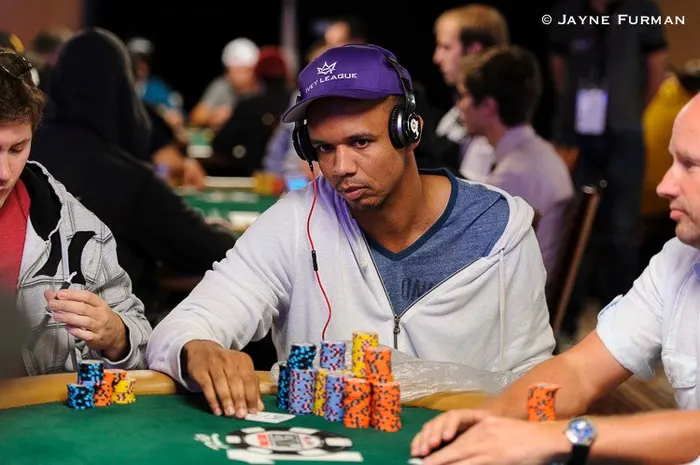
For decades, the $4,000/$8,000 mixed game at the Bellagio (originally known as Bobby’s Room, now Legends Room) has been the most prestigious regular cash game in Las Vegas. Ivey has been a fixture in this lineup for most of his career, competing against the best mixed-game players in the world.
The Aria casino honoured Ivey by naming its high-stakes poker room “Ivey’s Room” in 2010. The room was renamed “Table 1” in 2019 during Ivey’s legal disputes with MGM Resorts, but the original naming reflected his standing as the most respected cash game player of his generation.
Macau and the Asian private game circuit
In the early 2010s, Macau hosted the richest private poker games in history. Tables regularly held $20 million or more, with stakes of $4,000/$8,000 and above. The lineups mixed wealthy Asian business figures like Paul Phua and Richard Yong with a small number of western pros.
Ivey was one of the few players with a permanent seat at these tables. None of these results were publicly tracked, which is the single biggest reason his true career earnings are impossible to calculate.
Televised cash game appearances
Ivey’s televised cash game appearances include sessions on High Stakes Poker, Poker After Dark, and the Hustler Casino Live stream. His presence at any cash game table elevates the profile of the entire production, a dynamic few other players in poker history can claim.
Controversies & Legal Battles
Phil Ivey’s career has involved several high-profile legal disputes, most notably the edge-sorting cases against two casinos.
His role in the Full Tilt Poker scandal is covered in the Career Timeline above. This section focuses on the casino litigation in detail.
Borgata edge-sorting case (2014 to 2020)
In April 2012, Ivey and professional gambler Cheung Yin “Kelly” Sun visited the Borgata Hotel Casino in Atlantic City for a series of Punto Banco (mini-baccarat) sessions.
Sun identified tiny manufacturing asymmetries on the backs of the playing cards and requested that the dealer rotate certain cards 180 degrees, supposedly for superstitious reasons.
Over four sessions, Ivey won approximately $9.6 million at baccarat plus $500,000 at craps, totalling $10.1 million in payouts. Borgata paid in full at the time and even provided him with $250,000 in complimentary services during his stay.
When the Crockfords case became public (see below), Borgata sued Ivey in 2014. In October 2016, U.S. District Judge Noel Hillman ruled that Ivey did not commit fraud but had breached his contract by violating the New Jersey Casino Control Act’s prohibition on marking cards. RICO charges were dismissed.
In June 2019, U.S. Marshals seized $133,398 of Ivey’s WSOP winnings via a writ of execution. Daniel “Jungleman” Cates and Ilya Trincher both filed claims to portions of the seized funds based on staking agreements.
The case was settled confidentially in July 2020. Neither party disclosed the terms. Backers filing claims against seized funds is common in poker debts that ended up in court, where the money at stake rarely belongs to one person alone.
Crockfords edge-sorting case and the UK Supreme Court (2012 to 2017)
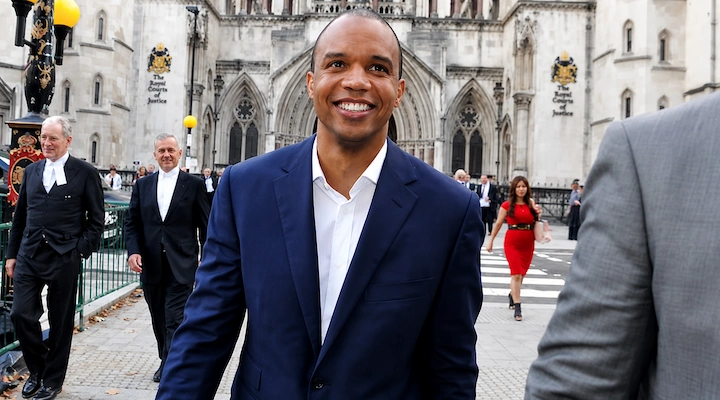
The Crockfords case predated the Borgata lawsuit and had far wider legal consequences. In August 2012, Ivey and Sun used the same edge-sorting technique at Crockfords Club in London’s Mayfair, winning £7.7 million (approximately $12.4 million) at Punto Banco.
Crockfords refused to pay out, and Ivey sued the casino for his winnings. The case reached the UK Supreme Court, which delivered a unanimous ruling against Ivey in October 2017.
The ruling went far beyond poker. The Supreme Court used the case to redefine the legal test for dishonesty across English criminal law, replacing the two-part test from R v Ghosh (1982) with a purely objective standard now known as the Ivey test.
Under this new standard, a person’s conduct is dishonest if ordinary people would consider it dishonest, regardless of whether the defendant personally believed their actions were honest.
This became one of the most significant criminal law decisions in a generation, affecting how fraud, theft, and other dishonesty offences are prosecuted throughout England and Wales. ESPN later covered the story in a 46-minute “A Queen of Sorts” episode of its 30 for 30 podcast series.
Paul Phua bail posting (2014)
In July 2014, Ivey and fellow high roller Andrew Robl each posted roughly a million dollars in bail for Paul Phua.
The Malaysian businessman had been arrested by the FBI at Caesars Palace and charged with running an illegal sports betting ring during the 2014 World Cup.
Ivey was not accused of any involvement in the betting operation. The case was dismissed in June 2015 after a federal judge found the FBI had breached Phua’s Fourth Amendment rights.
Other legal matters
Ivey’s financial difficulties following the edge-sorting cases were widely reported. In 2019, reports emerged that he had been forced to sell his Las Vegas home, raising questions about the impact of the legal battles on his finances.
He also invested seven figures in a Las Vegas cannabis dispensary (NuVeda LLC) that later filed for bankruptcy, a situation covered in more detail in the Business Ventures section below.
Personal Life & Relationships
Phil Ivey is one of the most private high-profile players in poker. He rarely discusses his personal life publicly and keeps his off-table activities firmly out of the spotlight. What’s verifiable is limited, but here’s what the public record shows.
Marriage and divorce
Ivey married Luciaetta Ivey (née Luciaetta Richard) in May 2002. The couple separated in December 2009, and the divorce became one of the most financially revealing proceedings in poker history.
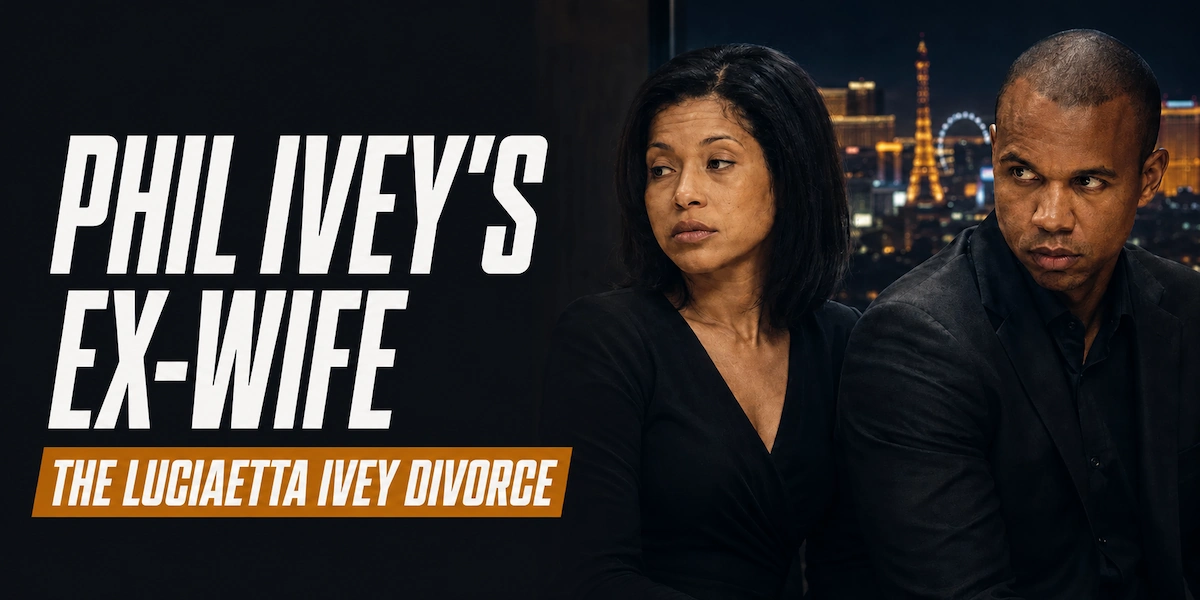
Court documents revealed a combined 2008 household income of $8 million, still the most detailed public look at a top pro’s finances.
- To Luciaetta: a purse collection valued above $1.2 million, jewellery worth over a million, and $180,000 a month in alimony tied to Ivey's Tiltware income.
- To Phil: roughly $15.1 million in gambling debts and over $170,000 in credit card debt.
Luciaetta later challenged the settlement after discovering that Phil had contributed $5,000 to divorce judge Bill Gonzalez’s re-election campaign. The Nevada Supreme Court ruled that this was not grounds for disqualification, and the original terms stood.
The campaign contribution scandal and Luciaetta’s legal fight are covered in our Luciaetta Ivey divorce story.
Is Phil Ivey married in 2026?
Ivey has not remarried and has made no public statement about his relationship status since the divorce.
Celebrity dating sites have linked him with Nellie Garcia, an IFBB bikini competitor and CrossFit athlete, since around 2013. Neither party has confirmed it.
Most authoritative sources indicate Ivey has no children, though this is also unconfirmed.
Social media and public presence
Ivey maintains a low public profile compared to most modern poker personalities. His Instagram account (@philivey) runs to six figures of followers and primarily carries WPT Global and ClubWPT Gold promotional content. His Twitter/X account is mostly inactive.
He does not stream, does not run a YouTube channel, and rarely gives interviews. When he does speak publicly, it tends to be at WPT events or in brief post-tournament spots. This deliberate privacy is part of why so many basic facts about his life remain unverified.
Business Ventures & Sponsorships
Ivey’s career extends well beyond the poker table. He has been involved in several business ventures across poker, technology, cannabis, and philanthropy.
- Full Tilt Poker (2003 to 2011): Original design team member, contracted Red Pro, and shareholder in Tiltware LLC. Earned approximately $920,000 per month before Black Friday. Covered in detail in the Career Timeline above.
- Ivey Poker (2012): Free-to-play poker app launched with Ivey's branding. Now defunct.
- Ivey League (2014 to 2017): Poker training site offering video courses from professional coaches across three subscription tiers. Acquired from Leggo Poker in February 2013. The site is no longer active.
- MasterClass (2019): A 12-lesson poker strategy course covering hand reading, bet sizing, and tilt management. Still available on the MasterClass platform.
- NuVeda LLC (2014 to present): Ivey provided a $1.9 million line of credit to this Las Vegas cannabis dispensary in exchange for a 3% equity stake. Co-owners allegedly removed his equity without consent and filed false documentation. Ivey sued in June 2020. NuVeda filed for Chapter 11 bankruptcy in April 2022 claiming less than $50,000 in assets. The lawsuit remains unresolved.
- WPT Global Ambassador (2022 to present): Signed in November 2022 to represent the World Poker Tour and its online platform. His first major sponsorship since Full Tilt.
- Budding Ivey Foundation: Non-profit providing educational and financial assistance to underprivileged children, named after Ivey's grandfather Leonard "Bud" Simmons. Raised $260,000 at a 2008 charity tournament and partnered with the Make-A-Wish Foundation in 2010.
Is Phil Ivey the Greatest Poker Player of All Time?
“Phil Ivey GOAT” is one of the most debated topics in poker. Seven-time bracelet winner Daniel Negreanu has said publicly: “When Chip Reese passed, that distinction of GOAT was passed down to Phil Ivey. Dominated online, tournaments, cash games, mixed games: all of it.”
Not everyone agrees. Phil Hellmuth holds 17 bracelets to Ivey’s 11 and has his own case for the title.
The counter is what those bracelets were won in. Fifteen of Hellmuth’s came in NL Hold’em; Ivey’s 11 span ten different non-Hold’em events. An Allen Kessler poll of 6,941 respondents had 88.2% naming Ivey the better No-Limit player.
Negreanu is the other name in the conversation and the closest on paper, with both men in the mid-$50M range in tracked live earnings. Ivey leads 11 bracelets to seven and is rated well clear in cash games and online.
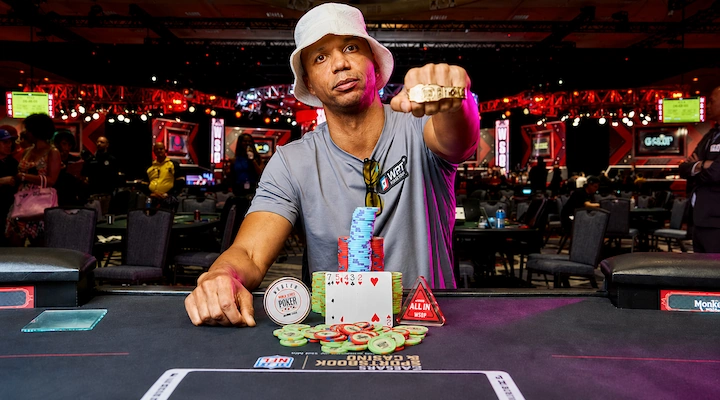
Ask professionals to name the best all-round player and Ivey is the most common answer. Live tournaments, online cash, mixed games, private high-stakes and super high rollers across three decades is a spread nobody else has.
Gus Hansen offered what might be the most succinct assessment: “The object of poker is to keep your money away from Phil Ivey for as long as possible.”
Whether Ivey is the definitive GOAT depends on how you weigh bracelet count against format versatility, but among the players who have sat across from him, the debate is largely settled.
Latest News & Updates
Phil Ivey remains active at the highest level of tournament and cash game poker, still entering the largest buy-ins on the schedule in his late forties.
His 2026 was a slow burn. Nothing landed until Event #38, and then four cashes worth $1,204,580 arrived inside a fortnight, headed by that third place in the Poker Players Championship.
Before Las Vegas came WSOP Paradise in December 2025, where he took 9th in the $100,000 Triton PLO Main Event for $257,000, then a 140th-place finish in the WPT World Championship at the Wynn.
The 12th bracelet is the one number on his record that has not moved since 2024. His 2025 and 2026 Series produced ten live cashes between them and no title.
Ivey has cashed in every Triton Super High Roller Series he has entered since 2022, the tour where five of his career titles were won.
For broader coverage, check our latest poker news. Ivey sits alongside the rest of poker’s biggest names in our directory of poker player profiles.
FAQs
What is Phil Ivey's net worth?
Phil Ivey’s net worth is estimated at $100 million to $115 million. The range is built from $55.7 million in tracked live cashes, $19.2 million in online cash game profit, and his Full Tilt salary, offset by the edge-sorting losses, the Borgata settlement and $15.1 million in divorce-assigned gambling debts.
How old is Phil Ivey?
Phil Ivey was born on February 1, 1977. He is currently 49 years old.
What are Phil Ivey's career earnings?
Phil Ivey’s tracked live tournament earnings total $55,697,664 across 266 recorded cashes as of August 2026. His total career earnings including online and private games are unknown.
How many WSOP bracelets does Phil Ivey have?
Phil Ivey has won 11 WSOP bracelets, placing him second on the all-time list behind Phil Hellmuth’s 17. All 11 came in non-Hold’em events, a record no other player holds.
Has Phil Ivey won the WSOP Main Event?
No. Ivey’s best Main Event finish was 7th place in 2009 as part of the November Nine, earning $1,404,014. He also finished 10th in 2003, eliminated by eventual champion Chris Moneymaker.
Is Phil Ivey still playing poker?
Yes. At the 2026 WSOP he finished 3rd in the $50,000 Poker Players Championship for $600,698 and 8th in the $250,000 Super High Roller for $553,270. He remains active as WPT Global Ambassador.
Did Phil Ivey cheat at baccarat?
Courts ruled that Ivey’s edge-sorting technique was not fraud but constituted a breach of the rules of the game. The UK Supreme Court ruled unanimously against him in 2017, and the Borgata case was settled confidentially in 2020. See the Controversies section above for full details.
What is Phil Ivey's IQ?
There is no verified public IQ score for Phil Ivey. Commentators frequently reference his high “poker IQ,” but this refers to his ability to read opponents and process game theory in real time, not a formalised test result.
How much has Phil Ivey won at the WPT?
Phil Ivey’s verified WPT earnings total $3,394,821 across 11 final tables, with a Main Tour victory at the 2008 LA Poker Classic for $1,596,100 and the 2021 WPT Heads-Up Championship for $400,000.
Why is Phil Ivey called No Home Jerome?
As a teenager, Ivey used a fake ID bearing the name Jerome Graham to play in Atlantic City casinos while underage. He spent so much time at the tables that locals assumed he had no home, giving him the nickname “No Home Jerome.”
Is Phil Ivey married?
Ivey married Luciaetta Ivey in May 2002 and divorced in December 2009. His current relationship status is not publicly confirmed.
Is Phil Ivey in the Poker Hall of Fame?
Yes. Phil Ivey was inducted into the Poker Hall of Fame on July 21, 2017, on the first ballot containing his name.
How tall is Phil Ivey?
Ivey is approximately 6’0″ (183 cm) based on visual evidence from televised poker appearances.
Sources & Methodology
This profile separates verifiable facts from estimates and public claims. Poker careers involve significant untracked cash game action, so we aim to be transparent about what can and cannot be confirmed.
How we build a net worth range
We start from countable inflows: tracked tournament cashes, tracked online results, and any salary or settlement figure entered into a public court record.
We then subtract documented losses of the same kind, and widen the range to cover untracked private cash game action rather than pretending it can be measured. We publish a range with its basis shown, never a single unsourced number.
How we report earnings
“Live tournament earnings” refer to tracked cash results reported by major poker databases. Cash totals are not the same as profit. “Online earnings” and “private cash game results” are generally not reliably public, so we avoid presenting them as confirmed totals.
How we cover controversies
We link to our own reporting when controversies are discussed and clearly label what is alleged, denied, or unclear. Where possible, we rely on direct statements and named sources rather than anonymous speculation.
References
- The Hendon Mob – tracked live tournament cashes and results history
- WSOP.com – official series profile and event results
- World Poker Tour – WPT titles, final tables and tracked WPT earnings
- Instagram (@philivey) – sponsorship activity and public appearances
- Wikipedia – basic biographical context (cross-checked where possible)