

Poker Hall of Fame: Members, Criteria & Who's Missing
The Poker Hall of Fame is the highest individual honour in professional poker. Founded in 1979 by Benny Binion at the Horseshoe Casino in Las Vegas, it recognises the players and industry figures who shaped the game at its highest level.
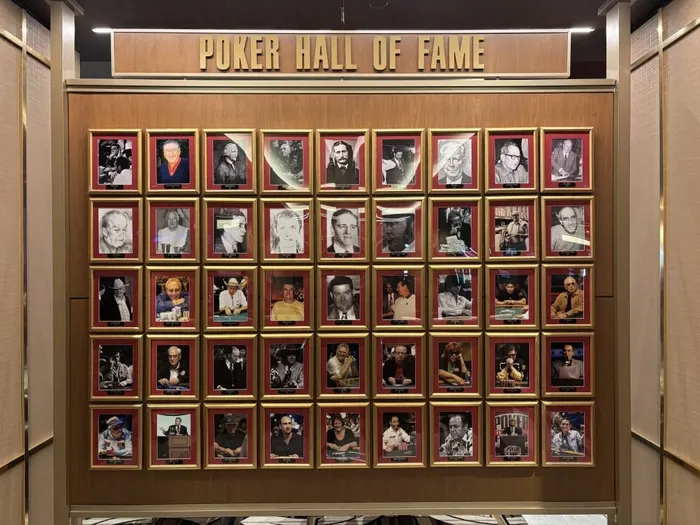
As of August 2026, 66 people have been inducted, including many of the most influential people in poker history. This page profiles the most notable members, explains how they are selected, and covers the names that many in the poker community believe should already be in. For the full directory, browse our poker player profiles with tracked earnings.
How Are Members Selected?
Eligibility criteria
The WSOP’s official Hall of Fame page lists five requirements for player nominations:
- Must have played poker against acknowledged top competition
- Must have played for high stakes
- Must have played consistently well and gained the respect of peers
- Must have stood the test of time
- Must be at least 40 years old at the time of nomination
Non-players can qualify if they have made a lasting positive contribution to the game. Past non-player inductees include tournament directors, television producers, and the Binion family members who created the WSOP itself.
The Chip Reese Rule
The age requirement did not exist until 2011. In 2009, public nominations opened for the first time and fans voted 23-year-old Tom Dwan onto the shortlist. The backlash led to a new minimum age of 40, informally named after cash game legend Chip Reese.
That rule temporarily disqualified regular nominees like Phil Ivey and Daniel Negreanu, both of whom were eventually inducted once they reached the threshold.
How the vote changed in 2026
For years the WSOP published a shortlist of 10 nominees and members distributed 10 points each, a format that produced a single inductee almost every year. The backlog of qualified candidates grew with it.
From 2026 the shortlist was cut to eight finalists and each living member casts up to four votes. Any finalist named on two thirds of the ballots goes in, which leaves room for as many as six in a single year. The first vote under the new rules still produced one.
That change followed sustained pressure. As late as May 2025, WSOP Executive Director Ty Stewart said in a Reddit AMA that the WSOP would keep it at one inductee per year unless the Hall’s members felt worthy candidates were being unfairly excluded. Thirteen months later the format was rewritten.
The Modern Era (2010–2026)
The last 16 years of inductions reflect poker’s global expansion, the rise of high-roller events, and the game’s shift toward mixed-game specialists and online crossover players.
Jason Koon (inducted 2026)
The first player voted in under the Hall’s rewritten rules, and the only name in the 2026 class. Jason Koon went in during his first year of eligibility, having turned 40 in August 2025.
Lifetime earnings: $77,032,156 (274 cashes), third on the all-time money list and the highest total of any Hall of Fame member. He holds 2 WSOP bracelets and a record 12 Triton titles. Our report covers how the 2026 vote played out.
▶ Read Jason Koon’s Full Profile
Michael Mizrachi (inducted 2025)
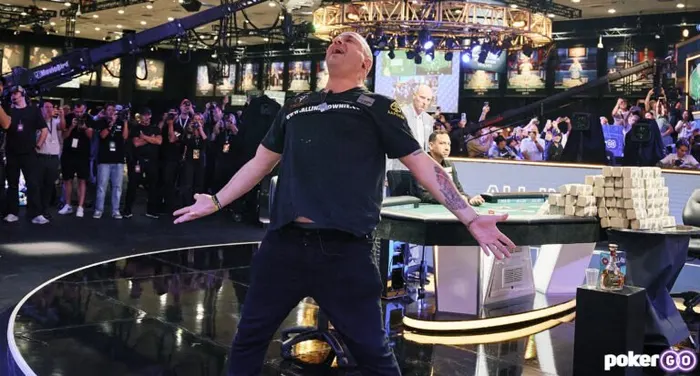
The most dramatic induction in the Hall’s history. Michael “The Grinder” Mizrachi won his record fourth Poker Players Championship and then the 2025 WSOP Main Event for $10,000,000 in the same summer. Living Hall of Fame members held an emergency vote and inducted him on stage minutes after his Main Event victory.
Lifetime earnings: $30,748,012 (259 cashes), 38th on the all-time money list. He holds 9 WSOP bracelets, the ninth coming in the 2026 $10,000 Pot-Limit Omaha Championship, and is the only player to have won both the PPC and the Main Event.
▶ Read Michael Mizrachi’s Full Profile
Nick Schulman (inducted 2025)
The standard 2025 inductee, voted in during his first year of eligibility after turning 40 in September 2024. Nick Schulman holds 8 WSOP bracelets including three in the $10,000 No-Limit 2-7 Single Draw Championship, making him the most decorated player in that discipline’s history. He won the eighth at the 2026 WSOP, his first since induction.
Lifetime earnings: $25,189,264 (279 cashes). Schulman replaced Gabe Kaplan in the High Stakes Poker commentary booth during Season 10 in 2023 and is one of PokerGO’s most recognisable voices. He also won the 2005 WPT World Poker Finals for $2,167,500 as the youngest WPT champion at the time.
Patrik Antonius (inducted 2024)
Finnish poker legend and one of the most feared cash game players in the world. Patrik Antonius made his name in the nosebleed online games of the Full Tilt era and has been a fixture in the highest-stakes live games for two decades.
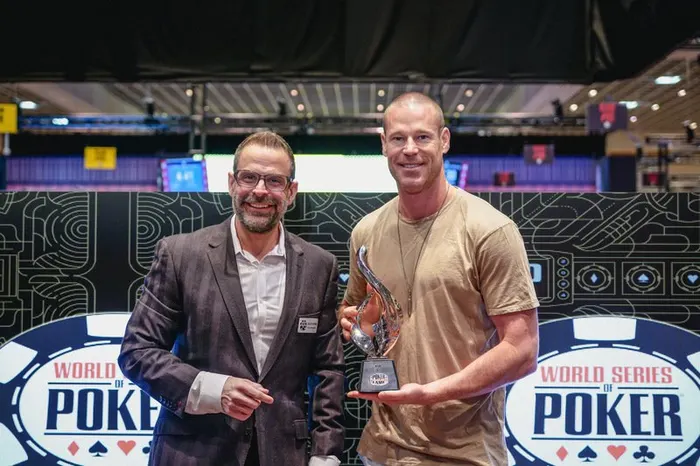
His 2024 induction ceremony at the Horseshoe recognised a career spanning EPT titles, Triton victories, and sustained dominance in private games that never appear on any leaderboard. Lifetime earnings: $34,675,694 (156 cashes), 32nd on the all-time money list.
▶ Read Patrik Antonius’s Full Profile
Brian Rast (inducted 2023)
The only player other than Mizrachi to have won the $50,000 Poker Players Championship three times (2011, 2016, 2023). Brian Rast holds 7 WSOP bracelets across multiple formats and won the inaugural $500,000 Super High Roller Bowl in 2015 for $7,525,000, his largest single score.
Lifetime earnings: $29,585,881 (164 cashes). A Stanford dropout who became one of the most respected mixed-game players in Bobby’s Room at the Bellagio. At the 2025 WSOP, he added a seventh bracelet in the $10,000 Razz Championship.
Layne Flack (inducted 2022, posthumous)
Known as “Back to Back” for his habit of winning consecutive tournaments. Layne Flack won 6 WSOP bracelets, four of them within a single 18-month stretch between 1999 and 2002. He was one of the most naturally gifted tournament players of the pre-boom era.
Flack passed away in July 2021 at the age of 52. His posthumous induction the following year recognised a career that many felt deserved the honour far sooner. Lifetime earnings: $5,838,797.
Eli Elezra (inducted 2021)
Israeli-born cash game specialist who built his reputation in the highest-stakes mixed games at the Bellagio alongside Doyle Brunson and Chip Reese. Eli Elezra holds 5 WSOP bracelets, three of them in Seven Card Stud events.
A fixture on High Stakes Poker and Poker After Dark. His autobiography, Pulling the Trigger, chronicles a life that included service in the Israeli Defence Forces and the 1982 Lebanon War before he ever touched a deck of cards. Lifetime earnings: $5,807,286 (134 cashes).
Huck Seed (inducted 2020)
Won the 1996 WSOP Main Event and holds 4 WSOP bracelets in total. Huck Seed was equally famous for his prop bets: he reportedly won over $100,000 betting he could learn to walk on stilts in under a week.
A Caltech graduate known for his analytical approach, Seed was a regular in the biggest live games during the 2000s. His induction recognised both his results and his status as one of poker’s most unique personalities.
Phil Ivey (inducted 2017)
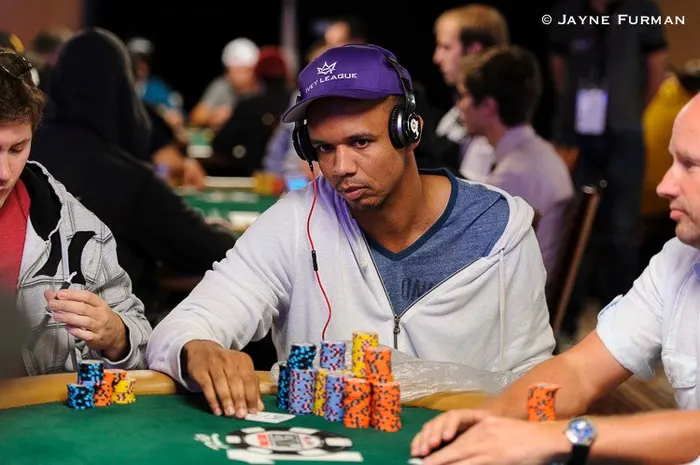
Widely regarded as the best all-round poker player alive. Phil Ivey holds 11 WSOP bracelets, has won a WPT title, and has been a dominant force in the highest-stakes cash games for over two decades.
Lifetime earnings: $55,697,664 in tracked tournaments alone, third among Hall of Fame members and a figure that does not include his private game and online results. Ivey’s induction in 2017 was considered overdue: his career record across every format makes the case that no one has played the game better.
▶ Read Phil Ivey’s Full Profile
Daniel Negreanu (inducted 2014)
The all-time leader in WSOP earnings and one of poker’s most recognisable public figures. Daniel Negreanu holds 8 WSOP bracelets, 2 WPT titles, and has been named WSOP Player of the Year twice.
Lifetime earnings: $60,663,240, second only to Jason Koon among Hall of Fame members. Inducted at 40, the minimum age allowed under the Chip Reese Rule, and the outright all-time money leader at the time.
▶ Read Daniel Negreanu’s Full Profile
John Hennigan (inducted 2018)
Known as “Johnny World” for his ability to beat any game at any stakes. John Hennigan holds 7 WSOP bracelets including two Poker Players Championship titles ($50,000 buy-in). He is considered one of the most versatile players in the game’s history.
A Bobby’s Room regular and one of the best Stud and mixed-game players alive. Hennigan publicly lobbied for Ted Forrest’s induction ahead of the 2025 vote, publishing an op-ed arguing his case.
Jennifer Harman (inducted 2015)
The first woman to win two open-field WSOP bracelets (2000, 2002), both in limit events at a time when women rarely entered non-Ladies events. Jennifer Harman was a fixture in the biggest cash games at the Bellagio for over a decade.
Inducted alongside John Juanda in 2015. Also a member of the Women in Poker Hall of Fame (2010). Lifetime earnings: $2,900,000+.
Erik Seidel (inducted 2010)
One of poker’s most consistent performers across four decades. Erik Seidel holds 10 WSOP bracelets and $49,253,821 in lifetime earnings, fourth among Hall of Fame members behind Jason Koon, Daniel Negreanu and Phil Ivey.
A former Wall Street trader and backgammon champion, Seidel is best known to casual fans for his heads-up loss to Johnny Chan in the 1988 Main Event, famously shown in the film Rounders. He also mentored Maria Konnikova for her bestselling book The Biggest Bluff.
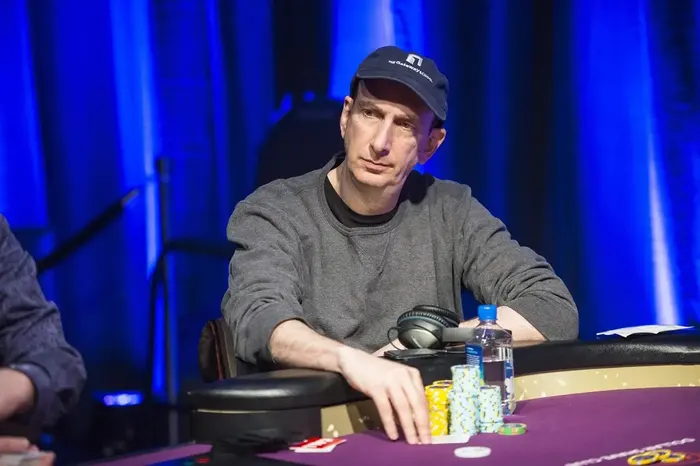
Dan Harrington (inducted 2010)
“Action Dan” won the 1995 WSOP Main Event and then made back-to-back Main Event final tables in 2003 and 2004, a feat that remains one of the most impressive in tournament history. His Harrington on Hold’em book series became the definitive tournament strategy resource for a generation of players.
Lifetime earnings: $7,200,000+. Co-inducted with Erik Seidel in 2010.
▶ Read Dan Harrington’s Full Profile
Barry Greenstein (inducted 2011)
Known as the “Robin Hood of Poker” for donating all of his tournament winnings to charity. Barry Greenstein holds 3 WSOP bracelets and authored Ace on the River, one of poker’s most respected strategy books.
A computer science PhD and longtime high-stakes cash game player, Greenstein was one of the original faces of televised poker and a Full Tilt Poker pro.
Linda Johnson (inducted 2011)
Called “The First Lady of Poker.” Linda Johnson won a WSOP bracelet in the 1997 $1,500 Seven Card Razz event and was instrumental in founding the Tournament Directors Association. She also served as publisher of Card Player magazine.
Inducted alongside Barry Greenstein in 2011. Also a member of the Women in Poker Hall of Fame (2008). Her contributions to tournament standardisation shaped how poker events run worldwide.
Todd Brunson (inducted 2016)
Son of Doyle Brunson and a high-stakes cash game specialist in his own right. Todd Brunson won a WSOP bracelet in 2005 ($1,000 Omaha Hi-Lo) and has been a regular in the biggest mixed games in Las Vegas for decades.
His induction recognised a career spent competing at the highest level in cash games rather than tournaments, a path that generates fewer headlines but reflects genuine elite-level play.
Barbara Enright (inducted 2007)
The first woman inducted into the Poker Hall of Fame. Barbara Enright won 3 WSOP bracelets and became the first woman to reach the Main Event final table in 1995, finishing 5th out of 273 players.
Her induction alongside Phil Hellmuth in 2007 came 28 years after the Hall’s founding and 12 years after her historic Main Event run. She called it a “lifetime achievement honour.”
The Poker Boom & Tournament Era
The 2000s saw poker explode into the mainstream. The players inducted from this era include Main Event champions, television personalities, and the names that defined the boom.
Phil Hellmuth (inducted 2007)
The all-time WSOP bracelet leader with 17 titles, more than any player in history. Phil Hellmuth won his first bracelet and the 1989 Main Event at age 24, making him the youngest champion at the time.
Known as “The Poker Brat” for his table behaviour, Hellmuth’s tournament record is unmatched for longevity and volume.
▶ Read Phil Hellmuth’s Full Profile
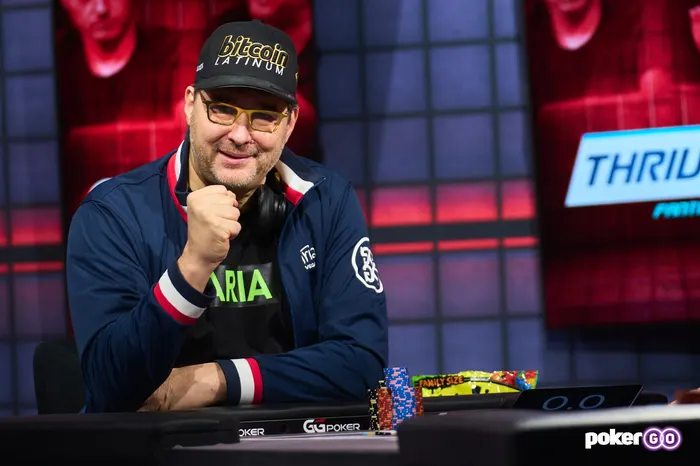
Chris Moneymaker (inducted 2019)
The player who changed everything. Chris Moneymaker won an $86 satellite on PokerStars, turned it into a seat at the 2003 WSOP Main Event, and won the whole thing for $2,500,000. That victory is widely credited as the single biggest catalyst for the global poker boom.
An accountant from Tennessee with no professional poker background, Moneymaker proved that anyone could win the Main Event.
▶ Read Chris Moneymaker’s Full Profile
Johnny Chan (inducted 2002)
The “Orient Express” won back-to-back WSOP Main Events in 1987 and 1988, a feat matched only by Stu Ungar. Chan holds 10 WSOP bracelets and was the player whose heads-up hand against Erik Seidel in 1988 became one of the most replayed moments in poker history after it appeared in Rounders.
Lifetime earnings: $9,200,000+. One of the most decorated tournament players of the pre-boom era.
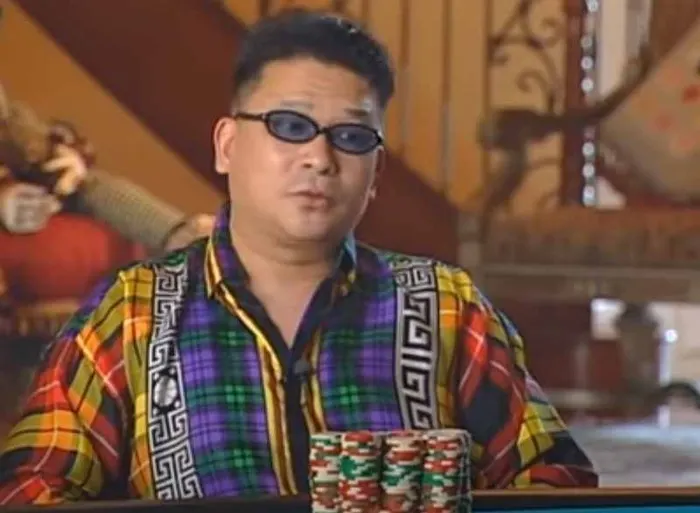
Scotty Nguyen (inducted 2013)
“The Prince of Poker” won the 1998 WSOP Main Event and the 2008 $50,000 H.O.R.S.E. Championship, making him one of very few players to win both the Main Event and the most prestigious mixed-game event. He holds 5 WSOP bracelets.
Famous for his catchphrase “That’s poker, baby!” and his emotional celebration after the 1998 final hand. Lifetime earnings: $12,100,000+.
Mike Sexton (inducted 2009)
The “Ambassador of Poker” and the voice of the World Poker Tour from its debut in 2003 until his departure in 2017. Mike Sexton won a WSOP bracelet and served as a partypoker ambassador, but his lasting contribution was bringing poker into living rooms through WPT broadcasts.
Sexton passed away in September 2020 at age 72. His induction recognised the role he played in making poker a spectator sport.
T.J. Cloutier (inducted 2006)
The only player to have won WSOP bracelets in pot-limit, no-limit, and fixed-limit formats. T.J. Cloutier holds 6 bracelets and was one of the most feared tournament players of the 1990s and early 2000s.
In his acceptance speech, Cloutier declared the induction was “one of two things I’ve always wanted to win.” Lifetime earnings: $10,600,000+.
Billy Baxter (inducted 2006)
Won 7 WSOP bracelets, all in non-Hold’em events. Billy Baxter is also known for winning the landmark Baxter v. United States tax case, which established that poker winnings could be treated as earned income rather than gambling gains.
That legal victory had implications for every professional poker player in America. Co-inducted with T.J. Cloutier in 2006.
Bobby Baldwin (inducted 2003)
Won the 1978 WSOP Main Event at age 28 and then became one of the most successful casino executives in Las Vegas history. Bobby “The Owl” Baldwin held senior roles at the Golden Nugget, the Mirage, and the Bellagio.
He holds 4 WSOP bracelets. At the Bellagio, Baldwin helped design the poker room that became the home of the world’s biggest cash games. One of the few players whose post-poker career surpassed his playing achievements.
Jack Binion (inducted 2005)
Non-player inductee. Jack Binion succeeded his father Benny as host of the WSOP and oversaw the tournament’s growth from a small gathering into the world’s largest poker event. Without the Binion family, the Hall of Fame and the WSOP itself would not exist.
The Founding Legends (1979–1999)
The earliest inductees include the founders of the WSOP, the game’s first champions, and the players who built poker’s culture before it had a television audience.
Doyle Brunson (inducted 1988)
“Texas Dolly” won back-to-back WSOP Main Events in 1976 and 1977, both with the same final hand: 10-2 offsuit. He holds 10 WSOP bracelets and authored Super/System, widely considered the most influential poker book ever written.
Brunson played at the highest stakes for over five decades. He passed away in May 2023 at age 89. His legacy as the godfather of modern poker is undisputed.
▶ Read Doyle Brunson’s Full Profile
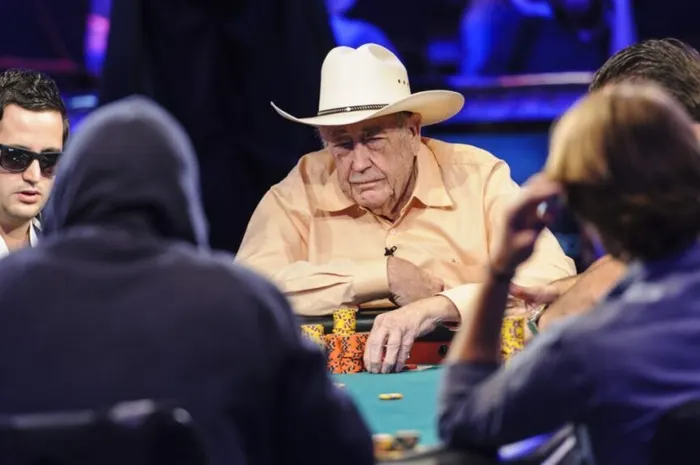
Stu Ungar (inducted 2001, posthumous)
Considered by many to be the most naturally gifted card player who ever lived. Stu “The Kid” Ungar won three WSOP Main Events (1980, 1981, 1997), the only player to achieve that. His 1997 victory, 16 years after his second title, is one of the greatest comeback stories in poker.
Ungar also won multiple gin rummy world championships and was reportedly unbeatable at that game. He died in 1998 at age 45. His story is a study in both genius and self-destruction.
Johnny Moss (inducted 1979)
The original. Johnny Moss won the first WSOP in 1970 (decided by a vote among participants, not a freeze-out) and then won the Main Event in its freeze-out format in 1971. He holds 9 WSOP bracelets.
Known as the “Grand Old Man of Poker,” Moss was one of the seven original inductees in the Hall’s founding class. He played professionally from the 1930s until his death in 1995.
Amarillo Slim (inducted 1992)
The first poker player to appear on The Tonight Show and the man most responsible for bringing poker to a mainstream American audience in the 1970s. Amarillo Slim won the 1972 WSOP Main Event and held 4 bracelets.
His showmanship and media savvy turned poker from a back-room game into a nationally televised event. He died in 2012 at age 83.
Chip Reese (inducted 1991)
The player the age rule is named after. Chip Reese moved to Las Vegas at 21 with his law school tuition money, won it all back and more, and never left. He was considered the best cash game player of his generation and won 3 WSOP bracelets including the inaugural $50,000 H.O.R.S.E. Championship in 2006.
Reese died in December 2007 at age 56. The “Chip Reese Memorial Trophy” is awarded to the Poker Players Championship winner each year.
Notable Omissions & Future Candidates
Even with the 2026 rule change, a growing list of qualified players is still waiting. Some have been nominated repeatedly. Others are not yet eligible. All of them are discussed regularly when the poker community debates who should be in.
Eligible but not inducted
Scott Seiver won three bracelets in a single summer (2024) and was named WSOP Player of the Year. He turned 40 that same year and has now been shortlisted twice, missing out in both 2025 and 2026. Seven bracelets and counting.
Three-time bracelet winner Justin Bonomo reached the eight-name shortlist in 2026, his first year of eligibility, on $65.6 million in live earnings and the $10,000,000 Big One for One Drop win. He can be nominated again in 2027.
Phil Galfond founded Run It Once, one of the most respected poker training and software platforms in the industry. He also turned 40 in 2025 and was nominated in his first year of eligibility. A dominant force in PLO and online high stakes.
Mike Matusow holds the record for most Hall of Fame nominations without induction, reaching 12 when he was shortlisted again in 2026. He has 4 WSOP bracelets. His polarising personality may be working against him in the vote.
Ted Forrest has 6 WSOP bracelets. John Hennigan publicly lobbied for his induction ahead of the 2025 vote, arguing in print that Forrest belonged in the Hall.
Gabe Kaplan commentated nine seasons of High Stakes Poker and holds $2,000,000+ in tournament earnings. A crossover figure featured on our celebrity poker players page. Never nominated.
Sam Farha is forever linked to the poker boom as the man who sat across from Chris Moneymaker in the 2003 Main Event heads-up. He holds $2,900,000+ in earnings but has never been inducted.
Newly eligible
Tom Dwan is the reason the age rule exists. In 2009, fans voted “durrrr” onto the Hall of Fame shortlist when he was just 23 years old. He turned 40 on 30 July 2026, five weeks after that year’s finalists were named, so 2027 is his first eligible ballot. His online legend and cash game dominance make him a near-certainty.
He is profiled on our list of elite players still chasing their first WSOP bracelet.
Controversial past nominees
Annie Duke won a WSOP bracelet in 2004 and holds $4,000,000+ in lifetime earnings. She has been nominated multiple times but has never received enough votes. The collapse of the Epic Poker League, which she helped lead, and public disputes with other professionals have made her candidacy divisive.
Chris Ferguson is a six-time bracelet winner and 2000 Main Event champion, but his role as a board member of Full Tilt Poker during its financial collapse and the resulting player fund shortage has made him one of the most controversial figures in Hall of Fame discussions.
The Women in Poker Hall of Fame
The Women in Poker Hall of Fame is a separate organisation from the WSOP Poker Hall of Fame. Founded by Lupe Soto in 2008, it recognises women who have made significant contributions to poker as players, organisers, or advocates.
As of 2024, it has 28 members across two categories: Class (27 members) and Pioneer (1 member, Starla Brodie, inducted 2024). The most recent Class inductees were Kristen Foxen, Jeanne David, and Brodie.
Three women hold membership in both Halls: Barbara Enright (WSOP HoF 2007, WiPHoF 2011), Linda Johnson (WSOP HoF 2011, WiPHoF 2008), and Jennifer Harman (WSOP HoF 2015, WiPHoF 2010). All three are profiled above and on our famous female poker players page.