

Johnny Chan Net Worth 2026: $8M-$12M, 10 Bracelets & the Rounders Legend
Johnny Chan is the last player to win back-to-back WSOP Main Events, and the man Matt Damon bluffs in Rounders. The film made him the most recognised face in poker; the record made him one of its most feared.
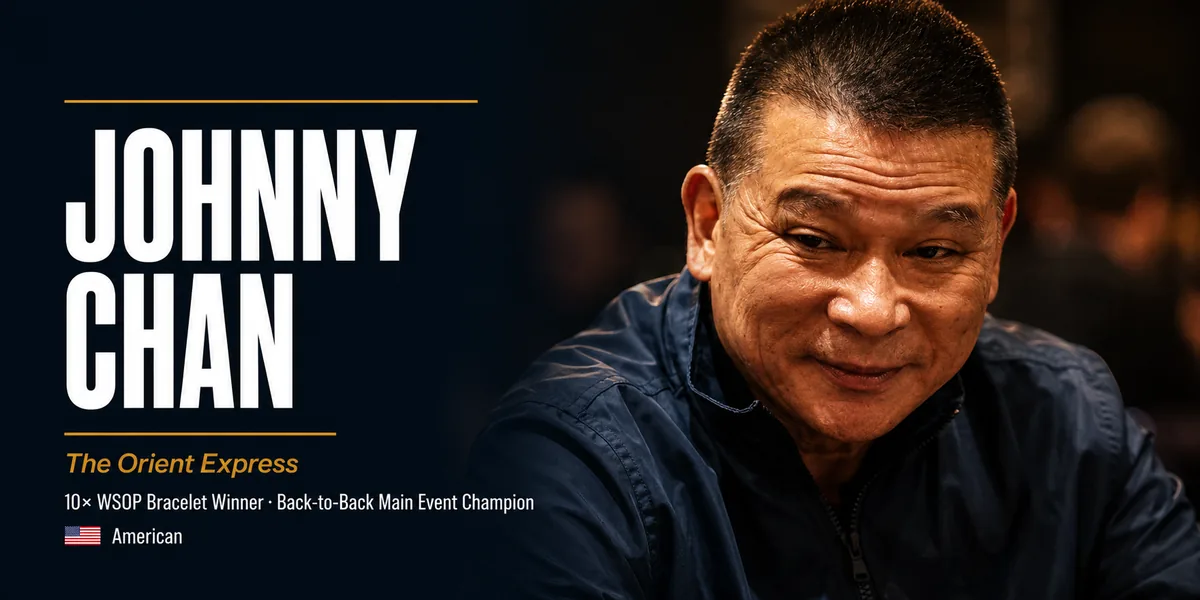
Ten WSOP bracelets and roughly $8.8 million in tracked live earnings anchor a career that began in Las Vegas card rooms in 1978, when he was 21 and broke. He was the first player to reach ten bracelets, and his Main Event titles came against fields of 152 and 167.
This profile separates what is verifiable from what is estimated. His tournament record is public; the net worth figures published online are not, so we build our own range from named components and say where each one comes from.
The tables below cover his bracelets, his biggest cashes and his televised record. For other legends of his era, our full poker player profile directory is the place to start.
Player Quick Facts
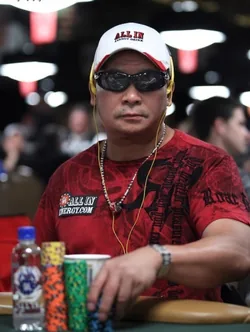
- Full Name: Johnny Chan
- Nickname: The Orient Express
- Born: 1 October 1957 (age 69)
- Nationality: American
- Heritage: Chinese, born in Guangzhou
- Hometown: Houston, Texas
- Residence: Las Vegas, Nevada
- Education: University of Houston (hotel and restaurant management, left at 21)
- Net Worth (Estimate): $8 million to $12 million, with $10 million the most-cited figure
- Live Tournament Earnings: $8,796,313 (155 cashes, per Hendon Mob)
- Biggest Live Cash: $750,000 (Poker Superstars Invitational, 2005)
- WSOP Bracelets: 10 (59 WSOP cashes, 30 final tables, $4,896,535 in WSOP earnings)
- Poker Hall of Fame: Inducted 2002
- Primary Formats: No-Limit and Pot-Limit Hold'em, Pot-Limit Omaha, high-stakes live cash games
- Known For: Back-to-back Main Event titles (1987, 1988); first player to ten bracelets; the 1988 hand used in Rounders; the orange on the table
- Current Sponsor: None
Johnny Chan's Net Worth
Johnny Chan’s net worth is estimated at $8 million to $12 million. The most-cited figure is $10 million, but no published number comes with a method attached, and his real position depends on forty years of private cash game results.
Here is where the estimates come from, what can be checked, and how he made his money.
Why do Johnny Chan net worth estimates vary?
Four figures circulate, and none of them explains itself:
- CelebrityNetWorth: $10 million, stated as fact, last updated years ago
- TheRichest: $7.2 million, no method given
- Poker magazine estimates: around $10 million, described as an estimate from results and reported business activity
- VIP-Grinders assessment: $8 million to $12 million, built from the components below
The spread is small because everyone starts from the same public number, his tournament earnings, and guesses at the rest. What nobody outside his family knows is how much he kept from the biggest cash games in Las Vegas between the late 1970s and the mid-2000s.
Those games are the reason the range sits above his gross tournament total rather than below it. For a player who spent his prime in the highest games in town, the tournament figure is a floor, not a ceiling.
What we can verify: $8.8 million in live earnings
The Hendon Mob records $8,796,313 across 155 cashes, which places Chan around 237th on the all-time money list. Of that total, $4,896,535 came at the World Series of Poker, according to WSOP.com.
Both figures are gross payouts. They do not subtract buy-ins, expenses or any staking arrangements, and a 1980s Main Event paid a fraction of what the same finish pays now.
How did Johnny Chan make his money?
Unlike most players on this site, Chan’s tournament record is the smaller part of the story. Here is what each stream looks like:
- High-stakes cash games: his primary income from 1978 onwards, in the biggest live games in Las Vegas. No public record exists and none ever will.
- Tournament winnings: $8,796,313 in tracked live cashes, the only fully auditable figure.
- Television: four wins from six appearances on Poker After Dark, two Poker Superstars finals, two seasons of High Stakes Poker.
- Books: Play Poker Like Johnny Chan (2005) and Million Dollar Hold'em (2006), both with Mark Karowe. Royalties undisclosed.
- Business: a fast-food franchise at the Stratosphere and casino consulting, offset by an online poker room, an energy drink and a Houston card room that all closed.
For comparison, Doyle Brunson also won ten bracelets and built his wealth in cash games, and his estimate sits at $25 million. Chan played the same games for fewer years, published fewer books and never held a long-term room sponsorship, which is why our range stops well short of that.
Career Earnings & Tournament Results
Chan’s tournament career runs from a first recorded result in 1982 to a tag-team min-cash at the 2025 WSOP. The scores that matter most were won at stakes that look modest today, in fields that were a hundredth of the size.
What is Johnny Chan’s biggest tournament cash?
His career-best cash is $750,000, for second place in the 2005 Poker Superstars Invitational, a $400,000 buy-in televised event at Caesars Palace. He got there from a stack of $20,000 out of $3,200,000 in play, then lost the final to Gus Hansen.
The 1988 Main Event, at $700,000, is his biggest open-field score. The Main Event did not pay a million-dollar first prize until 1991, three years after his last title.
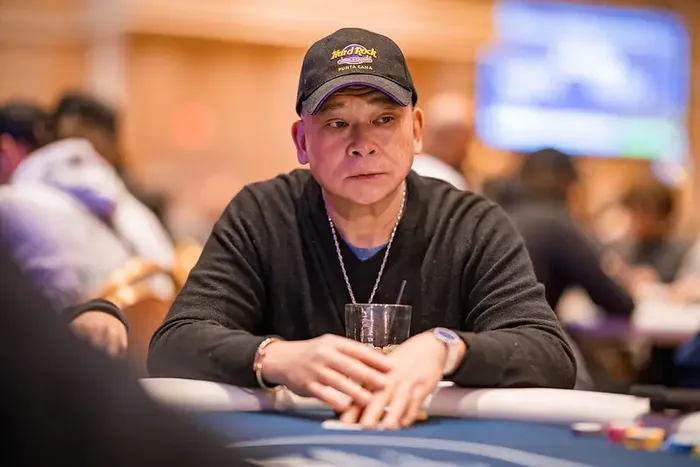
Invitationals aside, the pattern in his results is early money at small fields and steady Main Event cashes decades later.
Top tournament cashes
| Year | Event | Finish | Prize |
|---|---|---|---|
| 2005 | Poker Superstars Invitational, Caesars Palace | 2nd | $750,000 |
| 1988 | WSOP $10,000 Main Event | 1st | $700,000 |
| 1987 | WSOP $10,000 Main Event | 1st | $625,000 |
| 2005 | Poker Superstars II final | 1st | $400,000 |
| 2005 | WSOP $2,500 Pot-Limit Hold’em | 1st | $303,025 |
| 1989 | WSOP $10,000 Main Event | 2nd | $302,000 |
| 2003 | WSOP $5,000 No-Limit Hold’em | 1st | $224,400 |
| 2000 | WSOP $1,500 Pot-Limit Omaha | 1st | $178,800 |
| 1985 | WSOP $1,000 Limit Hold’em | 1st | $171,000 |
| 1997 | WSOP $5,000 Deuce to Seven Draw | 1st | $164,250 |
Eight of his ten biggest results are WSOP bracelet finishes or the 1989 runner-up, which tells you where the money in poker sat before the boom. The two Poker Superstars scores came from invitational formats that no longer exist.
The WSOP record beyond the bracelets
WSOP.com lists 59 cashes and 30 final tables, a final table rate of roughly one in two. That ratio belongs to an era when a bracelet event drew a few hundred runners and the same forty professionals reached most final tables.
His Main Event record after the titles is a study in persistence rather than results. He cashed in 2008 (329th), 2010 (156th), 2012, 2016, 2018, 2019 and 2023, with the 180th place in 2016 worth $42,285 the best of them.
Johnny Chan's 10 WSOP Bracelets
Chan won ten bracelets between 1985 and 2005, and in 2005 he was the first player ever to reach that number. Eight of the ten came in pot-limit or no-limit formats, which is unusual for a player of his generation.
He shares third place on the all-time list with the ten-bracelet legend Doyle Brunson and Erik Seidel. Above them sit Phil Hellmuth on seventeen and Phil Ivey and his eleven bracelets.
Complete bracelet list
| # | Year | Event | Buy-in | Prize |
|---|---|---|---|---|
| 1 | 1985 | Limit Hold’em | $1,000 | $171,000 |
| 2 | 1987 | NLHE Main Event | $10,000 | $625,000 |
| 3 | 1988 | NLHE Main Event | $10,000 | $700,000 |
| 4 | 1994 | Seven Card Stud | $1,500 | $135,600 |
| 5 | 1997 | Deuce to Seven Draw | $5,000 | $164,250 |
| 6 | 2000 | Pot-Limit Omaha | $1,500 | $178,800 |
| 7 | 2002 | NLHE Gold Bracelet Match Play | $2,500 | $34,000 |
| 8 | 2003 | No-Limit Hold’em | $5,000 | $224,400 |
| 9 | 2003 | Pot-Limit Omaha | $5,000 | $158,100 |
| 10 | 2005 | Pot-Limit Hold’em | $2,500 | $303,025 |
Records inside the ten
- First to ten: the 2005 win over Phil Laak broke a four-way tie on nine with Johnny Moss, Doyle Brunson and Phil Hellmuth. Brunson tied him later the same series.
- Four formats: hold'em, Omaha, seven card stud and deuce to seven draw. Only the stud win came in a limit game.
- Two in one series: the $5,000 no-limit and $5,000 pot-limit Omaha events, both in 2003.
- Twenty years apart: bracelet one in 1985, bracelet ten in 2005, a span matched by few players.
- Smallest prize: $34,000 for the 2002 heads-up match play event, often misreported as a Pot-Limit Omaha win.
Several published lists give him two bracelets in 2005 or a pot-limit Omaha title in 2002. Both are wrong: the 2002 win was the $2,500 heads-up match play event, and 2005 brought one bracelet, the tenth.
Johnny Chan's Poker Career Timeline
From a Houston restaurant family to the ESPN stage, the arc runs through four decades. Here is how it happened.
Guangzhou, Phoenix, Houston
Chan was born in Guangzhou on 1 October 1957. His family moved to Hong Kong in 1962, to Phoenix in 1968 and to Houston in 1973, where they ran restaurants and he learned cards playing with the staff.
He enrolled at the University of Houston to study hotel and restaurant management, the plan being to take over the family business. The story he tells of his first Las Vegas trip, at 16, is turning $500 into $20,000 in one night and losing all of it the next day.
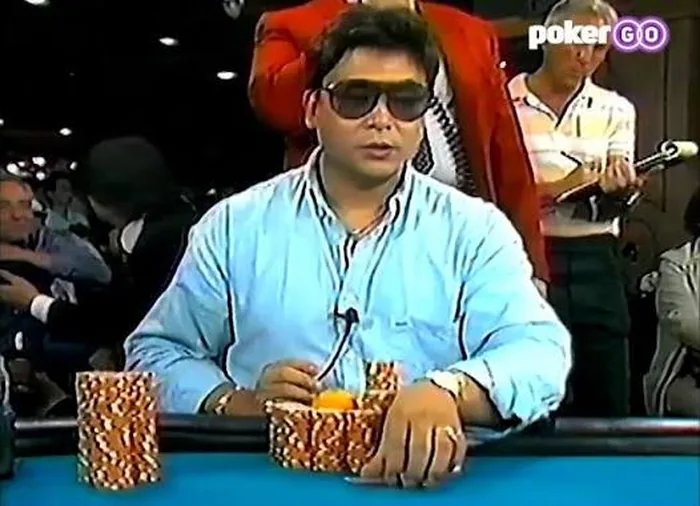
At 21 he left college and moved to Las Vegas. He took casual jobs, lost his wages at the tables and rebuilt, and by 1981 he was good enough to win Bob Stupak’s America’s Cup, clearing the final table in under an hour.
The Orient Express
Stupak gave him the nickname on the spot, and the results that followed turned it into a reputation:
- 1981: Bob Stupak's America's Cup, every opponent eliminated in under an hour
- 1982 and 1983: back-to-back $10,000 no-limit hold'em titles at the America's Cup of Poker
- 1983: first WSOP cash
- 1985: first bracelet, in the $1,000 Limit Hold'em event, for $171,000
1987 and 1988: double champion
In 1987 he entered the Main Event as one of 152 runners and beat Frank Henderson heads-up for $625,000, the first foreign-born champion. The final table also held Howard Lederer, then 23 and the youngest finalist to that point, and future 1995 champion Dan Harrington in sixth.
In 1988 he did it again, beating Erik Seidel from a field of 167 for $700,000. Nobody has defended the title since; the roll of every WSOP Main Event champion since 1970 shows only four multiple winners and just two who went back-to-back.
Three years at the final table
| Year | Field | Heads-up opponent | Result | Prize |
|---|---|---|---|---|
| 1987 | 152 | Frank Henderson | Won | $625,000 |
| 1988 | 167 | Erik Seidel | Won | $700,000 |
| 1989 | 178 | Phil Hellmuth | 2nd | $302,000 |
Is Johnny Chan the last back-to-back Main Event champion?
Yes. Doyle Brunson won in 1976 and 1977, Chan in 1987 and 1988, and no one has repeated since. With fields now above ten thousand, the odds of it happening again are close to zero.
Johnny Moss and Stu Ungar each won three titles, but neither strung two open-field wins together the way Chan did.
1989: nines against ace-seven
A year later he was heads-up for the third time in a row, against a 24-year-old from Wisconsin. Record 17-bracelet holder Phil Hellmuth held pocket nines, Chan held ace-seven suited, and the nines held.
Hellmuth took $755,000 and the youngest-champion record; Chan took $302,000. A win would have tied Moss’s three titles.
1994 to 2005: the road to ten
Bracelets four through nine arrived in stud (1994), deuce to seven (1997), pot-limit Omaha (2000), heads-up match play (2002) and two events in 2003. His 2002 induction put him on the full Poker Hall of Fame member list.
The tenth came in June 2005, in the $2,500 Pot-Limit Hold’em event at the Rio. He beat Phil Laak heads-up in the early hours for $303,025 and became the first player in history to hold ten.
The Rounders Hand & Poker's End Boss
For anyone who has not sat at a poker table, Johnny Chan is the man from Rounders. The 1998 film opens on videotape of the real 1988 heads-up match and later cuts to Chan playing himself, being bluffed off a pot by Matt Damon’s Mike McDermott.
WSOP.com calls him the film’s “End Boss”, and the label stuck. The cameo turned a two-time champion into a name people outside the game could recognise.
Was the Rounders hand real?
It was. Chan held J♣ 9♣ and flopped the nut straight on a queen-eight-ten board. He checked the turn to let Seidel, holding queen-seven for top pair, keep betting, and called when Seidel moved all in on the river.
The commentary line, that Seidel could not win the hand and did not know it, is what the film quotes. Seidel’s own verdict, given years later, was that he was the fish in the hand and the portrayal was accurate.
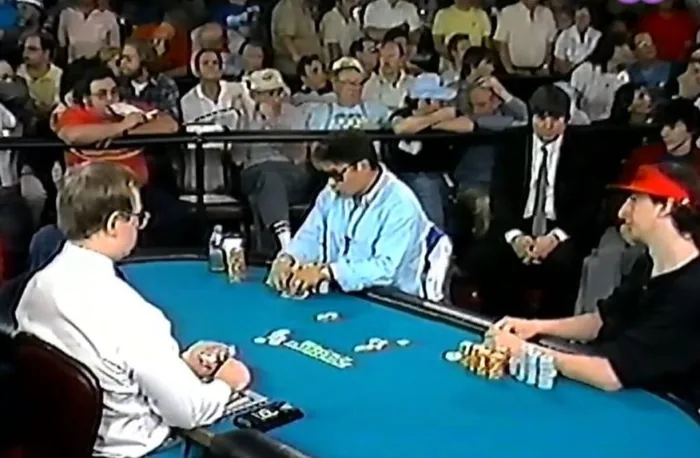
Chan was a technical advisor on the film and agreed to appear once he learned Matt Damon was the lead, a detail he has credited to his daughter. The scene took a fraction of the shoot but has followed him for more than 25 years.
The film sits at the top of our ranking of the best poker movies, and its release in 1998 is usually named alongside online poker as one of the seeds of the 2003 boom.
Lucky You and Poker King
He appeared again in Lucky You (2007), alongside Doyle Brunson and three-time bracelet winner Sam Farha, and played himself in the 2009 Hong Kong film Poker King.
Neither did what Rounders did. One cameo, filmed in a day, is the reason a 1988 hand between two men at Binion’s is still quoted verbatim.
Cash Game Career & Televised Poker
Chan built his bankroll in cash games first and tournaments second. From the late 1970s he played the biggest games in Las Vegas, in the Golden Nugget era and the rooms that followed it, against the names that fill the Hall of Fame.
No hand histories exist from that era. What survives is reputation, and peers from the period have called him the best player of the 1980s.
Televised cash games
He appeared in the first season of High Stakes Poker in 2006 and returned in 2011.
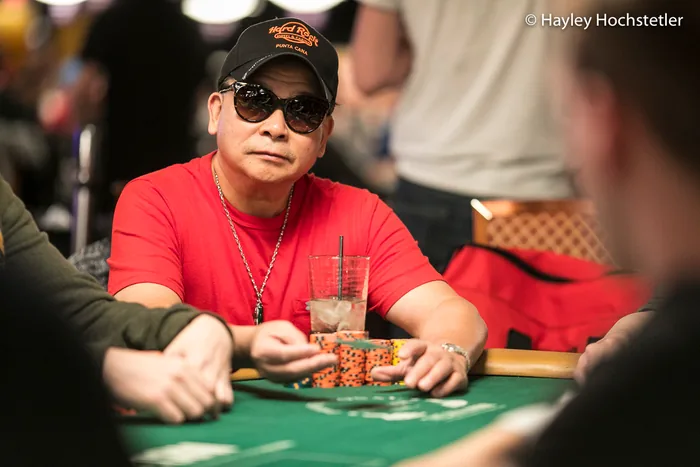
For scale, the pots in those early seasons rarely passed $500,000. The biggest cash game pots ever played now run past a million dollars several times a year, at stakes his generation never saw on camera.
Poker After Dark and Poker Superstars
His best televised record is on NBC’s Poker After Dark, a six-handed $20,000 winner-take-all format. Chan won four of his six appearances, more than any other player on the show.
| Week | Aired | Heads-up opponent | Result |
|---|---|---|---|
| WSOP Champions | January 2007 | Chris Moneymaker | Won |
| Champions Week | June 2007 | Joe Hachem | Lost |
| World Champions | February 2008 | Phil Hellmuth | Won |
| International | February to March 2008 | Patrik Antonius | Won |
| Dream Table III | March 2009 | Jennifer Tilly | Won |
The first win came over 2003 world champion Chris Moneymaker, the man whose title triggered the boom Chan’s film had helped seed. The 2008 run beat Hellmuth and Finnish cash game icon Patrik Antonius in consecutive weeks.
The fourth, in 2009, came against actress and bracelet winner Jennifer Tilly. Poker Superstars, the other invitational of the era, gave him a runner-up finish to Gus Hansen and then the Season II title over Todd Brunson, both in 2005.
Playing Style & Reputation
Chan’s game was built on patience, observation and pressure applied at the moment it hurt most. The defining traits:
- Pace control: he slowed the table down and made opponents act on his clock
- Trapping: the 1988 hand is the textbook example, checking a made hand to induce a shove
- Reading players over cards: his own line was that any bluffing at the table would be his
- The stare: a fixed, silent look across the table that became part of the intimidation
- Format range: bracelets in four different games, with big-bet hold'em and Omaha the strongest
He described the edge himself: not many players tried to bluff him, and if there was bluffing or stealing to be done, he would be the one doing it.
Peers said the same thing in longer form. Erik Seidel arrived in Las Vegas in 1988 having been told by Paul Magriel that the best no-limit player in the world was Johnny Chan.
What was Johnny Chan’s orange for?
The orange started as a practical answer to cigarette smoke in 1980s card rooms; Chan said the scent was pleasant and the fruit gave his hands something to do. After his second title other players began bringing fruit, and it became a trademark.
It has been read as superstition and as gamesmanship. Chan’s own explanation has never changed.
Reputation and legacy
Chan was among the first Asian-American players to reach the top of the game and has said he sees himself as a role model for the Asian players who followed. He mentored 2006 Main Event winner Jamie Gold, a relationship that became part of that year’s story.
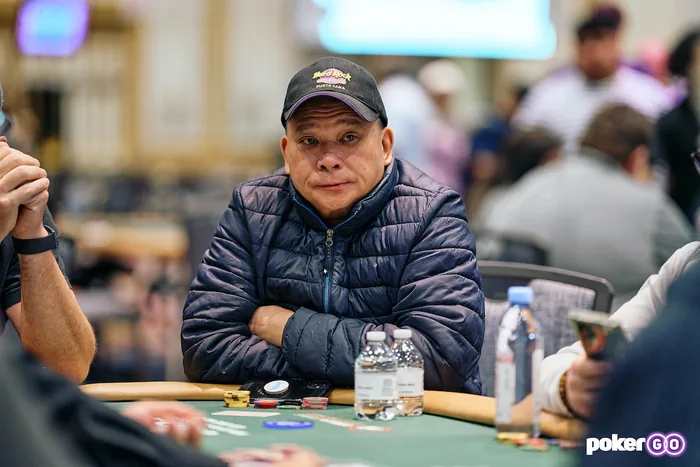
In lists of poker’s most influential figures of all time he sits with Brunson and Moss as the pre-boom players who defined what a professional looked like. A 2019 industry ranking of the fifty greatest WSOP players placed him fifth.
Business Ventures & Controversies
Away from the table Chan’s record is mixed. The steady income came from a Stratosphere fast-food franchise and casino consulting; the ventures that carried his name did not last.
What happened to Johnny Chan’s 88 Social?
Johnny Chan’s 88 Social was a Houston card room, formerly the 52 Social, that traded under his name. He was reported to be a minority owner rather than the operator.
Trouble surfaced in October 2021 when players began emptying their chip boxes and withdrawals were capped at $2,000 a day. The room cancelled its Winter Classic series, then locked its doors on 4 December 2021 with chips uncashed, as covered in our report on the 88 Social closure.
Three weeks later Sanjeev Vora took over the premises, rebranded them as the 101 Poker Club and presented a plan to cash every outstanding chip. How the Houston room changed hands is the closest the story came to a resolution. Chan never commented publicly.
Earlier ventures
- ChanPokerOnline.com: an online poker room launched in 2007 and closed in August 2008
- All In Energy Drink: co-founded by Chan, official WSOP energy drink and water sponsor in 2008 and 2009, faded soon after
- Books: Play Poker Like Johnny Chan (2005) and Million Dollar Hold'em (2006), both still in print
- Stratosphere franchise and consulting: the longest-running of his non-poker income streams
None of these involved allegations against Chan personally. The 88 Social closure is the one episode that cost players money, and the record shows a licensing arrangement that went wrong rather than a scheme.
Personal Life
Chan lives in Las Vegas and is the father of six children, and he has kept his family out of poker coverage almost entirely. Six children is also a line item in any net worth estimate that most profiles skip.
He is a former smoker who does not drink, which in the smoke-filled card rooms of his prime made the orange a health measure before it was a prop. Chinese-language media often use a transliteration of “Johnny Chan” rather than his birth name.
At 69, he still plays selectively rather than grinding a schedule, and he has never courted the ambassador deals that fund most of his contemporaries.
Latest News & Updates
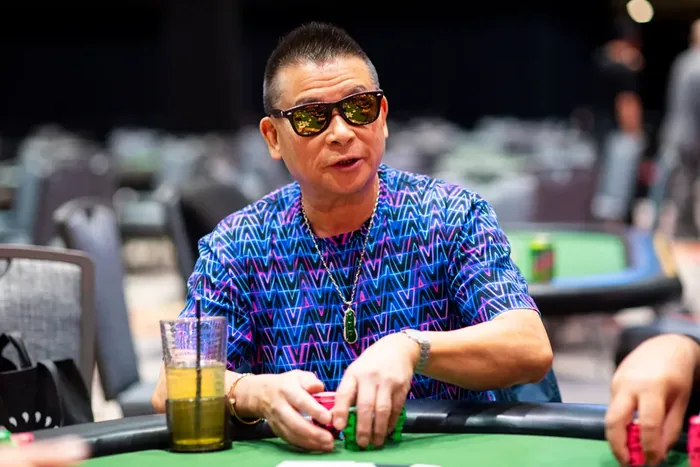
Chan’s 2026 has been quiet at the tables. His most recent recorded result is a $1,004 share of a $2,008 team min-cash in the $1,000 Tag Team event at the 2025 WSOP, playing alongside Timothy Tenpas.
He also entered the 2025 Super Seniors without cashing and reached Day 3 of the 2025 Main Event before busting short of the money. The 2026 series, covered in the full WSOP 2026 results, recorded no Chan cash.
Is Johnny Chan still playing poker?
Yes, on his own terms. He plays a handful of WSOP events each summer and has cashed in the Main Event as recently as 2023, when he finished 1,067th of 10,043.
| Year | Event | Finish | Prize |
|---|---|---|---|
| 2025 | WSOP $1,000 Tag Team (with Timothy Tenpas) | Min-cash | $1,004 share |
| 2024 | WSOP $10,000 Mystery Bounty | 133rd of 965 | $13,605 |
| 2023 | WSOP $10,000 Main Event | 1,067th of 10,043 | $17,500 |
| 2023 | WSOP $1,500 Big O | 14th of 1,458 | $13,982 |
| 2023 | WSOP $1,000 Pot-Limit Omaha | 140th of 2,017 | $2,209 |
The ceremonial side of his standing continues. In July 2024 he gave the “shuffle up and deal” on Day 1C of the Main Event, and our complete guide to the WSOP explains how a Tag Team seat fits into a series of a hundred bracelet events.
For anything new on the Orient Express, check our latest poker news coverage.
FAQs
Quick answers to the most searched questions about Johnny Chan’s net worth, earnings, Rounders and family.
What is Johnny Chan's net worth?
Johnny Chan’s net worth is estimated at $8 million to $12 million. The figure is not publicly confirmed. It is built from $8,796,313 in tracked live tournament earnings, decades of high-stakes cash game play, two books, television appearances and business income, less three ventures that closed.
Johnny Chan net worth 2026
Johnny Chan’s estimated net worth remains in the $8 million to $12 million range in 2026. He has added only a $1,004 tag-team cash since 2024, so the figure is driven by his historic cash game results and business interests rather than new winnings.
What are Johnny Chan's career earnings?
Johnny Chan has $8,796,313 in tracked live tournament earnings across 155 cashes, per The Hendon Mob. His largest cash was $750,000 for second in the 2005 Poker Superstars Invitational. A total of $4,896,535 came from WSOP events.
How many WSOP bracelets does Johnny Chan have?
Johnny Chan has 10 WSOP bracelets, won between 1985 and 2005. He was the first player to reach ten and is tied for third on the all-time list with Doyle Brunson and Erik Seidel, behind Phil Ivey (11) and Phil Hellmuth (17).
Who beat Johnny Chan in the 1989 Main Event?
Phil Hellmuth beat Chan heads-up in the 1989 WSOP Main Event, holding pocket nines against Chan’s ace-seven suited. Hellmuth, then 24, won $755,000 and became the youngest champion at the time. Chan collected $302,000 for second.
Who did Johnny Chan beat in 1988?
Chan beat Erik Seidel heads-up to win the 1988 WSOP Main Event for $700,000, from a field of 167. Seidel, playing his first major tournament, took $280,000. The final hand was later used in the film Rounders.
Is Johnny Chan in the Poker Hall of Fame?
Yes. Johnny Chan was inducted into the Poker Hall of Fame in 2002, three years before his tenth bracelet and fifteen years after his first Main Event title.
How old is Johnny Chan?
Johnny Chan was born on 1 October 1957 in Guangzhou, China. He is currently 69 years old.
Where is Johnny Chan from?
Chan was born in Guangzhou, China. His family moved to Hong Kong in 1962, Phoenix in 1968 and Houston in 1973, where they owned restaurants. He has lived in Las Vegas since moving there at 21 to play poker.
Does Johnny Chan have children?
Yes. Chan is the father of six children. He keeps his family out of the public eye and rarely discusses them in interviews.
What books has Johnny Chan written?
Chan has co-written two books with Mark Karowe: Play Poker Like Johnny Chan (2005), covering several poker variants, and Million Dollar Hold’em: Winning Big in Limit Cash Games (2006).
What is Johnny Chan's Poker After Dark record?
Chan holds the best record in Poker After Dark history: four wins from six appearances in the $20,000 winner-take-all format. He beat Chris Moneymaker, Phil Hellmuth, Patrik Antonius and Jennifer Tilly heads-up, and lost the final to Joe Hachem in 2007.
Sources & Methodology
This player profile separates verifiable facts from estimates and public claims. We cannot accurately calculate any player’s net worth, but we aim to publish transparent, verifiable information.
How we handle ‘net worth’
We do not treat any net worth figure as fact. Third-party estimates are reported with their source and caveats. Where no credible methodology is disclosed, we say so.
Chan’s $8 million to $12 million range is our own assessment. It starts from his tracked tournament earnings and adjusts for cash game history, published work and ventures that closed.
How we report earnings
Tournament earnings figures come from The Hendon Mob, which tracks live results only. WSOP-specific counts come from WSOP.com, which sometimes differs from Hendon Mob on cash totals, and we say which source each number belongs to.
All figures are gross payouts before buy-ins, staking splits, taxes and expenses. We update earnings after each major series.
How we cover controversies
We report what was alleged, what the player said in response, and where the matter stands. We do not take sides.
The 88 Social section above is drawn from our own contemporaneous reporting and the successor operator’s public statements. Chan’s exact stake was never disclosed, and we say so rather than guess.
References
The sources below were used in researching this profile. Social media links are included for verification and attribution.
- The Hendon Mob – tracked live tournament earnings, cash count, biggest cash and all-time ranking
- WSOP.com – official player profile, bracelet count, WSOP earnings, cashes, final tables and Hall of Fame status
- WSOP.com news – the 2011 ESPN Grudge Match against Phil Hellmuth
- Wikipedia – biographical context, bracelet event names and prizes, television and publishing history (cross-checked against primary sources)
- CelebrityNetWorth – the $10 million estimate discussed in the net worth section
- X (Twitter) – Johnny Chan's official account, as listed by The Hendon Mob