

Phil Ivey's ex-wife is Luciaetta Ivey (née Luciaetta Richard), who was married to the 11-time WSOP bracelet winner from May 2002 until their divorce in December 2009.
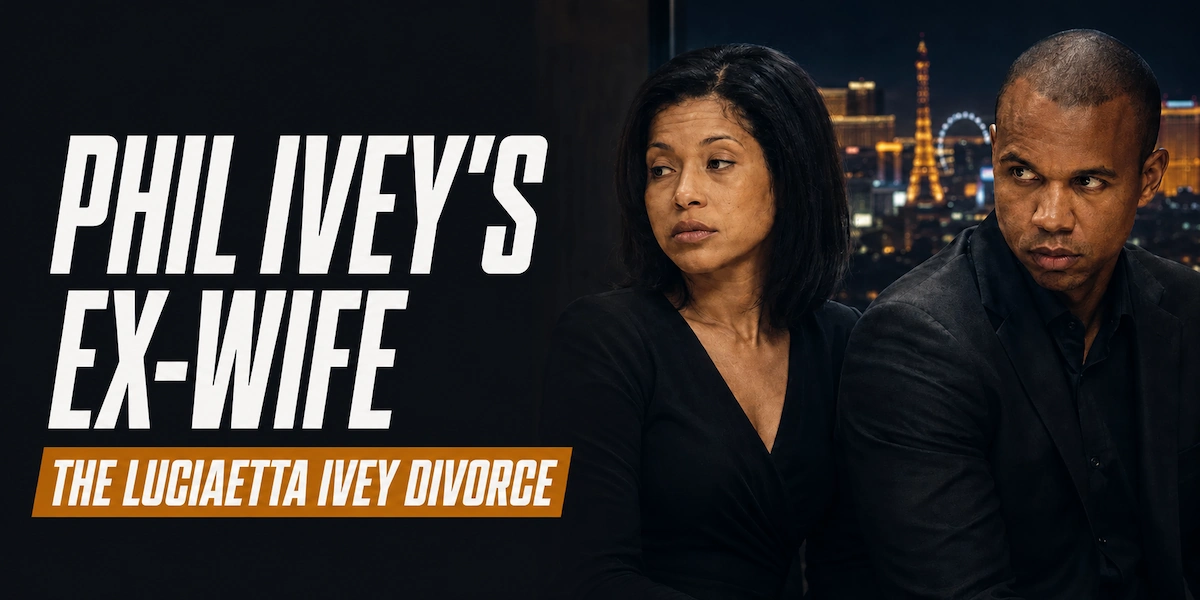
Court documents filed with the Nevada Supreme Court showed Luciaetta received $180,000 per month in alimony, a purse collection valued above $1.2 million, and jewelry worth over $1 million. Phil accepted more than $15.1 million in gambling debt. Those payments stopped entirely when Full Tilt Poker collapsed on Black Friday in April 2011.
Luciaetta then discovered that Phil had contributed $5,000 to the re-election campaign of the judge who signed their divorce decree. She fought the settlement to the Nevada Supreme Court and filed a federal lawsuit accusing Phil and his attorney of conspiring to deny her a fair share of their community property.
Who Is Luciaetta Ivey?
Luciaetta Ivey's full legal name from corporate filings is Luciaetta M. Ivey, with a maiden name of Luciaetta Richard. She was born in approximately 1978 in the United States.
| Detail | Info |
|---|---|
| Full Name | Luciaetta M. Ivey |
| Maiden Name | Luciaetta Richard |
| Birth Year | Approximately 1978 (unverified) |
| Nationality | American |
| Spouse | Phil Ivey (married May 19, 2002; divorced December 29, 2009) |
| Children | None |
| Current Residence | Tampa, Florida |
| Social Media | None known |
Almost nothing is publicly documented about her education, career, or family background before the marriage. That puts her in sharp contrast to poker wives like Amanda Leatherman, whose media career predated her relationship with Daniel Negreanu. During the seven years she was married to Phil, Luciaetta managed household finances and co-signed investment vehicles linked to his poker sponsorships and Tiltware LLC ownership.
After the divorce, she relocated to Tampa, Florida and has kept her life entirely private since. She has no known social media accounts and has not spoken publicly since the legal proceedings ended.
Phil and Luciaetta Ivey's Marriage (2002 to 2009)
Phil and Luciaetta met in the late 1990s, most likely in the Atlantic City area. Phil was already grinding poker sessions at the Taj Mahal Casino under his fake ID as “Jerome,” years before his first WSOP bracelet. Some sources describe Luciaetta as a “high school sweetheart,” but no reporting supports that claim, and Phil grew up in Roselle, New Jersey, not in Atlantic City.
They married in Las Vegas on May 19, 2002. That same year, Phil won three WSOP bracelets, tying the record for most wins in a single series. He was 25 years old and already being called the best all-round player in poker.
Phil's income during the marriage came primarily from his passive ownership stake in Tiltware LLC, the parent company of Full Tilt Poker. Luciaetta was not a public figure and had no independent career on record.
At its peak in 2008, the Ivey household was earning nearly $8 million per year combined. Phil's Tiltware stake alone was generating $920,000 per month. Within two years, it was over.
The marriage produced no children. They filed a joint petition for divorce in December 2009, and Judge Bill Gonzalez of the Clark County Family Court granted the decree on December 29, 2009. The case was sealed, and by all appearances, the split was uncontested.
That changed two years later.
The Ivey Divorce Settlement: What Luciaetta Received
The financial details of the divorce were originally sealed. They only became public in December 2011, when Phil's attorneys filed a response to Luciaetta's Nevada Supreme Court petition. That filing, first reported by the Las Vegas Review-Journal, exposed the full scope of the settlement.
Luciaetta's Share
| Asset | Detail |
|---|---|
| Alimony | $180,000 per month (taxable), drawn from Phil's Tiltware income |
| Purse Collection | Valued above $1.2 million |
| Jewelry | Valued above $1 million |
| Vehicle | Her car |
| Insurance | Her life insurance policy |
| Stocks | 40% of a stock account |
| Real Estate | Down payment for a new home, plus half the proceeds from the couple's home sale |
| Business Interests | 40% of all business interests except Tiltware LLC |
The single most important line in the agreement was the Tiltware exclusion. Luciaetta received 40% of every business interest Phil held, except his stake in Tiltware LLC. That stake was generating approximately $920,000 per month at the time of the divorce.
Instead of a share of the company, Luciaetta received monthly alimony payments drawn from that income. If the Tiltware money stopped, so did hers.
Phil's Debt Obligations
Phil took on all of the couple's debt as part of the settlement: more than $170,000 in credit card debt and over $15.1 million in gambling and other debt. Luciaetta walked away owing nothing.
“Luciaetta ended up with no debt, with millions of dollars worth of property, and with specific unambiguous alimony provisions.”
Phil Ivey's attorneys, in their December 2011 filing to the Nevada Supreme Court
From Phil's side, the settlement was generous. From Luciaetta's, the question was whether she had ever been told the full picture of where his money came from or where it went.
The Clause That Killed the Alimony
One line buried in the divorce agreement would define Luciaetta's financial future. If Phil stopped receiving income from Tiltware, her $180,000 monthly payments would cease.
On April 15, 2011, the DOJ shut down Full Tilt Poker, PokerStars, and Absolute Poker. Phil's Tiltware distributions stopped. The clause triggered.
Luciaetta received alimony for roughly 16 months (January 2010 to April 2011), totalling approximately $2.88 million. After that, nothing.
Luciaetta's Legal Fight Against the Settlement
For nearly two years after the divorce, Luciaetta accepted the terms. That changed in March 2011, when she hired Henderson attorney Bruce Shapiro to review the settlement. Shapiro discovered something that would turn a private divorce into a public scandal.
The Campaign Contribution
On April 17, 2010, Phil Ivey donated $5,000 to the re-election campaign of Judge Bill Gonzalez, the same judge who had signed the divorce decree four months earlier. Phil contributed to no other Family Court judge.
He was not the only person connected to the case who contributed. Phil's divorce attorney David Chesnoff gave $1,000 in cash plus approximately $3,543 in in-kind contributions. Chesnoff's wife gave $2,500.
In total, donations from people connected to the Ivey divorce accounted for roughly 14% of Gonzalez's total cash contributions.
“In any other context, that would look like a bribe.”
Bruce Shapiro, Luciaetta Ivey's attorney, to the Las Vegas Review-Journal
Luciaetta told the LVRJ she was “blindsided” and “very disgusted” when she learned about the contributions. She had never been informed.
The Malpractice Accusation
The campaign contribution was not the only problem Shapiro uncovered. Luciaetta's original divorce attorney, John Spilotro, had been paid a flat fee of $10,000 by Phil Ivey to represent her. According to the later federal lawsuit, Spilotro met with Luciaetta for no more than four hours total and performed no independent asset tracing, despite the couple's $8 million in 2008 community income.
Luciaetta alleged she had “no idea then and has no idea now where Phil's money came from or where it went.”

The Court Timeline
| Date | Event |
|---|---|
| March 2011 | Luciaetta hires attorney Bruce Shapiro |
| August 2011 | Motion filed to disqualify Judge Gonzalez |
| September 2011 | Chief District Judge Jennifer Togliatti denies disqualification |
| September 2011 | Luciaetta petitions the Nevada Supreme Court |
| November 2011 | Supreme Court finds “arguable merit,” gives Phil 30 days to respond |
| December 2011 | Phil's response (filed by Chesnoff and Schonfeld) publicly exposes all settlement details |
| January 2012 | Luciaetta files federal lawsuit against Phil, Chesnoff, and Spilotro |
| March 28, 2013 | Nevada Supreme Court unanimously denies the petition |
The Ruling
On March 28, 2013, the Nevada Supreme Court issued a unanimous decision denying Luciaetta's petition (Ivey v. Eighth Judicial Dist. Court, 129 Nev. Adv. Op. 16). The court ruled that campaign contributions made within statutory limits could not constitute grounds for judicial disqualification under Nevada law.
The original divorce settlement stood. Justice Nancy Saitta concurred with the ruling but wrote separately, noting that the circumstances created “an appearance of impropriety that the judiciary should strive to avoid.”
The outcome of the 2012 federal lawsuit (naming Phil, Chesnoff, and Spilotro) has never been publicly reported. It was most likely dismissed or settled quietly, but no court record has confirmed either result.
What Happened to Phil Ivey's Money After the Divorce?
Luciaetta's alimony ended in April 2011 because Phil's Tiltware income dried up. But Phil did not stop earning. Within a year of Black Friday, he was back at the highest-stakes tables in the world, winning tens of millions through a controversial baccarat technique that would land him in court on two continents.
The Full Tilt Collapse
The DOJ later labelled Full Tilt a “global Ponzi scheme,” alleging that roughly $390 million in player funds had gone missing while owners distributed over $443 million to themselves.
Phil boycotted the 2011 WSOP in protest, issuing a public statement saying he was “embarrassed” that Full Tilt had failed to pay players. The collapse remains one of the biggest cheating scandals in poker history. PokerStars eventually acquired Full Tilt in a $731 million DOJ settlement and reimbursed players.
The Borgata Edge-Sorting Cases
In 2012, Phil and gambling partner Cheung Yin “Kelly” Sun won $9.6 million playing baccarat at the Borgata in Atlantic City using a technique called edge-sorting. They exploited tiny manufacturing imperfections on the backs of playing cards to identify high-value cards before they were dealt. Separately, they won approximately £7.7 million ($12 million) at Crockfords Casino in London using the same method.
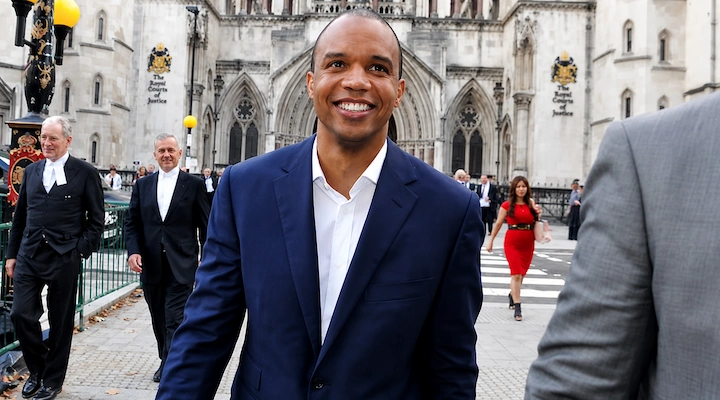
Both casinos fought back. Borgata sued in 2014, and in 2016 a federal judge ruled Phil must repay $10.1 million. The judge found no fraud, but ruled that edge-sorting breached the New Jersey Casino Control Act.
The UK Supreme Court ruled against Phil separately in 2017, finding that edge-sorting constituted cheating under English civil law.
In 2019, Borgata obtained a court order to garnish Phil's WSOP winnings. US Marshals seized $133,398 from his Poker Players Championship cash. The case was finally settled in July 2020 (terms undisclosed). All of this unfolded while Luciaetta's alimony had been at zero since April 2011.
Had the original divorce agreement given Luciaetta a percentage of Phil's future income rather than payments tied to a single company, the outcome of her settlement could have looked very different.
Where Is Luciaetta Ivey Now?
Luciaetta relocated to Tampa, Florida shortly after the divorce was finalized in 2009. She has not made any public statements, given any interviews, or appeared at any poker events since the legal proceedings ended in 2013.
She has no verified social media accounts. Unlike most people connected to high-profile poker figures, she has chosen complete privacy over public visibility. Both she and Phil have remained unmarried since the divorce, and neither has any children.
Phil is now a WPT Global ambassador, won his 11th WSOP bracelet in 2024, and is competing at the 2026 WSOP as this article is published.
Some bio sites claim Luciaetta remarried in 2014, works at a private equity firm, and owns property in northwest Tampa. None of these claims are supported by court records, named reporting, or any primary source.
FAQs
Who is Phil Ivey's ex-wife?
Phil Ivey's ex-wife is Luciaetta Ivey (legal name Luciaetta Marie Ivey). The couple married in Las Vegas on May 19, 2002, and divorced on December 29, 2009. The divorce settlement became public in 2011 and revealed $180,000 per month in alimony, a $1.2 million purse collection, and over $15.1 million in gambling debt assumed by Phil.
When did Phil and Luciaetta Ivey get married?
Phil and Luciaetta married in Las Vegas on May 19, 2002. They met in the late 1990s in the Atlantic City area, where Phil was already playing poker professionally. The marriage lasted seven years and produced no children.
How much alimony did Luciaetta Ivey receive?
Luciaetta received $180,000 per month in taxable alimony, drawn from Phil's Tiltware LLC income. The payments ran from January 2010 to April 2011 (roughly 16 months), totalling approximately $2.88 million. Payments stopped when Full Tilt Poker was shut down on Black Friday.
Why did Luciaetta Ivey's alimony payments stop?
The divorce agreement included a clause tying alimony to Phil's income from Tiltware LLC, the parent company of Full Tilt Poker. When the DOJ shut down Full Tilt on April 15, 2011 (Black Friday), Phil's Tiltware payments ceased and the alimony clause triggered automatically.
Did Phil Ivey and Luciaetta have children?
No. The seven-year marriage produced no children. Neither Phil nor Luciaetta has any reported children from subsequent relationships.
Where is Luciaetta Ivey now?
Luciaetta relocated to Tampa, Florida after the divorce and has kept her life entirely private since. She has no known social media accounts and has not spoken publicly since the legal proceedings ended in 2013. Some bio sites claim she remarried in 2014, but no primary source confirms this.
What is Luciaetta Ivey's net worth?
Luciaetta's net worth has never been publicly confirmed. Based on the divorce settlement, she received approximately $2.88 million in alimony payments, a purse collection valued above $1.2 million, jewelry worth over $1 million, 40% of a stock account, half the proceeds from the couple's home sale, and a down payment for a new residence. Several bio sites estimate her net worth in the low eight figures, but none disclose a methodology or cite a primary source.