

In October 2025, the FBI indicted 34 people for running rigged high-stakes poker games backed by four New York Mafia families. NBA coach Chauncey Billups was among them. The cheating tools included hacked shuffling machines, X-ray tables, and contact lenses that read marked cards.
That case made global headlines. But the poker world has been dealing with cheaters for far longer, with scandals touching some of the most influential people in poker history. Russ Hamilton stole over $22 million through a superuser account on UltimateBet.
Full Tilt Poker collapsed with $390 million missing from player accounts. Mike Postle allegedly used a hidden device to read hole cards on a livestream, and was never charged.
This is the complete history of every major poker cheating scandal and the biggest poker cheaters ever caught, from the earliest online superuser fraud to the latest federal indictments, updated for 2026. This page covers cheating at the tables: for unpaid debts, staking disputes, and player-to-player scams, see our separate guide to the biggest poker debts and scams.
Every Major Poker Cheating Scandal
The table below covers every scandal on this page. The full breakdown of each one follows.
| Scandal | Year | Method | Amount | Outcome |
|---|---|---|---|---|
| UltimateBet / Absolute Poker | 2007-2008 | Superuser access | $22M+ refunded | No criminal charges |
| Full Tilt / Black Friday | 2011 | Operator fraud | $390M missing | PokerStars repaid players |
| Mike Postle / Stones | 2019 | Alleged device | $250K+ alleged | Case dismissed, never charged |
| Robbi Jade Lew / Adelstein | 2022 | Unproven | $269K pot | Investigation: no evidence |
| Kabrhel Card Marking | 2023 | Alleged marking | N/A | Investigation: no evidence |
| Phil Ivey Edge Sorting | 2012-2014 | Edge sorting | $22M+ won | Ruled cheating (civil courts) |
| Prime Social Club | 2022 | Shuffle machines | Unknown | Never proven |
| Ali Imsirovic | 2022 | RTA / multi-accounting | N/A | Banned (GGPoker, PokerGO) |
| Jake Schindler | 2022 | RTA | N/A | Banned (GGPoker, PokerGO) |
| Fedor Kruse / Buehler | 2020 | RTA (two-PC setup) | $42K+ backer profit | Outed by flatmates |
| Bryn Kenney Stable | 2022 | Ghosting / collusion | N/A | No formal sanctions |
| Ren Lin / GGMillion$ | 2025 | Ghosting (screen-share) | $346K event | Suspended, then signed by WPT Global |
| Yaginuma Chip-Dumping | 2025 | Collusion | $1M bonus | WSOP vacated result |
| NBA/Mafia Rigged Games | 2025-2026 | Rigged shufflers, X-ray tables | $7M+ stolen | 34 indicted, trials pending |
The Online Superuser Era
These are the scandals that nearly killed online poker before the industry grew up. Both involved insiders exploiting access that no player at the table knew existed, and both exposed how little oversight early poker sites had over their own software.
UltimateBet / Absolute Poker: $22 Million Stolen (2007-2008)
The largest confirmed theft in online poker history began with a single suspicious tournament. In August 2007, an account named “Potripper” won a $1,000 tournament on Absolute Poker with impossibly perfect play, including a call with ten-high that no human would make without seeing the other cards.
Opponent Marco “CrazyMarco” Johnson requested hand histories. Support staff accidentally sent him a master file containing every player's hole cards, IP addresses, and observer accounts.
Players on the TwoPlusTwo forums traced an observer account directly to Absolute Poker's offices in Costa Rica. It was an inside job.
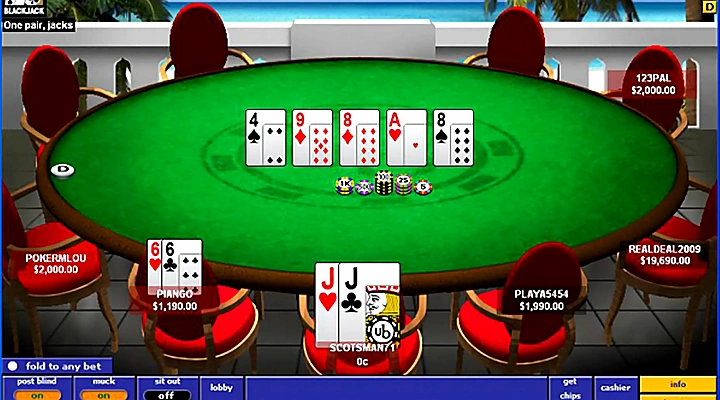
Attention then turned to sister site UltimateBet, where accounts like “NioNio” showed statistically impossible win rates. Both sites were owned by Tokwiro Enterprises and operated on the Cereus Poker Network. The cheating exploited a “God Mode” feature built into the software that let certain accounts see every opponent's hole cards in real time.
On September 29, 2008, the Kahnawake Gaming Commission announced it had found “clear and convincing evidence” that 1994 WSOP Main Event champion Russ Hamilton was “the main person responsible for and benefiting from” the cheating at UltimateBet.
“I took about $18 million from poker.”
Russ Hamilton, from the Travis Makar audio tapes (released 2013)
UltimateBet refunded $22,100,000 to affected players. The KGC fined the site $1.5 million but did not revoke its license. High-profile victims included Mike Matusow, Prahlad Friedman, and Ben Affleck.
- Hamilton was never criminally charged and never personally repaid players.
- The Cereus Poker Network shut down permanently in May 2012.
- Attorney Daniel Friedberg, present on the Makar tapes, later resurfaced as general counsel of FTX before that exchange collapsed in 2022.
- The DOJ’s Black Friday settlement eventually repaid roughly $33.5 million to over 7,000 Absolute Poker players via the Garden City Group.
The UltimateBet case set the template for every online cheating controversy that followed: insiders with access, a community investigation on TwoPlusTwo, a delayed official response, and a cheater who walked away without facing criminal consequences. Nearly 20 years later, that pattern still holds.
Full Tilt Poker / Black Friday: $390 Million Missing (2011)
This was not a cheating scandal. It was worse. On April 15, 2011, the DOJ unsealed indictments and seized the domains of PokerStars, Full Tilt Poker, and Absolute Poker. The date became known as Black Friday, and it froze the accounts of millions of online poker players overnight.

The charges against Full Tilt went far beyond operating an illegal gambling business. According to the DOJ's amended civil complaint, Full Tilt owed approximately $390 million to players worldwide, including roughly $150 million to US players. The company had only about $60 million on deposit.
Where did the rest go? Between April 2007 and April 2011, Full Tilt's owners distributed approximately $443,860,529 to themselves.
“Full Tilt was not a legitimate poker company. It was a global Ponzi scheme.”
US Attorney Preet Bharara
CEO Ray Bitar faced criminal charges. Chris Ferguson and Howard Lederer, two of the most prominent player-owners, faced civil charges only and were never criminally convicted. Both settled with the DOJ by forfeiting assets without admitting wrongdoing.
The resolution came on July 31, 2012, when PokerStars agreed to acquire Full Tilt's assets and repay all players, forfeiting $547 million to the US government. It remains the largest settlement in online gambling history.
- US players were eventually repaid in full through the DOJ remission process.
- Ferguson returned to tournament poker in 2016 to widespread community criticism.
- Lederer issued a public apology in 2017.
- Neither Ferguson nor Lederer has faced criminal prosecution to date.
Black Friday didn't expose a cheater at the tables. It exposed something arguably more damaging: a poker site that treated its players' deposits as its own money. This was fraud at the operator level, which is a different problem from the debts and disputes that arise between individual players.
The lasting impact wasn't just financial. It set back the legitimacy of online poker in the US by a decade and made “player fund segregation” the first question any serious grinder asks about a new site. The 2013 documentary Bet Raise Fold, ranked among the best poker documentaries of all time, captures the human side of Black Friday through the eyes of three players who lived it.
Cheating at the Live Tables
When poker moved to livestreams, RFID cards, and high-stakes private games, a new set of cheating methods emerged. Some involved intercepting card data from production rooms. Others relied on techniques as old as the game itself: marking cards, sorting edges, and compromising shuffle machines. The scandals in this section span all of them.
Mike Postle / Stones Gambling Hall (2019)
The most infamous accused cheater in live poker history was never charged, never convicted, and never paid back a cent. Between July 2018 and September 2019, Mike Postle went on an extraordinary run at Stones Gambling Hall in Citrus Heights, California, winning an estimated $250,000+ in low-stakes cash games streamed on “Stones Live.”
The stream used RFID cards whose data fed the production room. Archived footage repeatedly showed Postle staring into his lap, where he kept his phone, before making uncanny calls and folds that defied normal play at any level.
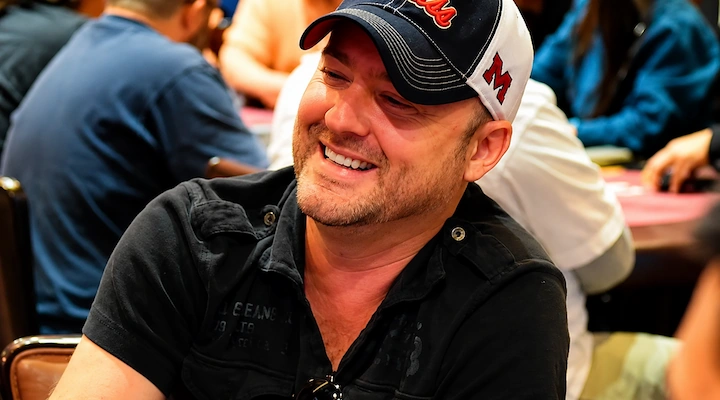
Commentator and player Veronica Brill was the first to publicly accuse Postle. Her allegations were reported by Scott Van Pelt on ESPN's SportsCenter on October 3, 2019. Joe Ingram took the case further, logging over 80 hours of hand analysis on YouTube and arguing that Postle's decisions occurred at mathematically impossible rates.
On October 9, 2019, 88 plaintiffs filed a $30 million lawsuit against Postle, Stones, and poker room manager Justin Kuraitis. In June 2020, Federal Judge William B. Shubb dismissed the case, citing California public policy against adjudicating gambling loss disputes. The dismissal against Postle was with prejudice.
Postle then filed a $330 million defamation suit against roughly a dozen people, including Negreanu, Galfond, Ingram, Brill, and ESPN. His attorneys withdrew and he dropped the suit in April 2021.
Anti-SLAPP rulings ordered him to pay Brill and Todd Witteles $27,000 each.
The Postle case is a cautionary tale about what happens when cheating is obvious to the community but impossible to prove in court. California gambling law shielded him from civil liability, no criminal investigation was ever opened, and the man widely considered one of the biggest poker cheaters in history walked away free.
Robbi Jade Lew vs Garrett Adelstein (2022)
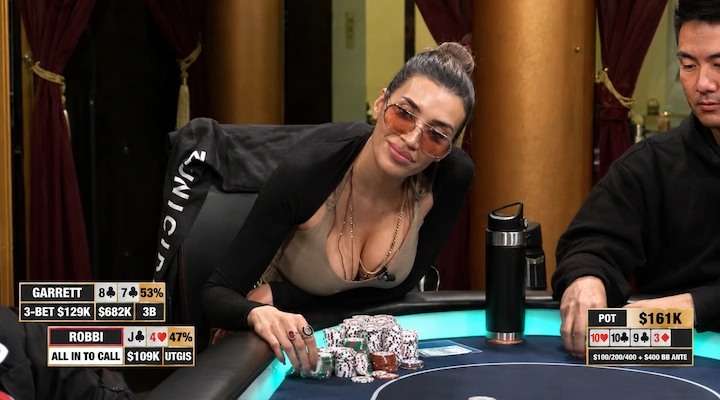
On September 29, 2022, during a Hustler Casino Live stream, amateur Robbi Jade Lew called Garrett Adelstein's all-in with J♣ 4♥ on a 10♥ 10♣ 9♣ 3♦ board and won a ~$269,000 pot. Adelstein confronted her on camera, persuaded her to return roughly $135,000, and then posted on social media accusing her of being part of a cheating ring.
HCL hired cybersecurity firm Bulletproof and private investigators. The 10-week probe found the following:
- No evidence of cheating in the J-4 hand or any other, though cheating with the existing setup was technically possible.
- Chip theft: HCL employee Bryan Sagbigsal stole $15,000 from Lew’s stack. He was fired and charged with grand theft by Gardena Police.
- Backing arrangement: an undisclosed deal between Lew and Jacob “Rip” Chavez was flagged as unethical. HCL banned such arrangements.
In March 2026, Adelstein called his cheating accusation tweet a “colossal mistake” and announced a memoir. For the full story on both players, see our complete breakdown of poker's most controversial players.
Martin Kabrhel Card-Marking Accusations (2023)
Card marking is one of the oldest cheating methods in poker, and Martin Kabrhel is the most high-profile player to be publicly accused of it in the modern game.
On June 18, 2023, during the WSOP $250,000 Super High Roller, Andrew Robl accused Kabrhel publicly. Players including Chance Kornuth, Justin Bonomo, Dan Smith, and Hugo Lemaire backed the claim, citing footage of Kabrhel handling cards with his fingernails and standing to peer at opponents' hole cards.
“How is Martin Kabrhel not banned from the WSOP?”
Andrew Robl, June 2023
- The WSOP investigated and found no evidence of card marking.
- Kabrhel denied everything and threatened defamation suits against Robl, Bonomo, Kornuth, Smith, and PokerGO.
- He finished 3rd for $2,279,038 in the same event.
- No charges, no bans, and no formal sanctions have ever resulted.
He is not the first player flagged for card manipulation at the WSOP. In 2015, Moldovan player Valeriu Coca made a deep run in a $10,000 bracelet event and was cleared by the WSOP, but was later found to have been banned from Prague casinos for marking aces and kings.
Kabrhel now has 5 WSOP bracelets and roughly $19 million in live earnings. The RFID card-handling disputes continued into 2026, but the accusation that started it all remains unproven.
Phil Ivey Edge Sorting (2012-2014)
Phil Ivey did not hack a system or use a hidden device. He exploited a flaw in the cards themselves, and two courts in two countries ruled it was cheating.
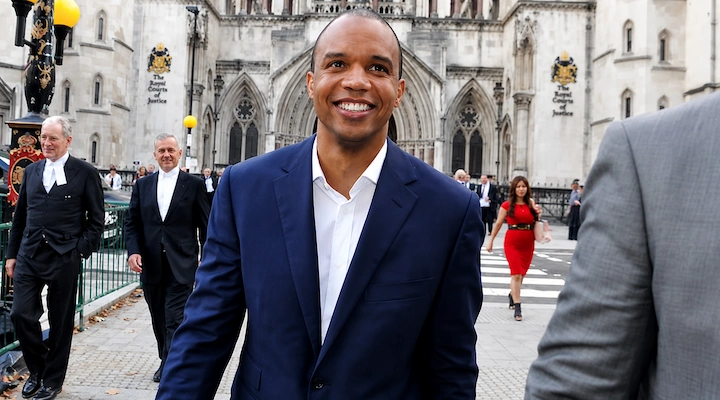
In 2012, Ivey and partner Cheung Yin “Kelly” Sun used a technique called edge sorting at punto banco (baccarat) tables. Certain Gemaco playing cards had asymmetric patterns on their backs. By requesting specific “rituals” (rotating high-value cards for “luck”), they could identify whether the next card was high or low before it was dealt.
At Atlantic City's Borgata, they won roughly $9.6 million across four visits between April and October 2012. At London's Crockfords (Genting UK), they won £7.8 million (~$12 million) in a single session. Crockfords refused to pay, returning only Ivey's £1 million deposit.
Ivey sued Crockfords to recover his winnings and lost. On October 25, 2017, the UK Supreme Court unanimously ruled that edge sorting constituted cheating.
“Mr. Ivey staged a carefully planned and executed sting.”
Lord Hughes, UK Supreme Court
In the US, Judge Noel Hillman ruled in December 2016 that Ivey and Sun had breached their contract with Borgata and ordered them to return $10.1 million. Borgata struggled to collect. In 2019, it seized $124,410 of Ivey's WSOP Poker Players Championship winnings. The parties reached a confidential settlement in July 2020.
- Ruled cheating in civil court in both the UK and the US.
- Many in the poker and gambling community view it as legitimate advantage play exploiting the casino’s failure to protect its own cards.
- Ivey was inducted into the Poker Hall of Fame in 2017, the same year the UK Supreme Court ruled against him.
- Both legal cases are fully resolved. No criminal charges were ever filed.
The Ivey case sits in its own category on this page. It is the only scandal where the method was performed openly at the table, the casino watched it happen in real time, and the courts still called it cheating. Whether you agree with that ruling depends on where you draw the line between skill and deception.
Prime Social Club / Shuffle Machine Allegations (2022)
In May 2022, Joe Ingram revealed allegations from former staff and players that Prime Social Poker Club in Houston, Texas had installed compromised shuffle machines on its cash game tables. The pattern was suspicious: an unidentified “action player” played loosely while certain unknown players consistently won.
When players demanded the machines be turned off, the suspected winners stopped winning. When the machines were turned back on and the same players started winning again, players walked out in protest.
Tournament director Justin Hammer and general manager Brent Pollack resigned. Matt Berkey (Solve for Why) corroborated the allegations on the “Only Friends” podcast, noting that Landon Tice and Martin Zamani were in the affected games.
- The allegations were never proven with hard evidence and no charges resulted.
- Prime Social was not shut down over the incident.
- Texas card rooms operate in an unregulated grey area (membership-fee model, no rake), which Doug Polk and others cited as the root problem.
The Prime Social case became a recurring example in arguments for Texas gambling regulation. Without a licensing body to investigate, the allegations remained exactly that: allegations. The episode also raised broader questions about the security of DeckMate shuffle machines, questions that resurfaced two years later when the FBI alleged rigged shufflers in the NBA/Mafia case.
The RTA and Collusion Wave
If the superuser era was about insiders exploiting backdoors, the modern threat is players using software to play perfect poker in real time. Real-time assistance (RTA) means consulting a solver or prebuilt database of GTO solutions during a hand, turning a human player into something closer to a bot. Combined with ghosting (someone else secretly playing your account), multi-accounting, and coordinated collusion, RTA has become the defining integrity issue in online poker.
The difference between studying with a solver between sessions (legal everywhere) and using one during play (banned everywhere) is a single alt-tab. That's what makes it so hard to detect and so hard to stop. Rooms now publish very little about how they catch it, which is why how WPT Global detects bots is worth reading in full.
Ali Imsirovic (Banned 2022)
Ali Imsirovic was the 2021 GPI and PokerGO Tour Player of the Year, with 14 high-roller wins in a single season. On April 18, 2022, Alex Foxen tweeted that Imsirovic was “banned from GG for multi-accounting and RTA” and had chip-dumped to “horses.” Foxen also alleged Imsirovic looked at an opponent's hole cards during a live $100K event.
Three-time bracelet winner Justin Bonomo, who later said he had personally lost over $1 million to cheats in the same GGPoker ban wave, and Chance Kornuth echoed the accusations. GGPoker confirmed the ban for RTA and multi-accounting.
On September 22, 2022, PokerGO indefinitely suspended Imsirovic, removing him from the PGT leaderboard and stripping his Player of the Year title defense. He has never fully or publicly addressed the allegations.
- GGPoker: permanently banned for RTA and multi-accounting.
- PokerGO: indefinitely suspended (September 22, 2022).
- February 2025: DQ’d from a Texas tournament upon registering.
- May 2025: kicked out of a Florida tournament while chip leader.
Imsirovic remains a poker pariah. He has never fully addressed the allegations, and no site or tour has lifted the bans.
Jake Schindler
Jake Schindler was suspended alongside Imsirovic by PokerGO on the same date (September 22, 2022) on the same RTA and collusion allegations. He was among the roughly 40 accounts caught up in GGPoker's RTA ban.
The timing made the suspension particularly awkward. Schindler had won his first WSOP bracelet just months earlier in the $50,000 High Roller ($1,328,068) and a ~$3.2 million Super High Roller Bowl Europe title in April 2022. With $35 million+ in live earnings, he ranked 12th on the all-time money list when the accusations surfaced.
He has never publicly confirmed or denied the allegations. Unlike Imsirovic, Schindler has not been ejected from live events since the ban, but his reputation in the high-roller community has never recovered.
Fedor Kruse / Henri Buehler RTA Scandal (2020)
The Kruse case is the most documented example of how RTA actually works in practice. In September 2020, German high-stakes pro Fedor “GlitchSystem” Kruse was outed by his own flatmates in Vienna, who posted screenshots, WhatsApp messages, and photos of his setup on the TwoPlusTwo forums.
The rig was a “dream machine”: two computers side by side, one running the poker client and the other loaded with a database of prebuilt GTO solutions for every cash game spot. Kruse used two separate mice to avoid triggering mouse-tracking detection software. The system took him from a break-even small-stakes player to a winner at NL40k on GGPoker and NL10k on PokerStars.
Fellow German pro Henri “Buehlero” Buehler had been backing Kruse during the cheating period (April to May 2020), profiting at least $42,000. Buehler claimed ignorance. DTO Poker Trainer fired Buehler as ambassador on September 28, 2020. Natural8 quietly removed him as well.
- Kruse claimed he was banned from only one site and disputed the amount of confiscated funds.
- Buehler’s involvement was dissected by Patrick Leonard and Benjamin “bencb789” Rolle.
- The case became the canonical example of the near-undetectable two-computer RTA threat.
Kruse later claimed he was banned from only one site and compared himself to Postle. The comparison was not well received. The case remains the most detailed public breakdown of how a two-computer RTA setup operates in practice.
Bryn Kenney Stable Allegations (2022)
On April 21, 2022, former stable horse Martin Zamani launched a Twitter thread and an 80-minute appearance on the Doug Polk Podcast accusing Bryn Kenney of running a cheating operation on GGPoker and partypoker. At the time, Kenney sat atop poker's all-time live money list with roughly $57.2 million in earnings.
The allegations were extensive: forced collusion in satellites, large-scale ghosting, RTA use, and multi-accounting. Zamani described a “cult-like” compound in Mexico with controlled diets, a shaman administering frog-poison rituals, and players pressured to “do what's best for the team.” Polk noted that Kenney's attorneys had threatened legal action before the podcast aired.
Lauren Roberts corroborated several claims, alleging Kenney played on her account and coached her in real time. PokerNews authenticated thousands of Telegram messages showing Kenney had knowledge of, and at times encouraged, ghosting among his horses.
- Kenney denied cheating but in a later Joe Ingram interview admitted that “ghosting happened in the past” while denying collusion and RTA.
- No formal sanctions, bans, or charges have ever resulted. Kenney has never been banned from any site or tour.
- He won a WSOP bracelet in 2024 and multiple Triton titles.
- GGPoker banned stables entirely in April 2023, directly referencing the type of abuses alleged in the Kenney case.
The Kenney case is the clearest example of how poker's enforcement gap works. The accusations were public, detailed, and partially corroborated. The accused admitted to one form of cheating.
And nothing happened. No site banned him, no tour excluded him, and his tournament career continued without interruption.
Ren Lin / GGMillion$ Ghosting (2025)
Tony “Ren” Lin was third on China's all-time live tournament money list with $19.8 million in earnings and a GGPoker ambassadorship. Our Ren Lin profile covers the full case. On October 14, 2025, during a $10,300 GGMillion$ final table, the account “RealOA” won $346,903. Finalist Yuan Lei (“Buzzcut,” who finished 3rd) revealed evidence that Lin had been coaching RealOA via a Tencent Meeting screen-share throughout the final table.
Lin apologized and said he didn't realize it was a rule violation. GGPoker disagreed.
- GGPoker permanently banned RealOA and indefinitely suspended Lin, terminating his ambassadorship.
- GGPoker refunded roughly $350,000 to affected players. Lin personally contributed $96,380 of that total.
- Lin was disqualified from the WSOP Super Circuit Cyprus Main Event (October 2025) despite having already bagged chips for Day 2.
- He returned to live play at WSOP Paradise (December 2025), roughly seven weeks after the ban.
What happened next made the scandal worse. In January 2026, Lin was signed as a WPT Global ambassador. The backlash was immediate.
Chip Race podcast hosts Dara O'Kearney and David Lappin resigned their WPT Global roles in protest. WPT Global defended the move, citing “second chances.”
“I didn't realise it was a rule violation.”
Ren Lin, October 2025
The Lin case exposed a gap between sites and tours. GGPoker banned him. The WSOP disqualified him.
And within weeks, a competing platform made him the face of their brand. For players who care about integrity, the message was hard to read as anything other than: cheating has consequences, unless someone else is willing to pay you.
Collusion and Chip-Dumping Cases
Collusion is the hardest form of cheating to prove because it often looks like normal poker until you see the pattern. Two or more players sharing information, soft-playing each other, or deliberately dumping chips can tilt entire tournaments without anyone at the table noticing in real time.
The most consequential collusion case in recent history happened at the 2025 WSOP. In the $1,500 Millionaire Maker (Event #53, 11,996 entrants), Jesse Yaginuma overcame a roughly 9:1 chip deficit heads-up against James Carroll. Viewers immediately alleged chip-dumping, pointing out that Yaginuma stood to claim a $1 million ClubWPT Gold bonus that only he was eligible for.
After a multi-day investigation, the WSOP took an unprecedented step on July 1, 2025: it vacated the result entirely. No winner was recognized. No bracelet was awarded.
The remaining prize pool (roughly $1,133,750 each) was split between the two players. Both were reportedly banned from Caesars properties.
“The promotion structure incentivized the behavior. That's the real problem.”
Joe Cada on the ClubWPT Gold bonus design
ClubWPT Gold paid Yaginuma the $1 million bonus anyway. Yaginuma denied collusion. The case prompted widespread criticism of promotional structures that create incentives for players to collude rather than compete.
Here are the other notable collusion cases from poker history:
The pattern across these cases is consistent. When sites investigate thoroughly (888poker, PokerBros), they sometimes clear the accused. When the evidence is strong enough (Yaginuma, Garofalo), the consequences are swift. The gap is in the middle: cases where suspicion is high but evidence falls short, and no one has the authority or incentive to dig deeper.
Beyond Poker: The NBA/Mafia Rigged Games (2025-2026)
On October 23, 2025, the FBI unsealed two Eastern District of New York indictments charging 34 people across two cases. The poker case charged 31 defendants with running rigged high-stakes games in Manhattan, Las Vegas, Miami, and the Hamptons, backed by the Bonanno, Genovese, Gambino, and Lucchese crime families. Prosecutors alleged more than $7 million was stolen.
The defendants included Basketball Hall of Famer and Portland Trail Blazers coach Chauncey Billups and former NBA player Damon Jones. A separate sports-betting case charged Miami Heat guard Terry Rozier. The operation was dubbed “Operation Royal Flush.”
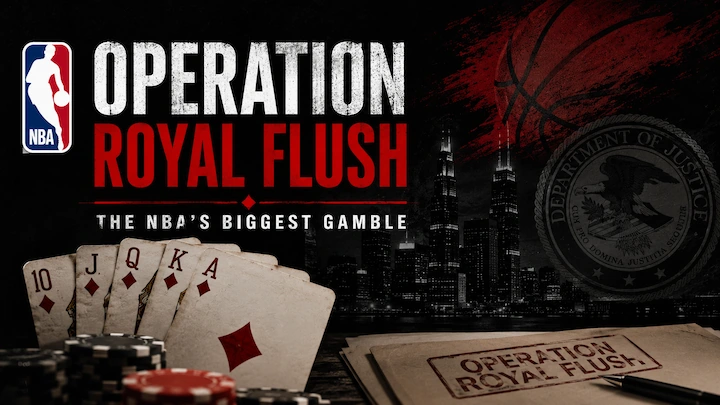
The cheating technology was unlike anything seen in a poker scandal before:
- Hacked automatic shuffling machines that read the deck and relayed the best hand to an off-site operator.
- An X-ray table that read face-down cards.
- Poker chip tray analyzers with hidden cameras.
- Special contact lenses and glasses that read pre-marked cards.
Victims were lured to games by celebrity “Face Cards” like Billups and Jones. Everyone else at the table was in on it. The Mafia families used threats and intimidation to collect debts. One Manhattan game in summer 2023 allegedly brought in roughly $1.8 million in a single session.
“I knew these games were rigged and that players were being cheated.”
Damon Jones, guilty plea statement, April 28, 2026
Jones became the first defendant to plead guilty on April 28, 2026, admitting to two counts of conspiracy to commit wire fraud. His combined loss across both cases exceeds $10 million. Sentencing is set for January 6, 2027.
Here is the current status of the key defendants as of mid-2026:
- Chauncey Billups: pleaded not guilty (November 24, 2025). Released on $5M bond. On unpaid leave from the Trail Blazers. Trial set for November 2, 2026.
- Terry Rozier: pleaded not guilty (December 2025). Faced a superseding indictment on May 28, 2026, adding bribery charges tied to a $100,000 payment and early exits from NBA games to help gamblers cash prop bets. Waived by the Miami Heat.
- Marves Fairley: pleaded guilty (May 28, 2026) to seven counts across the NBA betting and NCAA point-shaving cases. Sentencing February 24, 2027.
- Timothy McCormack: sentenced to two years in prison in a related betting strand.
This case is still developing. All defendants who have not pleaded guilty are presumed innocent pending trial. We will update this section as the Billups and Rozier cases progress through 2026 and into 2027.
The connection to poker is direct: the FBI alleges that the same type of shuffle machine manipulation suspected at Prime Social in 2022 was used at industrial scale in these Mafia-backed games. The difference is that this time, federal prosecutors have wiretaps, cooperating witnesses, and a grand jury indictment behind the allegations.
How Poker Cheating Works (and How It's Detected)
Every scandal on this page used one of a handful of methods. Understanding how they work is the first step toward recognizing when something is wrong at your table or on your screen.
The Methods
- Superuser access: insider software that reveals all hole cards in real time (UltimateBet, Absolute Poker). The most destructive method and the hardest for players to detect.
- Real-time assistance (RTA): consulting a solver or prebuilt GTO database during a hand (Imsirovic, Kruse, Carmanhani). The defining threat in modern online poker. Brazilian streamer Felipe Carmanhani was caught with GTO Wizard open on screen during a PokerStars PKO tournament in December 2023 and received only a two-week ban.
- Ghosting: another player secretly playing or coaching your account in real time (Kenney stable, Ren Lin).
- Multi-accounting: one person playing multiple accounts in the same tournament (Imsirovic, Kenney stable).
- Collusion: two or more players sharing hole card information, soft-playing, or chip-dumping (Yaginuma, Partouche, Pasqualini/Rossi).
- Card marking: physically altering cards with fingernails, ink, or bending (alleged: Kabrhel, Coca).
- Edge sorting: exploiting asymmetric card-back patterns to identify high-value cards before they are dealt (Ivey).
- Shuffle machine manipulation: hacking or compromising automatic shufflers to read the deck (alleged: Prime Social; charged: NBA/Mafia).
How Sites Catch Cheaters
Major poker sites combine multiple layers of detection. No single method catches everything, but together they create a system that makes sustained cheating increasingly difficult to hide.
- Statistical anomaly detection: flagging accounts whose VPIP, win-rate, and decision timing deviate from expected ranges over large sample sizes.
- Behavioral and timing analysis: detecting patterns consistent with solver consultation (uniform decision times, alt-tab patterns, mouse movement anomalies).
- Machine learning: pattern-recognition models trained on known cheating cases to identify similar behaviour in new accounts.
- Process and memory scanning: checking for blacklisted software running alongside the poker client.
- Human review teams: poker pros and security analysts who manually review flagged accounts and hand histories.
Industry coordination has improved significantly since the RTA wave. GGPoker's Player Integrity Council (PIC) maintains a cross-platform blacklist shared with the WSOP, WPT, Triton Poker, and PokerGO. WPT Global has invested six figures in its own anti-cheating infrastructure. Jason Koon's 2022 call for a shared blacklist helped push the industry toward the PIC model that now exists.
Is Online Poker Rigged?
This is the most searched question in all of poker integrity, and the answer has two parts.
The RNG (random number generator) itself is not rigged on regulated sites. Dealing is governed by certified algorithms, tested by independent auditors, and subject to licensing requirements. RNG cheating is essentially infeasible on any legitimate platform. The deals are fair.
The real threats are human. RTA, bots, collusion, ghosting, and multi-accounting are all documented problems. Regulated sites with geofencing and identity verification (PokerStars, WSOP.com, GGPoker) are meaningfully safer than unregulated apps and offshore rooms. The most dangerous environments are grey-market card rooms, private apps with no oversight, and underground games with no licensing body to appeal to.
If you play on a regulated, well-known poker site, the deck is not stacked against you. The risk is the person on the other side of the screen.
FAQs
What is the biggest poker cheating scandal of all time?
The largest confirmed theft is the UltimateBet superuser scandal (2007-2008), where 1994 WSOP champion Russ Hamilton used insider software to see opponents' hole cards and stole an estimated $22 million. UltimateBet refunded $22,100,000 to players. Hamilton was never criminally charged. In terms of total money involved, Full Tilt Poker's Black Friday collapse (2011) was larger at $390 million in missing player funds, but that was operator fraud rather than card cheating.
Is online poker rigged?
The dealing itself is not rigged on regulated sites. Random number generators are certified by independent auditors and subject to licensing requirements. RNG manipulation is essentially infeasible on any legitimate platform. The real, documented threats are human: RTA (real-time solver assistance), bots, collusion, ghosting, and multi-accounting. Regulated sites like PokerStars, GGPoker, and WSOP.com are meaningfully safer than unregulated apps and offshore rooms. If you play on a well-known, regulated poker site, the deck is not stacked against you.
Was Mike Postle ever charged with cheating?
No. Mike Postle was never criminally charged and never paid restitution to any player. A $30 million civil lawsuit by 88 plaintiffs was dismissed in June 2020 by Federal Judge William B. Shubb, citing California public policy against adjudicating gambling loss disputes. Postle's own $330 million defamation countersuit was dropped in April 2021. Anti-SLAPP rulings ordered him to pay two of his accusers $27,000 each. He resurfaced at the Beau Rivage in January 2023 under the name “Mike Lawrence.”
Did Robbi Jade Lew cheat against Garrett Adelstein?
A 10-week investigation by cybersecurity firm Bulletproof found no evidence of cheating in the J-4 hand or any other hand played on September 29, 2022, at Hustler Casino Live. The investigation did uncover that HCL employee Bryan Sagbigsal stole $15,000 from Lew's chip stack. Adelstein later called his public cheating accusation a “colossal mistake.” The hand remains widely debated but no method of cheating was ever identified or proven.
What is RTA in poker?
RTA stands for real-time assistance: using a poker solver, GTO database, or prebuilt solution library during active play. The difference between studying with a solver between sessions (legal) and consulting one during a hand (banned on every major site) is a single alt-tab. RTA is the defining cheating threat in modern online poker because it is extremely difficult to detect. High-profile cases include Ali Imsirovic (banned by GGPoker and PokerGO in 2022) and Fedor Kruse (outed by flatmates in 2020 for using a two-computer “dream machine” setup).
Who are the biggest poker cheaters ever caught?
The most significant confirmed or accused poker cheaters include Russ Hamilton ($22M UltimateBet superuser fraud), Mike Postle (alleged device at Stones Gambling Hall, never charged), Ali Imsirovic (banned for RTA and multi-accounting), Bryn Kenney (ghosting admitted, no formal sanctions), Phil Ivey (edge sorting ruled cheating in civil court), and the NBA/Mafia defendants (34 indicted for rigged games in 2025). The Full Tilt owners (Ferguson, Lederer, Bitar) committed operator fraud but were not card cheaters.
Is Phil Ivey a cheater?
Courts in both the UK and US ruled that Ivey's edge sorting constituted cheating in civil proceedings. The UK Supreme Court unanimously upheld the ruling in October 2017. Ivey was ordered to return $10.1 million to Borgata and lost his £7.8 million Crockfords claim. Many in the poker and gambling community view edge sorting as legitimate advantage play that exploited the casino's failure to protect its own cards, not traditional cheating. Ivey was inducted into the Poker Hall of Fame in 2017. No criminal charges were ever filed.
What happened on Black Friday in poker?
On April 15, 2011, the US Department of Justice seized the domains of PokerStars, Full Tilt Poker, and Absolute Poker, charging them with violating the Unlawful Internet Gambling Enforcement Act. Full Tilt was found to owe approximately $390 million to players worldwide while holding only $60 million. US Attorney Preet Bharara called it “a global Ponzi scheme.” PokerStars eventually acquired Full Tilt's assets and repaid all players, forfeiting $547 million to the US government. The key player-owners, Chris Ferguson and Howard Lederer, faced civil charges only and were never criminally convicted.
What is the difference between poker cheating and poker scams?
Cheating means manipulating the game itself: superuser software, real-time assistance, collusion, card marking, edge sorting, or rigged shuffle machines. The victim loses at the table while the hand is being played. Scams and debt disputes involve money moving between people away from the table: unpaid staking deals, borrowed money that never comes back, impersonation, and Ponzi schemes. Both damage the game, but they involve different methods, different victims, and different consequences. This page covers cheating. Player-to-player money disputes are covered separately in our poker debts and scams guide.