

The nine players who reached the WSOP 2026 Main Event final table on 5 August shared $30,250,000 in Las Vegas. An estimated $12,273,963 of it, 40.58%, goes to tax authorities across six jurisdictions. Lucas Jumalon won $10,000,000 and keeps an estimated $6,009,174.
The figures come from Russ Fox, an enrolled agent at Clayton Financial and Tax in Las Vegas, who runs this exercise every August. They are projections of what each finalist will owe, not filed returns. Our recap of how Jumalon closed out the final table covers the run itself.
One caveat outweighs the rest. Fox excludes staking and swaps because the details are rarely made public, and most of this field will have sold a piece of their action. Nobody at that table banks the full figure below.
| Finish | Player | Residence | Prize | Estimated take-home |
|---|---|---|---|---|
| 1 | Lucas Jumalon | Washington | $10,000,000 | $6,009,174 |
| 2 | Lauri Saaskilahti | Spain | $6,000,000 | $3,227,000 |
| 3 | Greg Mueller | Canada | $3,750,000 | $2,628,000 |
| 4 | Michael Gagliano | New Jersey | $2,750,000 | $1,419,317 |
| 5 | Han Feng | Texas | $2,250,000 | $1,360,247 |
| 6 | Rami Hammoud | Canada | $1,750,000 | $1,228,000 |
| 7 | Jamie Shaevel | California | $1,500,000 | $744,500 |
| 8 | Mario Boos | France | $1,250,000 | $706,299 |
| 9 | Evagoras Evagorou | Cyprus | $1,000,000 | $653,500 |
| Total | Nine finalists | $30,250,000 | $17,976,037 |
What Lucas Jumalon Actually Keeps From $10 Million
Jumalon is 22, comes from Spokane, and files as a professional gambler. After tax he keeps an estimated $6,009,174. Federal income tax and self-employment tax together take $3,990,826, a rate of 39.91%.
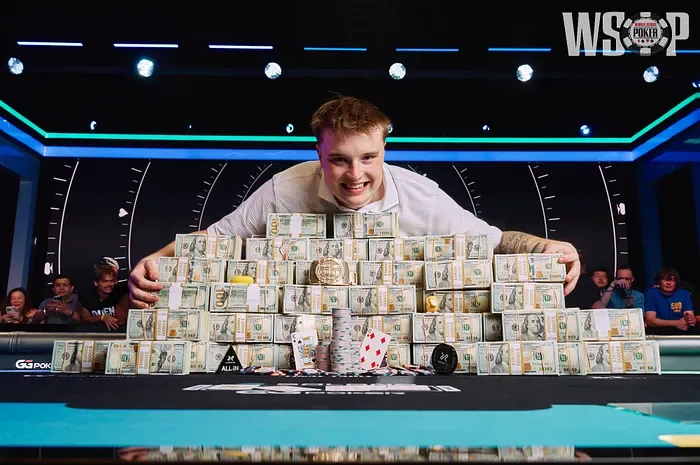
Washington has no state income tax, so there is nothing on top of that. It is the single biggest reason the champion hands over a smaller share of his prize than the two Americans below him who live in New Jersey and California.
Self-employment tax is what marks him out from the amateurs at the table. Filing as a professional lets a player deduct expenses, but it also brings a 15.3% charge on net profit that recreational players never see.
Washington Stops Being a No-Tax State in 2028
The champion caught the last good year. Washington has enacted the first broad income tax in its history, and it lands two years from now.
- The law: ESSB 6346, signed by Governor Bob Ferguson on 30 March 2026, sets a 9.9% rate on household income above a $1,000,000 standard deduction.
- The timing: it takes effect on 1 January 2028, with collections beginning in 2029.
- The ballot: Initiative 645 was certified on 15 July 2026 and goes to voters on 3 November. It would repeal the tax and ban state and local income taxes outright.
- The courts: a constitutional challenge is still pending. The Washington Supreme Court rejected an earlier referendum challenge on 4 May 2026 without ruling on whether the tax itself is lawful.
Jumalon's prize is ten times the threshold at which that tax would start to apply. Whether a future champion in the same chair faces it depends on a ballot in November and a case that has not been heard.
Why Seventh Place Lost More Than Half the Prize
Jamie Shaevel finished seventh for $1,500,000 and faces the heaviest burden of anyone at the final table: an estimated 50.37%.
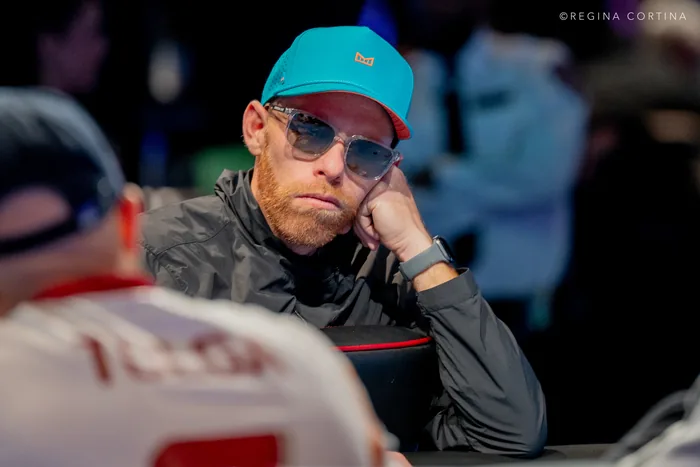
The split is roughly $598,373 to the IRS and $157,127 to California. The state share on its own is more than ten per cent of what he won, which is more than some finalists paid in total.
Han Feng finished two places higher and pays a far smaller proportion. He is also a professional, also filing federal income tax and self-employment tax, and the only material difference is that he lives in Houston.
Shaevel plays cash games in the Los Angeles card rooms. His tax position is a fixed cost of where his game is, not a choice he made for this tournament.
- California: Jamie Shaevel loses an estimated 50.37% of a $1,500,000 score, the heaviest burden at the table.
- New Jersey: Michael Gagliano loses an estimated 48.39% of $2,750,000, split between the IRS and the state.
- Washington: Lucas Jumalon pays no state share at all on $10,000,000, the only American at the table who does not.
- Texas: Han Feng loses an estimated 39.54% of $2,250,000, the lightest burden of the four Americans.
All four Americans face the same federal system. Everything separating them is a state line.
How WSOP Main Event Taxes Work for Non-US Players
Five of the nine finalists live outside the United States. The default for a non-resident alien is a flat 30% withheld at source, and tax treaties are what change that.
The 9,208 entries came from 111 countries. France sent 296 players and Spain 148, and both countries ended up collecting from a finalist.
| Player | Country | Treaty position | Estimated tax |
|---|---|---|---|
| Lauri Saaskilahti | Spain | Exempt from US tax | $2,773,000 to Spain |
| Greg Mueller | Canada | Withheld at source | $1,122,000 |
| Rami Hammoud | Canada | Withheld at source | $522,000 |
| Mario Boos | France | Exempt from US tax | $543,701 to France |
| Evagoras Evagorou | Cyprus | No treaty | Withholding plus $49,500 |
Treaty Countries Collect the Money Instead
Runner-up Lauri Saaskilahti is Finnish, works in sales and lives in Barcelona. The US-Spain treaty exempts his $6,000,000 from American tax entirely, which sounds like a windfall until you look at where he files.
Fox puts Spain's top rate at 47% and the bill at an estimated $2,773,000 to the Agencia Tributaria.

Mario Boos hit the same wall from a different direction. The US-France treaty exempts gambling winnings specifically, so the IRS takes nothing from his $1,250,000, but Fox puts France's top marginal rate at 45%, with a further 3% surtax above €250,000.
Boos keeps an estimated $706,299. A treaty exemption is not a tax break. It decides which government collects.
No Treaty Means Paying Both, Partly
Evagoras Evagorou went out ninth for $1,000,000 and is the first player from Cyprus to reach a Main Event final table. There is no US-Cyprus treaty, so the withholding came off the top before he left the building.
Cyprus taxes worldwide income to a maximum of 35%, and a foreign tax credit for what the IRS already took leaves an estimated $49,500 owed at home. His take-home lands at $653,500, the smallest at the table in absolute terms.
What the Supreme Court of Canada Changed for the Two Canadians
Fox describes the Canadian position as unsettled, with Revenu Quebec pursuing professional players and the CRA elsewhere taking a softer line. That description has been overtaken by events.
On 4 June 2026 the Supreme Court of Canada refused leave to appeal in Fournier-Giguere et al v Canada, leaving the Federal Court of Appeal ruling in place. Poker earnings are taxable business income where the activity is run as a commercial enterprise.
The question of how Canadian authorities treat poker income has been live for more than a decade. It now has an answer.
What has not changed is the position of recreational players. Casual winnings remain non-taxable windfalls north of the border. The test is commerciality, not skill and not the size of the score.
Rami Hammoud is an analytics manager from Montreal who plays as an amateur, so he faces the US withholding and nothing at home. That comes to an estimated $522,000.
Residency Beat Results at the Final Table
The clearest illustration sits two places apart on the payout sheet. Hammoud finished sixth for $1,750,000 and keeps an estimated $1,228,000. Michael Gagliano finished fourth for $2,750,000 and keeps an estimated $1,419,317.
A million dollars of prize money separates them. Under $200,000 separates what they bank.

Gagliano's 48.39% is federal income tax, self-employment tax and New Jersey combined. Hammoud pays a flat withholding and files nothing at home. Amateur status in the right country was worth more at this final table than two finishing positions.
The pattern holds across the whole field, not just the nine who made it. The WSOP published where its 9,208 entries came from, and every hand of the ESPN final table sat on top of a field drawn heavily from the highest-tax states in the country.
- California, 965 entries. More players than any other state, and the heaviest tax burden at this final table.
- Nevada, 738 entries. Second-most of any state, no income tax, and nobody at this final table lived there.
- Texas, 479 entries. No state income tax, and the lightest burden of the four Americans who reached the final nine.
- New Jersey, 219 entries. Fewer than a quarter of California's total, and the second-heaviest bill at the table.
- Washington, 170 entries. Eighth on the list, and the home of the player who won the whole thing.
None of this is something a player can fix in the moment. Where you file is decided years before you sit down, and at this final table it mattered as much as how deep you ran.
The 90% Loss Cap Makes These Numbers Look Generous
From 1 January 2026 the One Big Beautiful Bill Act caps gambling loss deductions at 90% of losses. A player who breaks even across a year can now owe tax on money they never actually netted, which is where the term phantom income comes from.
None of the figures above reflect it, because Fox is measuring one win rather than a full year of results. Our guide to the new 90% loss cap explained covers how it works in practice.
Pressure to reverse it has been building all year, including the campaign to repeal the cap led from inside the gaming industry.
What This Says About Next Year
Fox makes one comparison worth repeating. Last year's final table included players from treaty countries that do not tax gambling at all, producing effective rates of zero. This year brought Spain at 47% and France at 48% instead.
The champion's seat told the same story twice. Florida has no state income tax either, so Michael Mizrachi's $10 million Main Event win in 2025 left him with roughly the same net figure Jumalon banks here.
The tax take at a Main Event final table depends as much on who happens to reach it as on the prize money itself. Nine different passports would have produced a very different total.

Next August's version of this analysis should look different for the Americans. The 2026 tax year is the first run under the loss cap, so a professional's full-year position and their Main Event score will no longer line up as neatly as the figures above suggest.
Three dates decide how different it gets.
- 3 November 2026: Washington votes on Initiative 645, which would repeal the state's new income tax and ban state and local income taxes outright.
- 1 January 2028: if the tax survives the ballot and the courts, it applies at 9.9% on household income above a $1,000,000 standard deduction, with collections from 2029.
- August 2027: the next edition of this analysis, and the first to cover a full tax year run under the 90% loss cap.
Jumalon may turn out to be the last champion from his state to keep a full share, which would be a strange footnote to attach to a record that runs through every Main Event winner since 1970.
Frequently Asked Questions
How much tax did the WSOP 2026 Main Event winner pay?
Lucas Jumalon faces an estimated $3,990,826 on his $10,000,000 first prize, a rate of 39.91%. He pays federal income tax and self-employment tax as a professional gambler, and Washington has no state income tax to add on top. The figure excludes any payments to backers.
Do foreign players pay US tax on WSOP winnings?
The default is a flat 30% withheld at source for non-resident aliens. Tax treaties can exempt that income from US tax, as they did for the Spanish and French residents at this final table. The money is then taxable where the player lives instead, and players from countries with no US treaty can usually claim a foreign tax credit against their bill at home.
Why did sixth place keep more than fourth?
Rami Hammoud finished sixth for $1,750,000 and keeps an estimated $1,228,000. Michael Gagliano finished fourth for $2,750,000 and keeps an estimated $1,419,317. Hammoud is an amateur Canadian facing only the US withholding, while Gagliano is a New Jersey professional paying federal, self-employment and state tax.
References
- Russ Fox, The Real Winners of the World Series of Poker 2026, Taxable Talk, 6 August 2026
- WSOP, Lucas Jumalon wins the 2026 WSOP Main Event, 5 August 2026
- WSOP, WSOP Updates 2026: The Main Event Bubble Set to Pop Today (final table payouts and field breakdown), 9 July 2026
- The Canadian Press, Supreme Court declines to review poker tax ruling, 4 June 2026
- Ballotpedia, Washington Initiative 645 certified for the November ballot, 18 July 2026