

On 15 April 2011, the US Department of Justice unsealed indictments against the three poker sites that controlled 95% of the American online market. PokerStars, Full Tilt Poker, and the Cereus Network went dark within hours. The event became known simply as Black Friday.
Fifteen years later, only six US states run regulated online poker. That covers roughly 11% of the population. The regulated market generates between $75 million and $90 million a year: about 8 to 9% of the $973 million US players were producing before the indictment.
For the vast majority of American grinders, the question is not whether online poker recovered. It didn't. The question is where to actually play. The human cost of that day has been captured on screen in several poker documentaries, most notably Bet Raise Fold (2013).
What Happened on 15 April 2011
US Attorney Preet Bharara's office seized five domain names and unsealed a 52-page indictment against 11 people connected to PokerStars, Full Tilt Poker, and the Cereus Network (Absolute Poker, UltimateBet). Agents froze more than 76 bank accounts across 14 countries.
At approximately 3:26pm EDT, PokerStars blocked US players from real-money play. Full Tilt followed hours later. An estimated 1.4 million active American players lost access to the sites overnight.
- The charges: conspiracy to violate UIGEA, bank fraud, and money laundering conspiracy, plus violations of the Illegal Gambling Business Act.
- PokerStars: player funds were segregated. US withdrawals started 26 April 2011. The company paid $731 million in its July 2012 DOJ settlement.
- Full Tilt Poker: owed roughly $390 million to players worldwide while holding only $60 million. Described by the DOJ as a 'global Ponzi scheme'. Owners had extracted $440 million+ in player funds since 2007.
- Absolute Poker / UltimateBet: collapsed entirely. Owed approximately $50 million to players. Filed bankruptcy in May 2011. US players received partial DOJ-coordinated repayments starting 2017.
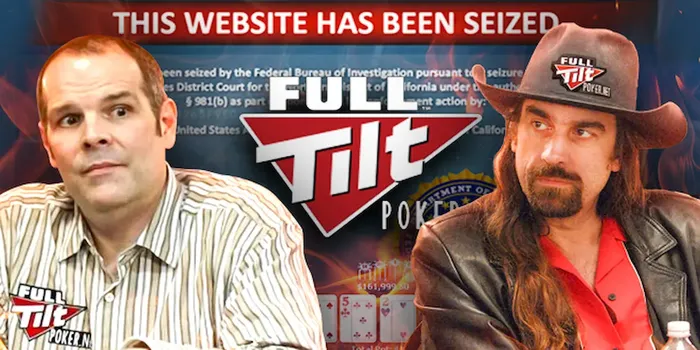
Isai Scheinberg, one of the most influential poker figures in the game's history, was the last of the 11 defendants to face sentencing. The PokerStars founder surrendered in January 2020 and pleaded guilty to one count of operating an illegal gambling business.
In September 2020, Judge Lewis A. Kaplan handed him time served plus a $30,000 fine. All 11 defendants ultimately pleaded guilty, and none went to trial. Our breakdown of Black Friday prison sentences shows who actually served time, from payment processor Ira Rubin's three years to the week Absolute Poker's Scott Tom spent in jail.
Fifteen Years, Six Operational Rooms
Nine states have legalised online poker since Black Friday. Only six have live sites. Three more passed laws but never attracted operators.
| State | Law signed | Poker launch | MSIGA member |
|---|---|---|---|
| Nevada | 2011 | 30 April 2013 | Feb 2014 |
| Delaware | June 2012 | Nov 2013 | Feb 2014 |
| New Jersey | Feb 2013 | Nov 2013 | Oct 2017 |
| Pennsylvania | Oct 2017 | Nov 2019 | April 2025 |
| Michigan | Dec 2019 | Jan 2021 | May 2022 |
| West Virginia | March 2019 | June 2025 | Nov 2023 |
The Multi-State Internet Gaming Agreement now links all six states into shared player pools, covering roughly 38.6 million Americans. Pennsylvania's April 2025 entry was the biggest single expansion. Connecticut, Rhode Island, and Maine legalised but never launched: restrictive tribal licensing or rules blocking MSIGA participation killed momentum.
The Regulated Market Never Recovered
Academic research from the University of Hamburg put pre-Black Friday US online poker revenue at around $973 million across roughly 1.4 million active players. A 2013 study projected a fully regulated market could reach $2.2 billion in year one.
Neither figure came close. Combined regulated GGR across the six operational states in 2024 landed between $75 million and $90 million. Online poker represents under 1% of total US iGaming revenue.
| Metric | Pre-Black Friday (2010) | Regulated US market (2024) |
|---|---|---|
| Annual revenue | ~$973 million | $75M to $90M |
| Active players | ~1.4 million | Not disclosed |
| States with access | All 50 | 6 |
| % of US adults with access | 100% | ~11.4% |
The PokerStars story adds a final bookend. The brand that survived Black Friday, paid a $731 million settlement, and re-entered the regulated market voluntarily left the US on 1 April 2026, folding into FanDuel's platform.
Fifteen years ago it was forced out by prosecutors. This time it was a corporate choice.
American Gaming Association data from August 2025 tells the offshore side of the story: Americans wager $673.6 billion annually with unregulated operators. The share using only legal sites fell from 52% to 24% in three years. The offshore market is growing, not shrinking.
Where US Players Can Actually Grind in 2026
For the 88.6% of Americans with no regulated option, two offshore rooms have emerged as the practical answers. Both accept US players regardless of state and settle in crypto.
ACR Poker
ACR Poker has been the default US-facing grind site for over a decade. The flagship skin of the Winning Poker Network serves most US states, with crypto handling 60%+ of transactions and monthly payouts above $50 million.
The ambassador roster is anchored by Chris Moneymaker, Chris Moorman, and high-stakes legend Tom Dwan, who joined in March 2024 under the ‘Durrrr' screen name. The tournament flagship is the Venom, which has beaten its guarantee at every edition since Fall 2023.
The April 2026 High Five edition guaranteed $8 million NLH plus $2 million PLO, with $2,650 buy-ins. The March 2026 Online Super Series XL awarded $60 million+ against a $50 million guarantee across 569,903 entries from 128 countries.
- Spring 2024: $12.6M prize pool against a $12.5M guarantee. Winner: Dominik Nitsche ('Texxassss') for $1,818,044.
- Summer 2025: $10.5M combined pool across NLH and PLO. Winner: David 'IamYorFather' Gonzalez for roughly $710,000.
- Fall 2025 PKO: $7.85M pool. Winner: 'Rigapols81' for $675,224.
- Winter 2026 Mystery Bounty: $11.3M pool against a $10M guarantee. Winner: Pedro 'MatasSembolas' Neves for $728,281.
Rakeback options split two ways: 27% fixed for simplicity, or the progressive Elite Benefits programme that climbs to 65% at the top tier. Our full ACR Poker review covers the tiers, the Beast leaderboard, and the Venom Vault wheel.
Promo code VIPELITE unlocks the top tier plus a $3,000 monthly VG Race, a $2,000 depositor freeroll, and exclusive freerolls for VIP-Grinders signups.
CoinPoker
CoinPoker is the newer answer. Founded in 2017 by Tony G and Isabelle Mercier, the Panama-based crypto room requires no KYC for standard accounts, denominates games in USDT, and accepts US players with no state restrictions. Registration takes email and phone only.
The March 2026 ‘Level Up' software rebuild added PLO6, Bomb Pots, Short Deck, and Action Games. Desktop and mobile clients ship for Mac, Windows, iOS, and Android, plus a mobile web option that skips the download.
The CoinRewards system launched 1 April to replace the old flat 33% rakeback. Three streams now run in parallel, paying out $1.5 million+ weekly: 15% daily rakeback, $1 million weekly CoinRaces leaderboards, and $500,000 weekly Infused Splash Pots. No CHP token holding required.
- Inaugural High-Stakes (Dec 2024 to Jan 2025): NL10K, 6-max. Winner: Owen 'PR0DIGY' Messere, $591K profit plus a $50K Rolex Daytona Ghost.
- Mid-Stakes (June 2025): NL500. Winner: 'WWSF45', $36,886 profit plus a $17K Rolex Yacht-Master.
- PLO (finished Nov 2025): 6-max. Winner: 'godfromstock', $150,462 profit plus a $15K Rolex.
- High-Stakes II (Nov to Dec 2025): NL10K. Winner: Pedro 'Biluzin' Toledo, $359,530 profit plus a $35K Rolex Land-Dweller.
The Cash Game World Championship added a Heads-Up edition that ran until 3 May, with LLinusLLove, Jungleman, Buttonclickr, and Nik Airball battling rake-free in NLHE and PLO brackets at $50/$100 stakes.
Nik Airball joined as ambassador in December 2025, alongside Bencb, Patrick Leonard, Mario Mosböck, and a roster that expanded to 13+ names by March 2026. Our CoinPoker rakeback breakdown walks through the full CoinRewards structure, from the 15% daily cut to the weekly Splash Pots and CoinRaces.
For more crypto poker rooms beyond these two, we cover USDT, Bitcoin, and Ethereum options on a dedicated page.
What Happens Next
Federal legalisation has no working coalition. New York is the most promising new regulated market, but its 2026 bill died without a vote and a launch before 2028 looks unlikely. Illinois and Virginia keep filing bills, while Florida, Texas, and California show no realistic path.
The gap between regulated and offshore is unlikely to close. For a grinder in Florida, Texas, Georgia, Arizona, or anywhere outside the six operational states, 15 years of state-by-state regulation has produced nothing.
ACR Poker and CoinPoker remain the practical answers. Both still pay, both still fill, and both still accept players from most of the country.
For ongoing coverage, follow our poker news section.
